

Oil-Immersed Transformer Maximum Ambient Temperature: Limits & Monitoring Guide 2027
Date: 2026年11月6日 18:09:34
- Ambient temperature is the temperature of the air around the transformer. It is not the oil or winding temperature, and Oil temperature can be substantially higher than ambient during normal operation. The reading must be assessed against transformer loading, cooling conditions and the manufacturer's thermal limits.
- Oil-immersed transformer maximum ambient temperature has no single answer. It depends on the standard, the design, the cooling class, the loading basis, the altitude and the installation (outdoor, indoor, enclosure).
- IEC 60076-1 quotes 40°C, 30°C and 20°C as usual service conditions. They are three different statistics, and none of them is an operating cap.
- Higher ambient reduces thermal margin. At steady state, oil and winding temperatures tend to rise roughly in step with it at the same load, with deviations from oil viscosity, loss changes and cooling control.
- Top-oil, winding and hot-spot temperatures are different quantities with different measurement methods.
- Judge temperature trends together with load, ambient and cooling status. One OTI reading says little on its own.
Table of Contents
- 1. What Does Maximum Ambient Temperature Mean?
- 2. Ambient Temperature vs Transformer Temperature Rise
- 3. How High Ambient Temperature Affects Transformer Loading
- 4. Top-Oil, Winding and Hot-Spot Temperature
- 5. Cooling Performance at High Ambient Temperature
- 6. How to Monitor Temperature in Oil-Immersed Transformers
- 7. Temperature Monitoring Methods and Products
- 8. High-Ambient-Temperature Operating Checklist
- 9. FAQ
1. What Does Maximum Ambient Temperature Mean?
Ambient temperature is the temperature of the air or cooling medium at the installation site. Transformer ratings are tied to specified service conditions, and "maximum ambient" is often used loosely for several different statistics.
IEC 60076-1 describes usual service conditions with three values:
- 40°C is the highest cooling-air temperature at any time. It is a peak the cooling design is expected to handle.
- 30°C is the monthly average of the hottest month, formed from the mean of daily maxima and the mean of daily minima. It describes sustained hot-season conditions, not a peak.
- 20°C is the yearly average. IEC 60076-2 uses it as the cooling-medium basis for its temperature rise limits.
IEEE C57.12.00 uses a different basis: a 30°C average ambient over any continuous 24-hour period, with a 40°C maximum. A 24-hour average and an IEC monthly average are different statistics and cannot be swapped.
None of these figures is an absolute operating ceiling for every oil-immersed transformer. They are reference conditions behind a rating. A unit specified for a hot site can carry a higher ambient basis, and a unit in a poorly ventilated room may see a higher effective ambient than weather data suggests. The nameplate and the manufacturer's stated service conditions decide what applies.
2. Ambient Temperature vs Transformer Temperature Rise
To a first approximation and in steady state, the temperature at a given point is ambient plus the rise at that point. Rise is determined in a heat-run test at rated power, which is why transformer temperature rise limits are written against a reference cooling-medium temperature rather than a particular site.
The commonly cited IEC 60076-2 values are 60 K top-oil rise and 65 K average winding rise. They apply to transformers with class 105 (IEC 60085) solid insulation, immersed in mineral oil or synthetic liquid with a fire point not above 300°C, under the cooling modes listed in the standard's temperature rise table. They are steady-state limits at continuous rated power, referenced to a 20°C yearly average cooling medium. Directed-oil cooling, high-temperature insulation systems and IEEE 65°C-rise designs follow other limits, so check the applicable standard edition and the transformer's own data before reusing these numbers.
Real operation differs from "ambient plus rise". Load changes, oil circulation, thermal inertia and the winding-to-oil gradient all affect the result. Oil responds over hours and windings over minutes, so readings during a load step do not match steady-state values.
| Thermal Quantity | What It Represents | Affected by Ambient Temperature? |
|---|---|---|
| Ambient temperature | Air or cooling medium around the transformer and its radiators | It is the external condition itself |
| Top-oil temperature | Oil near the upper tank region or the designed measuring point | Yes. Ambient sets the baseline the oil rise is added to |
| Winding temperature | Average, indicated or calculated winding condition, depending on the method | Yes, through oil temperature and heat removal |
| Winding hot spot | Hottest thermally stressed winding location | Yes. Ambient, top-oil rise and the hot-spot gradient combine |
3. How High Ambient Temperature Affects Transformer Loading
Higher ambient leaves less margin between the surrounding air and the temperatures the insulation system is designed for. At the same load and cooling stage, oil and winding temperatures usually settle higher. Keeping hot-spot temperature within the design basis then takes either lower load or more cooling.
IEC 60076-7 and the IEEE C57.91 loading guide both start from ambient and load, calculate top-oil and hot-spot temperatures, and relate them to insulation ageing. For 65°C-rise insulation systems, the IEEE guide uses a 110°C hot-spot reference at 30°C average ambient for normal loading. That value belongs to that insulation system and that ambient, and it does not carry over to other designs.
| Condition | Thermal Effect | What to Verify |
|---|---|---|
| Site ambient above the rating basis | Higher oil and winding temperatures at the same load; loading adjustment may be needed | Nameplate and manufacturer service conditions |
| Indoor room or enclosure | Effective ambient at the radiators can exceed outdoor air temperature | Enclosure correction in the loading guide |
| High altitude | Thinner air removes less heat | Altitude stated in the specification |
| Fans or pumps out of service | Cooling mode drops and capability falls with it | Rating for the cooling stage actually available |
Derating for high ambient should come from the manufacturer's loading data or the applicable guide. Percent-per-degree rules found online assume particular cooling modes and insulation systems and should not be applied to an unspecified transformer. The loading calculation also uses the ambient statistic its own basis defines, which is not always the daily peak.
4. Top-Oil, Winding and Hot-Spot Temperature
Top-oil temperature describes oil in the upper tank region. It moves slowly, so it shows overall heat removal well and fast local heating poorly.
Winding temperature depends on how it was obtained. A conventional indicator gives a calculated value from top-oil temperature plus a load-current term, while a heat-run test gives an average derived from winding resistance.
Transformer winding hot-spot temperature is the temperature at the hottest point inside the winding. In the loading guides it equals ambient plus top-oil rise plus the hot-spot gradient above top oil, and it drives the insulation ageing calculation. External oil measurement cannot see it, and a WTI reading should not be treated as a direct hot-spot measurement.
5. Cooling Performance at High Ambient Temperature
Radiators reject heat to the surrounding air, and the driving force is the difference between oil and air temperature. Warmer air shrinks that difference, so the same radiators move less heat unless fans or pumps compensate. Cooling stages start earlier and run longer, and the remaining margin is smaller.
High ambient is not a fault by itself. It does make cooling problems show up sooner: a failed fan, restricted airflow, weak oil circulation or fouled radiators may stay hidden at 15°C and appear as a clear temperature rise at 38°C. Judging transformer cooling performance means comparing top-oil and winding trends with load, ambient and fan or pump status over time. A temperature that keeps climbing after a cooling stage starts calls for checking the cooling path, but load, ambient and sensor condition need to be ruled in or out before concluding it is a cooling fault.
6. How to Monitor Temperature in Oil-Immersed Transformers
A top-oil reading of 80°C means one thing at light load on a cool morning and another at full load in a heat wave with a fan stage stuck off. The assessment needs the inputs together:
Ambient temperature + transformer load + top-oil temperature + winding / hot-spot temperature + cooling state → thermal condition assessment
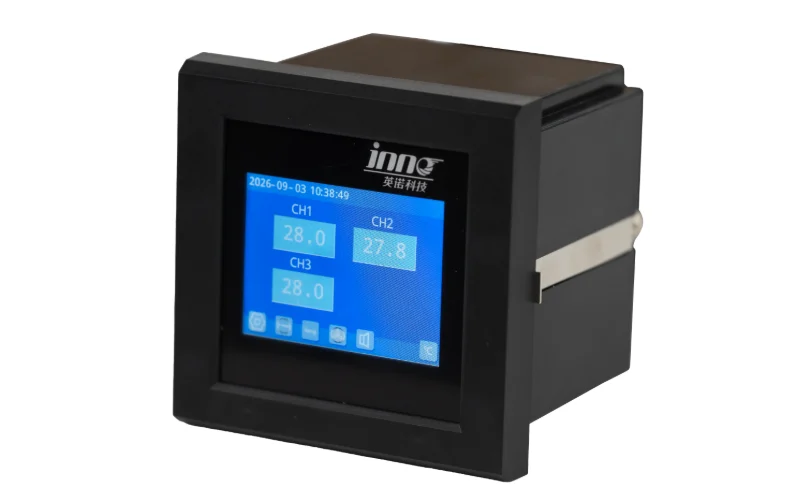
Ambient temperature is easy to leave out of this picture, yet it explains many temperature changes that look unexplained at the panel. Transformer temperature monitoring that records ambient, load, oil, winding and cooling status together makes trend and alarm history comparable over time. Oil-immersed transformer monitoring extends the same approach to oil condition and cooling equipment.
7. Temperature Monitoring Methods and Products
Each method answers a different question, and none replaces the others.
For oil, the BWY2 transformer oil temperature indicator is a mechanical OTI with adjustable contacts for cooling start and over-temperature alarm, plus Pt100 and optional 4–20 mA outputs. It indicates top-oil temperature and says nothing directly about the winding.
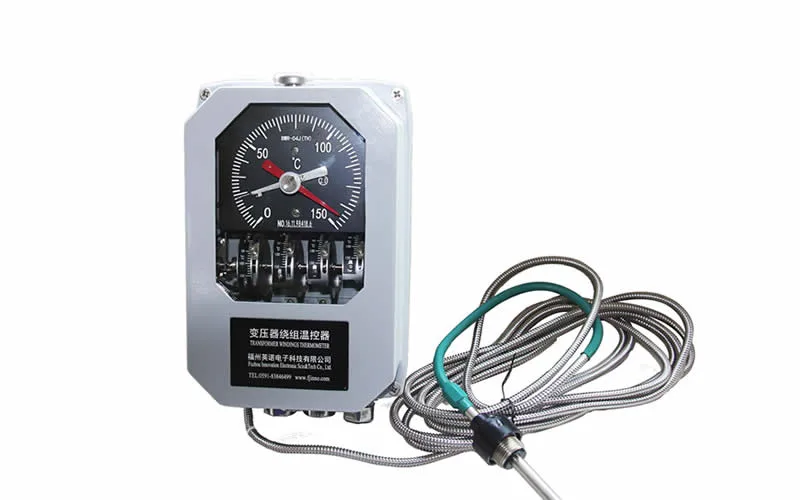
For the winding, the BWR2 transformer winding temperature indicator adds a load-current term to oil temperature and shows a simulated winding value for local indication, cooling control, alarm and trip.
Instrument ratings need care at hot sites. The product pages list a −40°C to +80°C operating ambient range for BWY2 and −40°C to +65°C for BWR2. Those figures describe where the instrument itself can operate. They do not state the maximum ambient temperature the transformer is permitted to run in.
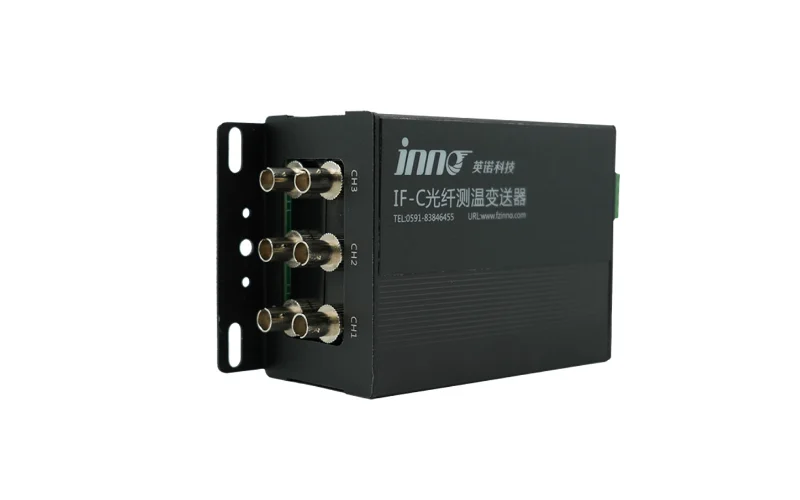
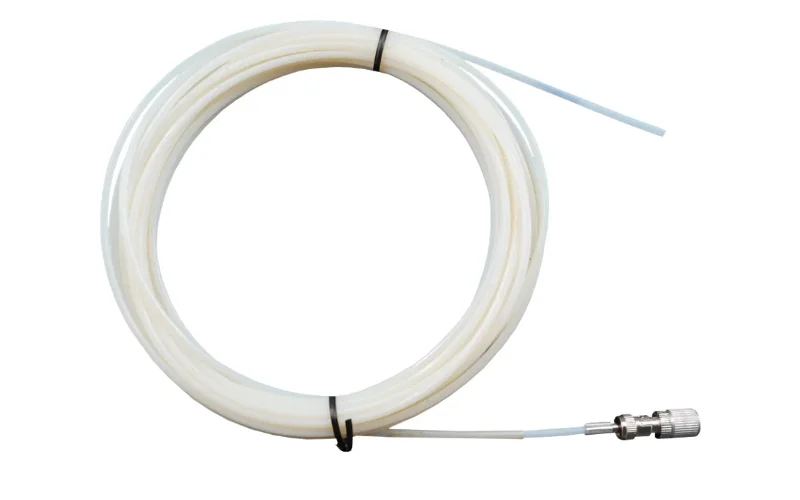
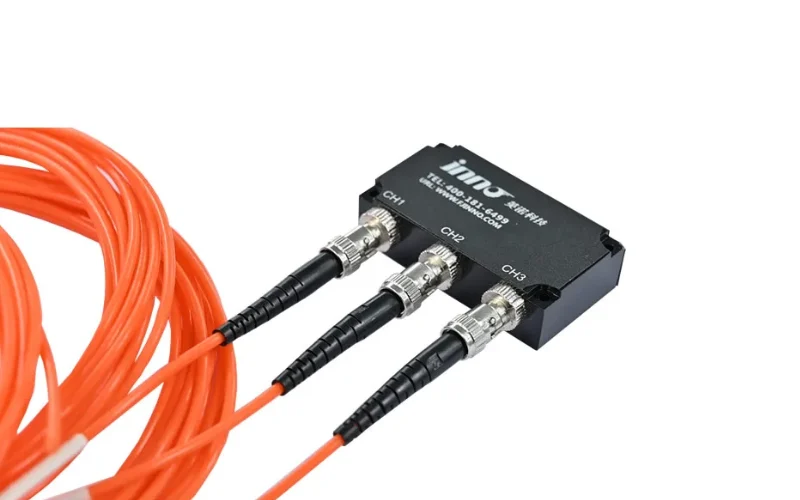
For direct measurement, a polyimide fiber optic winding temperature sensor places a fluorescent sensing tip at the installed winding location. The tip is electrically insulating and immune to electromagnetic interference. It is normally installed during manufacture or major refurbishment, and each probe measures one point, so placement should follow the thermal design. Conventional WTI and Pt100 methods stay valid for control and protection, and the two approaches often run together.
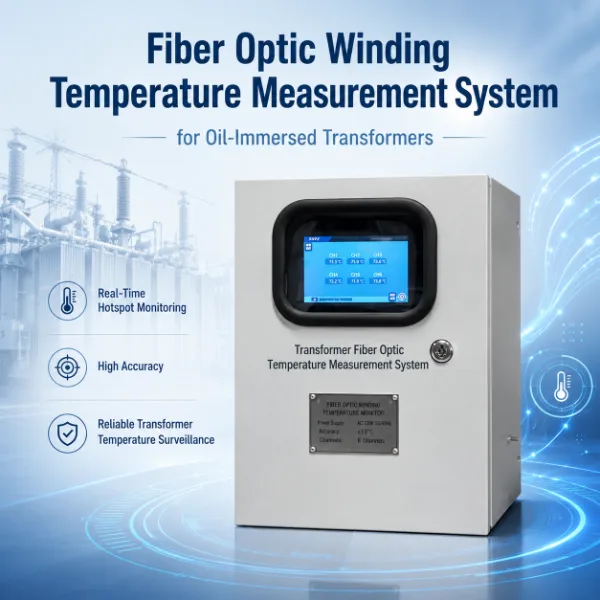
Where several windings or phases need coverage, the multi-channel fiber optic system supports 1 to 64 channels with RS485/Modbus communication. Channel count should follow the points that matter thermally, not the maximum the host can accept.
| Method / Product Type | Temperature Measured | Direct or Indirect | Typical Role | INNOFZ Example |
|---|---|---|---|---|
| OTI | Top-oil temperature | Direct (oil at the pocket) | Local indication, cooling start, alarm | BWY2 |
| WTI | Simulated winding temperature | Indirect (oil plus load term) | Winding indication, cooling control, alarm, trip | BWR2 |
| Fiber optic probe | Local winding temperature at the sensing tip | Direct | Hot-spot measurement at selected points | Polyimide-protected probe |
| Multi-channel fiber optic system | Several winding points | Direct | Multi-point monitoring, SCADA output | Multi-Channel Fiber Optic Temperature Measurement System |
8. High-Ambient-Temperature Operating Checklist
- Confirm the nameplate and the manufacturer's service conditions, including ambient basis, cooling class and altitude.
- Compare site ambient with the loading basis, using the statistic that basis defines.
- Account for enclosure or room effects if the transformer is indoors.
- Review the top-oil temperature trend at comparable load and ambient.
- Check winding or hot-spot temperature where a measurement exists, and note whether it is calculated or direct.
- Compare temperatures against load instead of reading them alone.
- Verify that fans and pumps start when commanded and that temperature responds.
- Watch for persistent phase or winding temperature imbalance.
- Review alarm history for repeated events rather than reacting to one peak.
- Decide whether reduced loading is required under the manufacturer's guidance or the applicable loading guide.
Alarm and trip values are transformer-specific and come from the manufacturer's documentation and the protection study.
9. FAQ
What is the maximum ambient temperature for an oil-immersed transformer?
No absolute figure applies to every unit. IEC 60076-1 lists 40°C at any time, 30°C as the monthly average of the hottest month and 20°C as the yearly average as usual service conditions. IEEE C57.12.00 uses a 30°C average over any continuous 24 hours and a 40°C maximum. These are rating reference conditions, not universal limits. The nameplate and manufacturer data define the limit for a given transformer, and hot-climate designs can be specified for higher ambient.
How does ambient temperature affect transformer loading?
Higher ambient reduces the margin between the surrounding air and the temperatures the insulation can accept. At steady state, oil and winding temperatures tend to settle higher at the same load, so the load that keeps hot-spot temperature within the design basis falls. The amount depends on the cooling mode, the insulation system and the loading guide used, such as IEC 60076-7 or IEEE C57.91.
What is the difference between ambient, top-oil and winding temperature?
Ambient is the air around the transformer. Top-oil temperature is the oil in the upper region, and winding temperature is an average, indicated or calculated value depending on the method. Hot-spot temperature is the hottest winding location. Each sits progressively above ambient and is measured differently.
Should transformer loading be reduced in high ambient temperatures?
It depends on how far site conditions exceed the rating basis and on the cooling available. Where they exceed it, the manufacturer's loading data or the applicable guide sets the adjustment. Where ambient stays within the basis and cooling is healthy, no change may be needed. Load, temperature trends and cooling status should inform the decision alongside ambient.