

What Is a Transformer Oil Level Indicator?
Date: 2026年10月24日 16:21:23
- A transformer oil level indicator shows the level of insulating oil in an oil-immersed transformer, commonly in the conservator tank.
- Oil level changes naturally as transformer oil expands and contracts with temperature, so the reading is never perfectly constant.
- Magnetic oil level indicators give local mechanical indication without requiring direct electrical contact with the oil.
- Some designs add low-level or high-level alarm contacts or remote signals, depending on model and configuration.
- Abnormal oil level should be read together with oil temperature, leakage inspection and transformer operating condition.
- Online monitoring can combine oil level with temperature and pressure data for a broader view of transformer condition.
Table of Contents
- 1. What Does an Oil Level Indicator Show?
- 2. How Does a Magnetic Oil Level Gauge Work?
- 3. Why Transformer Oil Level Changes
- 4. Oil Level Indicator vs Oil Level Sensor
- 5. Oil Level Alarms and Abnormal Conditions
- 6. Online Oil Level Monitoring
- 7. Choosing an Oil Level Indicator
- 8. Transformer Oil Level Indicator FAQ
1. What Does an Oil Level Indicator Show?
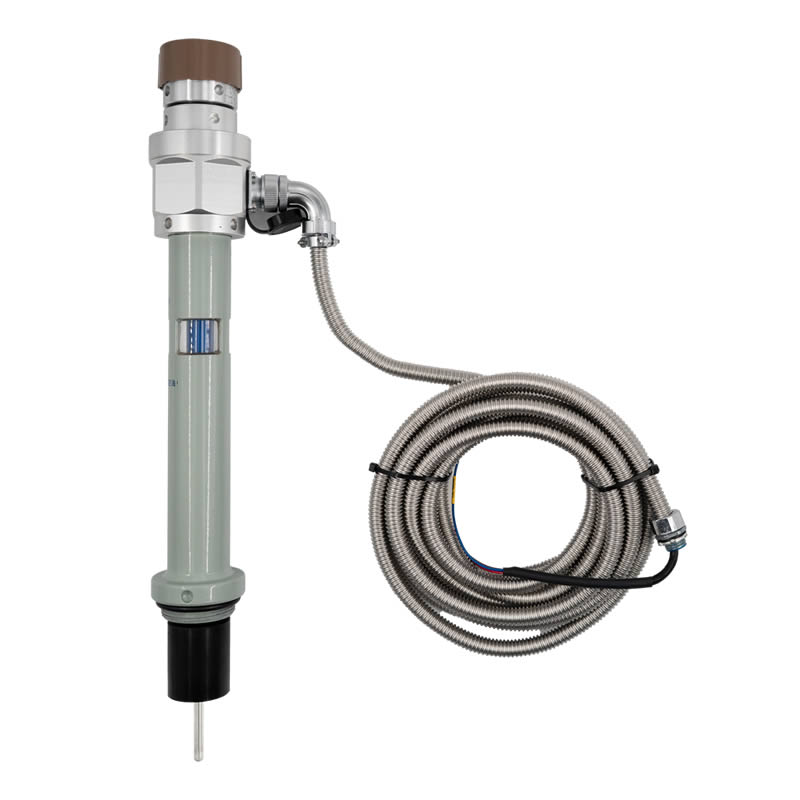
An oil level indicator normally displays the relative oil level in a transformer conservator or in another oil chamber designed for the purpose. Oil level gauges for transformers are used mainly on oil-immersed units, and where a conservator is fitted the gauge usually sits on that tank. Measurement location still depends on transformer design, so sealed units without a conservator may show level differently.
The gauge reports level only. It does not show oil quality, it does not measure dissolved gases, and it does not directly measure winding temperature. Because oil volume changes with temperature, the indication belongs next to oil temperature data and should not be read in isolation.
| Parameter | What It Indicates | Typical Monitoring Purpose |
|---|---|---|
| Oil Level | Volume of oil in the conservator or oil chamber | Detect oil loss, leakage indication or abnormal level change |
| Oil Temperature | Overall thermal condition of the oil | Assess loading, cooling effectiveness and temperature rise |
| Oil Pressure | Internal pressure of the tank and oil system | Identify abnormal tank or oil-system operating conditions |
| DGA | Fault gases dissolved in the oil | Track developing thermal or electrical faults |
| Winding Temperature | Temperature of the winding or its hot spot | Evaluate thermal stress on insulation |
2. How Does a Magnetic Oil Level Gauge Work?
2.1 Basic Operating Sequence
A typical magnetic oil level indicator follows a simple chain. Oil level changes, an internal float moves, a mechanical linkage or magnetic coupling responds, and an external pointer on a dial shows the relative level. The oil stays on one side of a sealed housing while the pointer sits on the other.
2.2 Why Magnetic Coupling Is Used
Magnetic coupling transfers float movement through the housing wall, so no rotating shaft has to pass through a seal. That keeps the oil system isolated from the outside while still giving a readable dial at ground level. Some dials also carry markings for the expected level at different oil temperatures.
Mechanical design varies by manufacturer and model, and not every magnetic oil level indicator is built the same way. Float arrangement, linkage and dial layout should be read from the specific gauge documentation.
3. Why Transformer Oil Level Changes
3.1 Normal Temperature-Related Change
Transformer oil expands as temperature rises and contracts as temperature falls. In a conservator-type transformer the extra volume moves into the conservator, so oil level is not expected to stay exactly constant.
A low indication at low oil temperature is therefore not automatically an oil leak. A higher indication during warmer operating conditions is not automatically an abnormal condition either. Reading the level against oil temperature, whether from an oil temperature indicator or a transformer temperature monitor, separates normal movement from a real deviation.
3.2 Abnormal Oil Level Change
Some level changes do not follow temperature. Possible causes include:
- Oil leakage
- Insufficient oil quantity or incorrect filling
- Conservator or bladder issues, where applicable
- Abnormal pressure condition
- Mismatch between level and temperature readings
- Indicator malfunction
An abnormal indication may point to one of these and requires verification. Low oil level does not always mean leakage, and high oil level does not always mean a transformer fault.
4. Oil Level Indicator vs Oil Level Sensor
Naming varies between manufacturers, so the terms overlap in catalogs. A transformer oil level gauge or indicator mainly provides local visual indication. An oil level sensor produces electrical or electronic level information. An oil level monitor collects or displays level data and may add alarm or communication functions.
| Device | Primary Function | Local Display | Electrical Output | Remote Monitoring |
|---|---|---|---|---|
| Oil Level Indicator | Local visual level indication | Yes, dial or window | Contacts on some models | Not by itself |
| Oil Level Sensor | Electrical level information | Depends on model | Yes | Through a connected system |
| Online Oil Level Monitor | Collects, displays and transmits level data | Depends on model | Yes | Typically yes, by configuration |
Function follows the specific model, so features should be confirmed from the documentation instead of inferred from the product name.
5. Oil Level Alarms and Abnormal Conditions
Depending on model and configuration, an oil level indicator or sensor may provide a low oil level alarm, a high oil level alarm, remote indication, a relay contact, or an analog or digital output. Not every product offers all of these. Alarm setpoints belong to the transformer design and the project requirements.
A level alarm normally calls for assessment rather than automatic isolation, in the same way any transformer alarm asks operators to verify the signal first. Useful checks include current oil temperature, leakage inspection, pressure, transformer load, recent maintenance and alarm history. A level reading that disagrees with the rest of that picture may point to the indicator itself.
6. Online Oil Level Monitoring
A local gauge answers one question: what is the current level? Online monitoring adds continuous or periodic level data, oil temperature, oil pressure, alarm status and, depending on configuration, remote communication. Oil level is more useful when interpreted together with oil temperature and pressure.
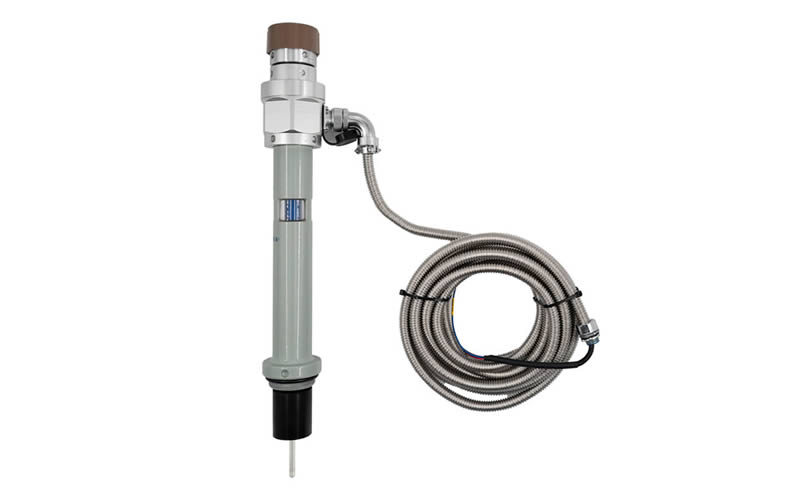
INNOFZ offers an integrated transformer oil temperature, level and pressure monitoring system, model IB-YKTCF-OL/OP, designed for oil-immersed distribution transformers. It combines oil temperature, oil level, internal pressure and a pressure relief valve in one device, installs at the position traditionally used for an oil level gauge, and provides RS485 communication with IP68 protection.
| Monitoring Parameter | What It Shows | Why Combined Monitoring Helps |
|---|---|---|
| Oil Level | Oil volume in the conservator or oil chamber | Interpreted against oil temperature, it separates thermal expansion from oil loss |
| Oil Temperature | Overall oil thermal condition | Gives the context needed to judge whether a level change is normal |
| Oil Pressure | Internal tank and oil-system pressure | Adds mechanical information about the oil system |
| DGA | Fault gases dissolved in the oil | Adds information about internal thermal or electrical conditions; it does not measure oil level |
Fault-gas trends come from dissolved gas analysis monitoring, which complements level and pressure data without replacing them.
Oil level is only one transformer condition indicator. Broader oil-immersed transformer monitoring may combine oil level, oil temperature, pressure, DGA, winding temperature, bushing condition and OLTC condition. Projects covering several transformer types can start from the wider transformer monitoring range.
7. Choosing an Oil Level Indicator
Selection starts with the transformer and its conservator arrangement, then moves to signal and mounting requirements.
| Selection Item | What to Confirm |
|---|---|
| Transformer type | Oil-immersed design and whether a conservator is fitted |
| Conservator design | Mounting position, connection type and float travel space |
| Oil level range / scale | Dial range matches the expected level movement |
| Local dial readability | Dial size and visibility from the inspection position |
| Alarm contacts | Whether low or high level contacts are required |
| Remote signal | Required output type and compatibility with the monitoring system |
| Environmental protection | Suitability for outdoor, humid or dusty installation |
| Electrical contact rating | Rating suitable for the connected alarm circuit |
| Monitoring compatibility | Interface with existing temperature, pressure or SCADA equipment |
8. Transformer Oil Level Indicator FAQ
8.1 What is a transformer oil level indicator?
A transformer oil level indicator shows the level of insulating oil in an oil-immersed transformer, commonly in the conservator. Many use a float with magnetic coupling to drive an external dial. Some models add alarm contacts or remote signals, depending on configuration.
8.2 Why does transformer oil level change with temperature?
Transformer oil expands as it heats and contracts as it cools. In conservator-type transformers, that volume change moves oil in and out of the conservator, so the level indication rises and falls with oil temperature. A temperature-related change is normal and is not a leak by itself.
8.3 What is the difference between an oil level indicator and an oil level sensor?
An oil level indicator mainly provides local visual indication on a dial or window. An oil level sensor provides electrical level information for a monitor or control system. Product names vary between manufacturers, so functions should be confirmed for each model.
8.4 What can cause low transformer oil level?
Low indication can come from oil leakage, insufficient filling, conservator or bladder issues, or low oil temperature that has contracted the oil. A faulty indicator is also possible. Level should be checked against oil temperature and a leakage inspection before conclusions are drawn.