
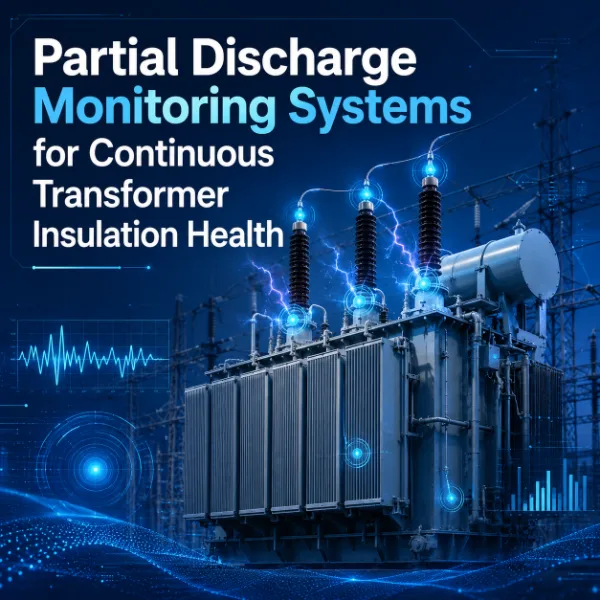
Partial Discharge Monitoring Systems for Continuous Transformer Insulation Health
Our online partial discharge monitoring systems detect and trend PD activity inside power transformers around the clock, turning periodic offline testing into continuous, predictive transformer monitoring — and connecting naturally with our bushing, OLTC, DGA and temperature monitoring solutions for a complete insulation health picture.
- Continuous, online PD detection instead of periodic offline spot checks
- UHF, HFCT and ultrasonic sensing options for cross-checked PD diagnostics
- Part of a complete transformer online monitoring solution, not a standalone point sensor
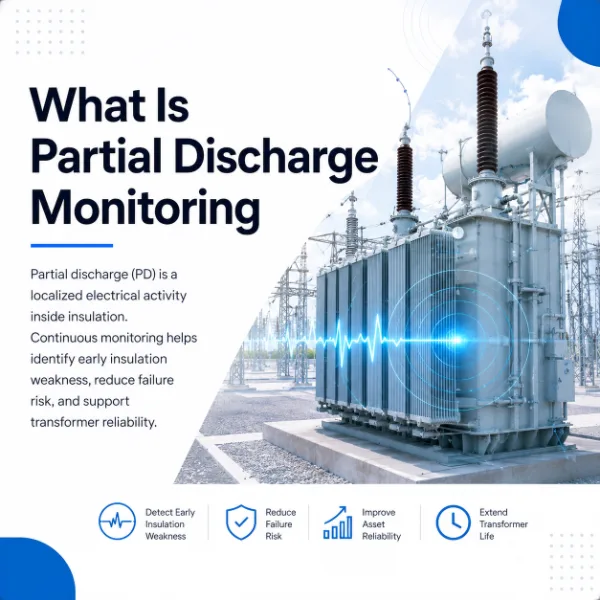
What Is Partial Discharge Monitoring?
Partial discharge (PD) is a localized electrical discharge that only partially bridges the insulation between conductors — an early indicator of insulation defects such as internal voids, surface tracking, corona or floating-potential contacts. Online partial discharge monitoring places UHF, HFCT, or ultrasonic sensors on the transformer to capture PD pulses continuously and convert them into actionable insulation health data.
- Sensors installed at the oil valve, tank surface, or grounding cable, depending on sensor type
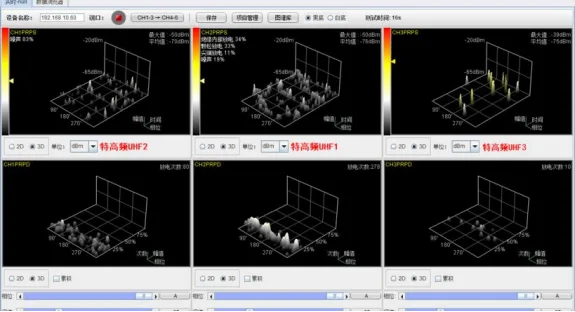
- PD pulses are sampled, filtered from electrical noise, and mapped into PRPD/PRPS patterns
- Pattern analysis classifies discharge type — internal, surface, corona or floating discharge — and its trend
- Output is available via local display, alarm relay, RJ45 Ethernet, or RS485/Modbus for SCADA integration
Why Periodic PD Testing Isn't Enough
A factory or offline partial discharge test only provides a result at one point in time. Online partial discharge monitoring keeps watching insulation condition continuously while the transformer stays in service, closing the blind interval between scheduled tests.
- PD activity can grow from stable to alarm level between scheduled test dates
- Offline testing arranged during a shutdown window can miss load- and temperature-dependent discharge behavior
- Electrical noise in the substation makes manual PD interpretation harder without a continuous baseline
- Undetected PD accelerates insulation aging and raises the risk of unplanned outages
Where Partial Discharge Develops Inside a Transformer
Partial discharge in a power transformer is often traced to one of three areas. Knowing where discharge tends to originate helps decide which sensor type and which parts of our transformer monitoring solution range should be combined with PD monitoring.
| PD Source Area | Typical Cause | Complementary Monitoring |
|---|---|---|
| Core & Coil Assembly | Insulation voids, moisture ingress, particle contamination, winding insulation aging | Winding Temperature Monitoring / DGA Monitoring |
| Bushing | Capacitance shift, dielectric loss increase, contamination or moisture at the bushing tap | Bushing Monitoring |
| On-Load Tap Changer (OLTC) | Contact wear, arcing during switching, mechanism resistance | OLTC Monitoring |
Operating voltage, induced stray flux and insulation impairment from moisture or particles are the underlying factors that most often push one of these three areas into discharge activity — which is why PD monitoring is rarely deployed as a single, isolated sensor.
Complete Transformer Online Monitoring Solutions
Partial discharge monitoring is one part of a full transformer condition monitoring picture. Explore the rest of our online transformer monitoring solutions to build the insulation health and condition monitoring coverage your asset needs.

Transformer Monitoring
Our overall transformer online monitoring solution, combining temperature, DGA, PD, bushing and OLTC data into one condition monitoring view.
Transformer Temperature Monitoring
Online winding and top-oil temperature monitoring that flags thermal stress often linked to insulation aging and PD onset.
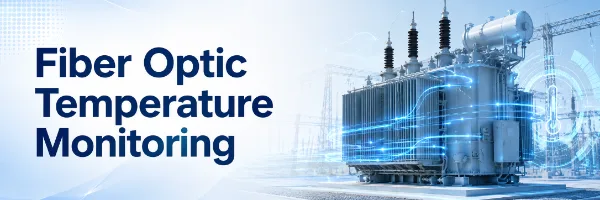
Fiber Optic Temperature Monitoring
Direct winding hot-spot temperature measurement using dielectric fiber optic sensors, fully immune to the transformer's electromagnetic field.

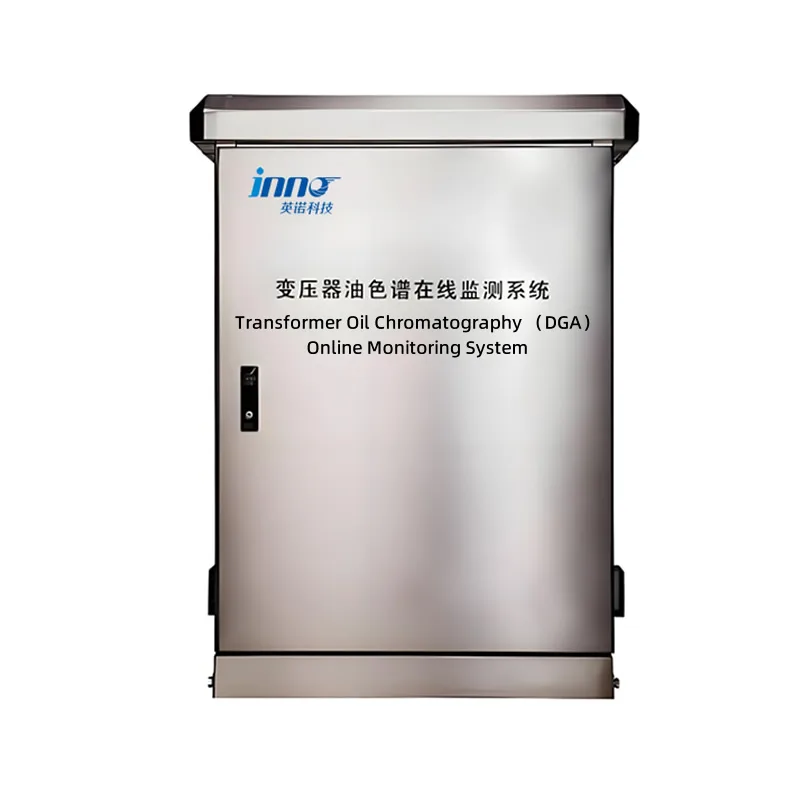
Transformer DGA Monitoring
Continuous 7-gas chromatographic analysis of transformer oil, used to confirm whether detected PD activity is already generating fault gases.

OLTC Monitoring
Tracks tap-changer current, temperature, vibration, torque and position — catching mechanical wear that can generate discharge activity.

Bushing Monitoring
Capacitance, dielectric loss and leakage current monitoring for bushings, paired naturally with bushing-level PD sensing.
Partial Discharge & Related Condition Monitoring Products
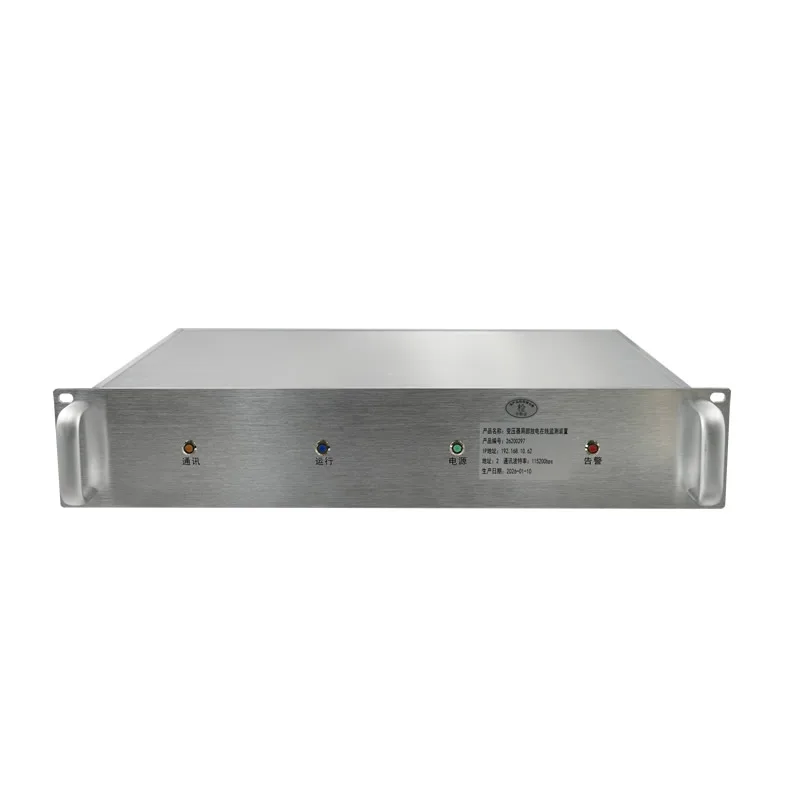
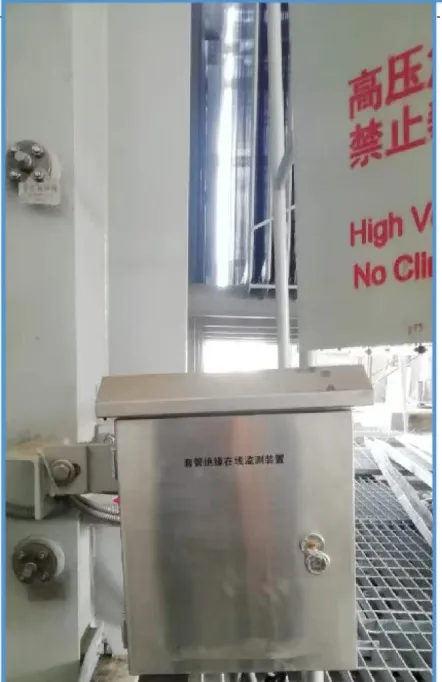
Our partial discharge monitoring hardware is factory direct and in-house engineered, and pairs naturally with our bushing, OLTC, DGA and fiber optic temperature monitoring products for complete transformer condition coverage.
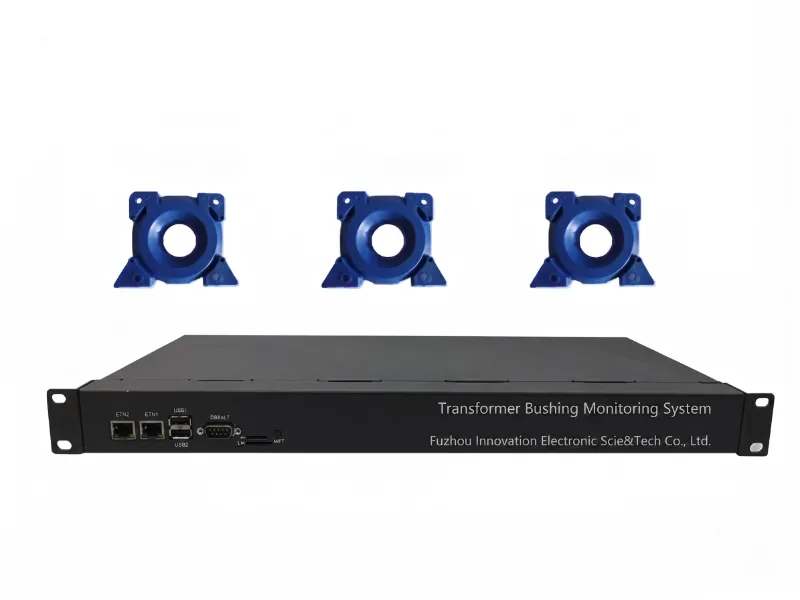
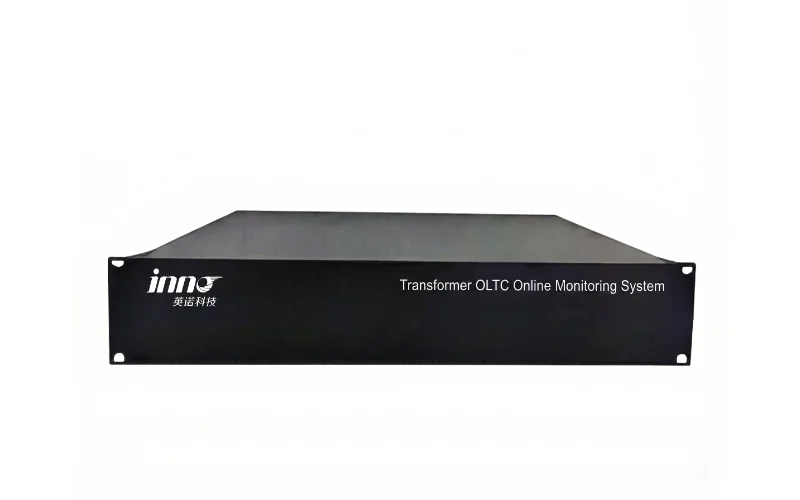
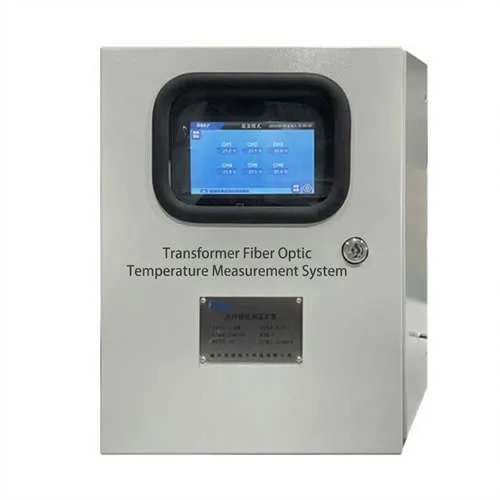
Partial Discharge Sensor Configuration
Sensor type is selected based on the transformer structure, installation access, and the PD source area being monitored. UHF, HFCT and ultrasonic sensors can be cross-checked together for higher diagnostic confidence.
| Sensor Type | Bandwidth | Installation Method | Main Purpose |
|---|---|---|---|
| UHF Partial Discharge Sensor | 300MHz – 3000MHz | Oil valve, plug-in port or tank interface | Detects ultra-high frequency electromagnetic signals from internal PD |
| HFCT Partial Discharge Sensor | 100kHz – 50MHz | Clamp-on grounding cable or bushing ground path | Detects high-frequency pulse current from PD activity |
| Ultrasonic PD Sensor | 20kHz – 200kHz | Magnetic or surface-mounted on tank | Detects acoustic emission from PD activity inside the transformer |
Standard monitoring host configuration supports 4 or 6 channels with ≤0.5dBm channel consistency, ≤20000pC monitoring range, and 200MS/s sampling rate. Exact channel count and sensor mix are configured per project — contact our engineering team for a configuration matched to your equipment.
How Online Partial Discharge Monitoring Works
Pulse Detection
UHF, HFCT, or ultrasonic sensors capture the electromagnetic, current, or acoustic signal produced by a discharge event.
Noise Filtering
Onboard signal processing separates genuine PD pulses from switching noise and external electromagnetic interference.
PRPD / PRPS Mapping
Pulses are mapped against the AC phase cycle and pulse sequence to build PRPD and PRPS diagnostic patterns.
Alarm & SCADA Output
Pattern classification and trend drive a display value, alarm relay, or RJ45 Ethernet / RS485 output to SCADA.
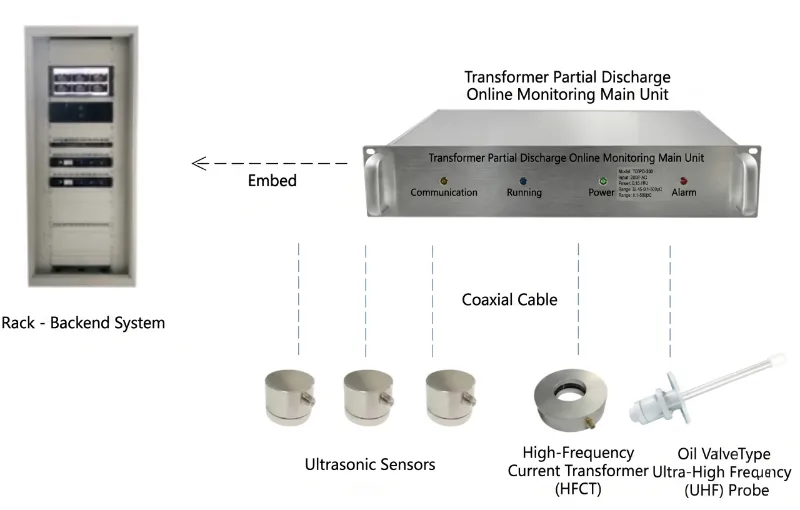
What Does a Partial Discharge Monitoring System Include?
A complete partial discharge monitoring system is built from PD sensors, a PD monitoring host, monitoring software, and a communication interface. Sensors collect discharge signals from different positions; the host samples and processes the signals; the software displays PRPD/PRPS patterns, trend curves, and alarms.
- PD sensors — UHF, HFCT and ultrasonic options for cross-checked detection
- PD monitoring host — 4 or 6-channel signal acquisition and processing
- Monitoring software — PRPD, PRPS, trend curves, alarms and historical records
- Communication interface — RJ45 Ethernet and RS485 to SCADA or asset platforms
Optional Accessories
- Control cabinet, screen cabinet or convergence cabinet for sensor routing
- IP68-rated sensor protection for outdoor or oil-immersed mounting
- Signal splitter for shared use with DGA correlation setups
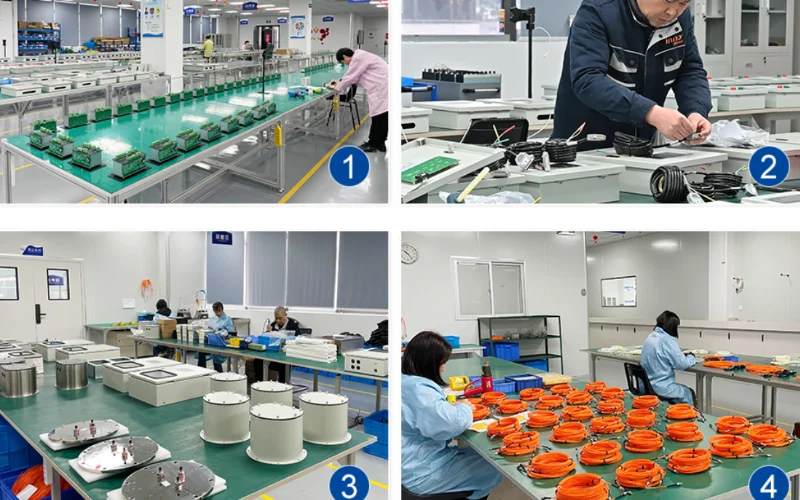
Partial Discharge Monitoring, Engineered and Customized In-House
We design and manufacture our partial discharge monitoring hardware end to end — from the UHF/HFCT/ultrasonic sensors to the monitoring host — giving us the flexibility to tailor a transformer monitoring configuration to your specific asset, voltage class, and plant-wide condition monitoring requirements.
- In-house R&D and manufacturing of PD sensors and monitoring host hardware
- Configurations tailored to voltage class, sensor mix, and channel count
- Custom enclosure ratings and mounting options for indoor, outdoor, or oil-immersed environments
- Engineering support from initial consultation through commissioning
Partial Discharge Monitoring FAQ
What is partial discharge monitoring?
Partial discharge monitoring uses UHF, HFCT, or ultrasonic sensors to continuously detect localized discharge pulses inside transformer insulation, giving an early, real-time indicator of insulation health.
What is the difference between online monitoring and a partial discharge test?
A partial discharge test on a transformer is usually a factory, commissioning or periodic maintenance check giving a result at one point in time. Online partial discharge monitoring runs continuously while the transformer stays in operation, tracking the PD trend instead of a single snapshot.
What causes partial discharge in a transformer?
Common causes include insulation voids, surface contamination, moisture ingress, manufacturing defects, and gradual insulation aging under operating voltage and stray magnetic flux.
Where does partial discharge typically develop?
The three most common source areas are the core and coil assembly, the bushing, and the on-load tap changer — each of which can be monitored with its own dedicated solution alongside PD sensing.
What sensor types are used for partial discharge monitoring?
Common sensor types include UHF sensors for electromagnetic pulses, HFCT clamps for high-frequency ground current, and ultrasonic sensors for acoustic emission on the tank surface.
Where are partial discharge sensors typically installed?
Sensors are mounted at the oil valve or tank interface for UHF sensing, on the grounding cable for HFCT sensing, or on the tank surface for ultrasonic sensing.
How does partial discharge relate to dissolved gas analysis (DGA)?
The two are complementary: partial discharge monitoring detects the electrical discharge event itself in real time, while DGA measures the fault gases that discharge activity can generate in the oil over time.
Can partial discharge monitoring be used on transformer bushings?
Yes. Bushing-level PD monitoring can be added as a standalone sensor or combined with capacitance and dielectric loss monitoring in an integrated bushing monitoring configuration.
Is partial discharge monitoring relevant to on-load tap changers (OLTCs)?
Yes. OLTC contacts can generate discharge activity as they wear, so PD sensing is often paired with current, vibration and torque monitoring for a complete OLTC health assessment.
What is a PRPD pattern?
A phase-resolved partial discharge (PRPD) pattern plots detected pulses against the AC phase cycle, and its shape helps classify the discharge source, such as a void, surface tracking, or corona.
Can partial discharge data be integrated with SCADA?
Yes. The monitoring host outputs data via RJ45 Ethernet and RS485/Modbus for integration with SCADA or centralized condition monitoring platforms.
How does partial discharge monitoring support transformer insulation health?
By tracking discharge trends continuously, operators can flag developing insulation defects at an early stage, supporting proactive maintenance instead of reacting after a failure.
Can the system distinguish between multiple discharge sources on the same asset?
Yes. Multi-channel configurations report each sensor's data independently, helping locate which part of the asset a discharge is coming from.
What output formats does the monitoring host provide to plant operators?
Readings are available as a local display value, a relay-driven alarm signal, or a digital RJ45 Ethernet / RS485 feed to a SCADA or condition monitoring platform.
Does adding a PD sensor affect the transformer's dielectric strength?
No. Sensors are designed to be non-invasively mounted at the oil valve, tank surface, or grounding cable, so they do not alter the insulation or dielectric performance of the transformer.
How often does a partial discharge sensor need maintenance?
Maintenance is generally limited to periodic checks of sensor connections and host function, since the sensors themselves have no moving parts.
Can partial discharge monitoring replace offline diagnostic testing entirely?
Online monitoring is meant to complement, not fully replace, periodic diagnostic testing — it continuously flags when and where a closer offline investigation is warranted.
What voltage classes is partial discharge monitoring used for?
PD monitoring is applied across medium- and high-voltage power transformers in substations, power plants, renewable energy stations and industrial facilities.
How is severity classified in a partial discharge monitoring system?
Severity is typically classified by discharge magnitude, phase concentration, repetition rate, and trend direction over time, with alarm thresholds configurable to the specific asset and risk tolerance.
Should partial discharge monitoring be combined with other transformer monitoring solutions?
Yes. Because PD activity is often linked to winding temperature, oil condition, bushing insulation or OLTC wear, PD monitoring is most effective when paired with our temperature, DGA, bushing or OLTC monitoring solutions rather than deployed alone.
Trusted by Utilities and Transformer Manufacturers Worldwide
Our partial discharge monitoring systems are deployed across power utilities, transformer OEMs, and industrial plants in developed markets throughout North America, Europe, and Asia-Pacific.
Continuous PD trending caught a developing void defect months before it would have shown up in our next scheduled offline test.
Utility Engineering TeamFrance
Pairing PD sensors with the DGA system gave us a much faster way to confirm whether a discharge event was actually generating fault gas.
Transformer OEMSouth Korea
Combining PD, bushing and OLTC monitoring under one platform made our insulation health reviews far more conclusive than any single measurement alone.
Grid OperatorUnited States
The UHF and HFCT sensors cross-checked each other well, and the PRPD patterns made it easy to brief our maintenance team on next steps.
Power Equipment ManufacturerGermany
Not Sure Which Partial Discharge Monitoring Configuration Fits Your Equipment?
Tell us your equipment type and the discharge sources you're concerned about — our engineering team will recommend the right sensor mix and, if useful, the complementary transformer monitoring solutions to pair it with.