

How to Detect Early Transformer Faults with Dissolved Gas Analysis
Date: 2026年11月5日 18:28:53
- Dissolved gas analysis (DGA) can identify developing thermal and electrical faults through the gases they generate in transformer oil.
- Very early faults may produce too little gas to cause an obvious concentration change.
- Gas generation rate and trend often matter more than one isolated oil sample.
- Online DGA shortens the interval between measurements and can reveal faster changes.
- Partial discharge, winding temperature, moisture and protection data can reveal abnormalities that DGA alone may not explain.
- Early fault diagnosis works best when several condition indicators are time-correlated.
Table of Contents
- How DGA Detects Early Transformer Faults
- Why Some Early Faults May Be Missed
- Which Fault Gases Matter?
- Online DGA vs Periodic Oil Sampling
- Faults That Need More Than DGA
- Combining DGA with Temperature, PD and Insulation Monitoring
- Online DGA Monitoring System
- Early Transformer Fault Detection Checklist
- FAQ
How DGA Detects Early Transformer Faults
Thermal and electrical stress break chemical bonds in mineral oil and, at higher energy levels, in cellulose insulation. The fragments recombine into gases that dissolve in the oil. Low-energy activity tends to produce hydrogen (H2) and methane (CH4). Hotter faults add ethane (C2H6) and ethylene (C2H4). Arcing can produce acetylene (C2H2), while overheated paper releases carbon monoxide (CO) and carbon dioxide (CO2).
A single list of gases says little on its own. Four things carry the diagnostic weight in transformer fault diagnosis:
- Concentration: how much of each gas is in the oil now.
- Generation rate: how quickly each gas is increasing.
- Gas pattern: which gases rise together, and in what proportion.
- Trend over time: whether the change is a step, a plateau or an accelerating climb.
For a wider look at gas formation and interpretation methods, see our article on dissolved gas analysis in transformers. CO and CO2 also come from normal ageing, so their meaning depends on trend and context.
Why Some Early Faults May Be Missed
Incipient transformer faults are small by definition. A fault can be real and still leave a signature too faint to stand out from the background gas already in the oil. The reasons are mostly physical, not a weakness of the method.
| Reason | Why DGA May Show a Weak Signal | What Else to Check |
|---|---|---|
| Low-energy discharge | Small gas increase that can stay inside normal scatter | PD trend, repeated DGA |
| Localized overheating | Slow thermal gas growth | Temperature, load, cooling |
| Intermittent fault | Gas generation stops between events | Online trend, protection events |
| Long sampling interval | A rapid event may start and develop between two samples | Online DGA, event logs |
| Gas dilution and oil circulation | Gas mixes into a large oil volume, and circulation changes how fast it spreads | Cooling mode, pump status, sampling point |
| Fault location and transformer design | Gas from a fault deep in the winding structure may take time to reach the sampled oil | Design review, other sensors |
| Measurement sensitivity and baseline variation | Small changes can hide inside analyzer accuracy or normal lab-to-lab scatter | Same-method comparison, longer trend |
Slow gas generation is the quietest case. A hot spot producing a little ethylene per week can take months to separate from the baseline, and a once-a-year sample may never show the slope at all.
None of this makes DGA unreliable. It means early-stage sensitivity has practical limits, and a flat result at one sampling date does not prove the insulation system is quiet. Depending on transformer design, some faults take longer than others to leave a readable trace in the oil.
Which Fault Gases Matter?
Hydrogen often appears first because the molecule is small and forms under many types of stress, including partial discharge and general overheating. Rising hydrogen is a prompt to look at the other gases, not a verdict.
Methane, ethane and ethylene follow thermal severity. Methane and ethane are often associated with lower-temperature overheating, while ethylene becomes more prominent as temperature rises. The ratios between them, and how those ratios move over time, say more than any single value.
Acetylene deserves attention because it is often associated with very high temperatures or arcing. It still requires interpretation with the other gases and the trend: a trace amount that stays flat reads differently from one that keeps increasing. CO and CO2 point toward cellulose involvement, though both also accumulate through ordinary ageing.
Interpretation frameworks such as IEC 60599, IEEE C57.104 and the Duval Triangle help turn gas patterns into fault categories. No universal ppm alarm threshold fits every unit, because age, design, loading history and previous oil treatment all shift what is normal for a given transformer.
Online DGA vs Periodic Oil Sampling
Periodic sampling gives discrete snapshots. Online DGA gives a continuous or high-frequency record. A developing fault can change significantly between two laboratory sampling dates, and the lab data alone will not show how or when.
What online measurement adds:
- Trend and rate of change, not just a level.
- Event detection when gas generation jumps after a through-fault, a switching operation or a load swing.
- Remote alarm for unattended sites.
- Historical comparison against the unit's own baseline.
The practical trade-offs are laid out in our comparison of online DGA vs oil sampling. Online DGA does not replace laboratory analysis. Lab work remains the reference method, and it covers oil quality parameters an online unit does not. Most engineers use both, with the lab confirming any alarm.
Not every transformer needs continuous gas monitoring. Criticality, age and warning history decide that, as covered in our guide to online transformer DGA monitoring.
Faults That Need More Than DGA
DGA mainly reflects oil and insulation decomposition tied to thermal and electrical activity. Several abnormal conditions either leave little gas or need another measurement to explain the gas that does appear.
| Condition | DGA Value | Additional Monitoring |
|---|---|---|
| Early PD | May show H2 changes, but the signal can be weak | PD monitoring |
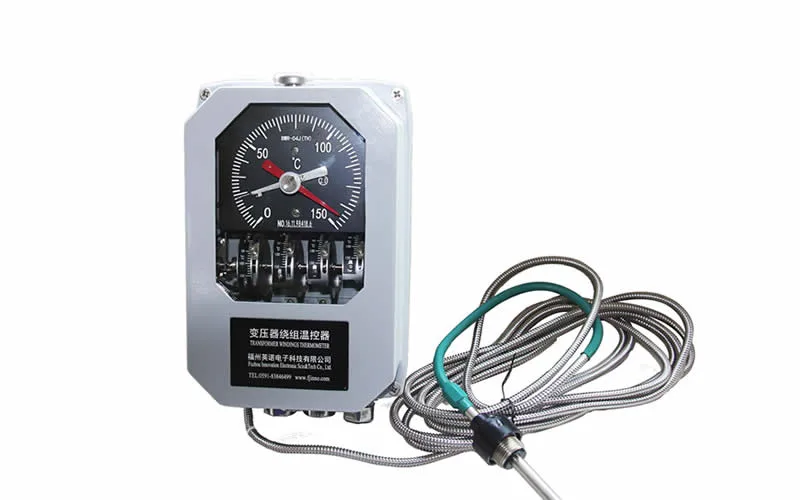
| Winding overheating | Thermal gases may develop | Hot-spot temperature monitoring |
| Cooling degradation | May indirectly affect gas generation | Temperature and cooling monitoring |
| Moisture | Not diagnosed by fault gas alone | Moisture-in-oil monitoring |
| Bushing condition | Limited, unless the defect reaches the main tank oil | Bushing monitoring |
| OLTC condition | Switching gases can complicate main-tank interpretation if oil systems communicate | OLTC monitoring |
| Mechanical abnormalities | May produce no distinctive gas pattern | Electrical and mechanical diagnostic tests |
Each method supplies different evidence. PD monitoring does not replace DGA, and DGA does not replace PD monitoring.
Combining DGA with Temperature, PD and Insulation Monitoring
A rising ethylene trend means more when top-oil and winding temperatures climbed at the same time, and less when load was flat and the cooling system healthy. Hydrogen growth means more when a PD sensor is logging activity during the same weeks. Parameters read together (DGA, temperature, PD, moisture, load, protection records) narrow the list of possible explanations quickly.
A workable review sequence:
DGA Trend → Temperature / Load Correlation → PD / Alarm Cross-Check → Condition Assessment → Maintenance Priority
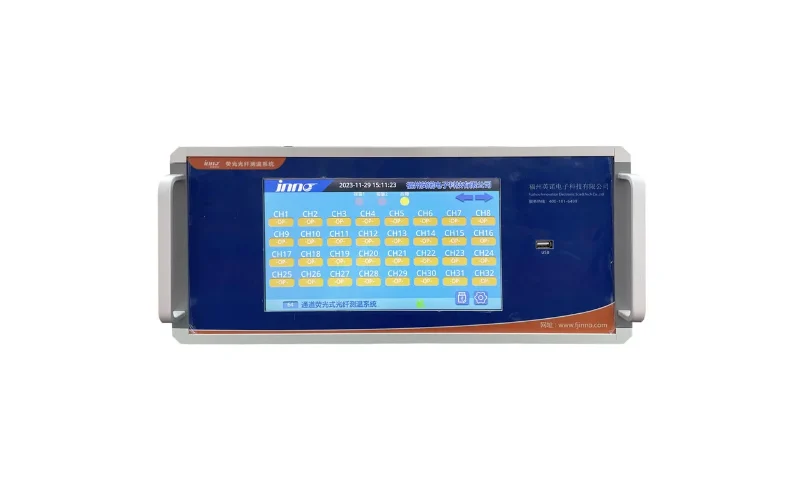
When gases point to a thermal fault, direct transformer winding hot-spot monitoring can show whether winding temperature supports the suspicion. When hydrogen leads, transformer partial discharge monitoring can show whether discharge activity is present. Neither confirms a diagnosis alone. They shift the weight of evidence.
That layered view is the core of transformer condition monitoring: sensors that measure different physical effects, with data aligned on one time axis so the engineer sees what changed together.
Online DGA Monitoring System
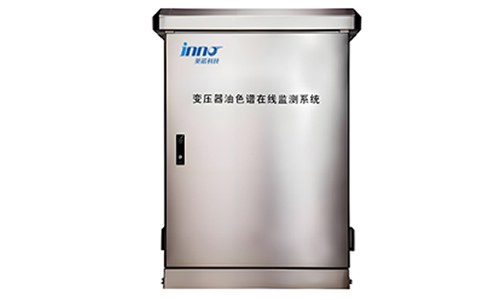
An online DGA monitoring system extracts gas from circulating oil and analyzes it automatically on site. The figures below come from the INNOFZ product page.
| Parameter | Specification | Why It Matters for Early Fault Detection |
|---|---|---|
| Detected gases | H2, CH4, C2H6, C2H4, C2H2, CO, CO2 | Covers both oil and cellulose decomposition |
| Lowest detection limits | C2H2: 0.1 μL/L; CH4, C2H6, C2H4: 0.5 μL/L; H2: 2 μL/L | Sets how small a change the analyzer can resolve |
| Sampling cycle | Adjustable, minimum ≤ 2 hours | Shortens blind intervals between measurements |
| Analysis method | Gas chromatography (TCD / FID); dynamic vacuum membrane degassing | Laboratory-style separation of individual gases |
| Communication | RS-485 (MODBUS RTU/TCP), IEC 61850, RJ-45 Ethernet; optional 4–20 mA | Puts gas trends into SCADA next to other data |
| Data storage | ≥ 10 years on-board | Supports long baselines and slow-trend review |
| Moisture in oil | Optional, 1–100 μL/L | Adds an insulation indicator that fault gas cannot show |
As the page describes it, the unit installs on an energized transformer through the oil valves. A transformer DGA monitor still needs lab confirmation at commissioning and when alarms occur, and it works best as one input to the wider picture described above.
Early Transformer Fault Detection Checklist
| Check | Why It Matters |
|---|---|
| Review the DGA trend, not one reading | One value cannot separate a fault from normal scatter |
| Compare gas generation rates | A fast-rising small value can matter more than a stable high one |
| Review transformer load | Gas changes often follow loading changes |
| Compare top-oil and winding temperatures | Tests whether a thermal explanation fits |
| Check PD alarms | Hydrogen growth may have an electrical cause |
| Review moisture data | Water affects insulation behavior and ageing rate |
| Check protection relay history | Through-faults and trips can explain sudden gas steps |
| Compare with previous laboratory results | Verifies analyzer offset and long-term direction |
| Look for sudden multi-parameter changes | Simultaneous movement across indicators carries more weight |
| Assess transformer age and criticality | Sets how quickly follow-up should happen |
FAQ
Can DGA miss early transformer faults?
Yes, it can. Very low-energy faults, slow gas generation, long sampling intervals and fault location can all keep early gas signals below what a single sample reveals. Trending and shorter measurement intervals reduce that risk.
Which transformer faults are hardest to detect with DGA?
Early partial discharge, intermittent faults, and conditions that generate little gas, such as some mechanical or moisture-related problems, tend to be harder to see in DGA alone. Other monitoring methods fill those gaps.
Is online DGA better than periodic oil sampling?
Online DGA gives denser data and faster alarms. Periodic laboratory sampling gives reference-grade results and a broader oil test suite. The two complement each other.
What monitoring methods should be used with DGA?
Winding and oil temperature, partial discharge, moisture in oil, load data and protection records are the usual companions. Bushing and OLTC monitoring add coverage where those components matter.