

Jauge de température de l'huile de transformateur vs jauge de température des enroulements : principales différences et choix
发布时间:6 septembre 2026, 15 h 45 min 30 s
- Transformer oil temperature gauge (OTI) measures or indicates insulating oil temperature, typically top-oil temperature, while a winding temperature gauge (WTI) represents transformer winding thermal conditions.
- OTI and WTI are not interchangeable. Many oil-immersed power transformers use both because oil temperature and winding temperature provide different information about transformer thermal condition.
- A conventional WTI normally provides a thermal image or calculated indication of winding temperature rather than directly measuring the hottest conductor inside the winding.
- For direct transformer winding hot-spot measurement, embedded capteurs de température à fibre optique can be installed at selected winding locations.
- When replacing an OTI or WTI, check temperature range, sensing arrangement, alarm contacts, trip contacts, cooling control, remote output, mounting and communication requirements before selecting a model.
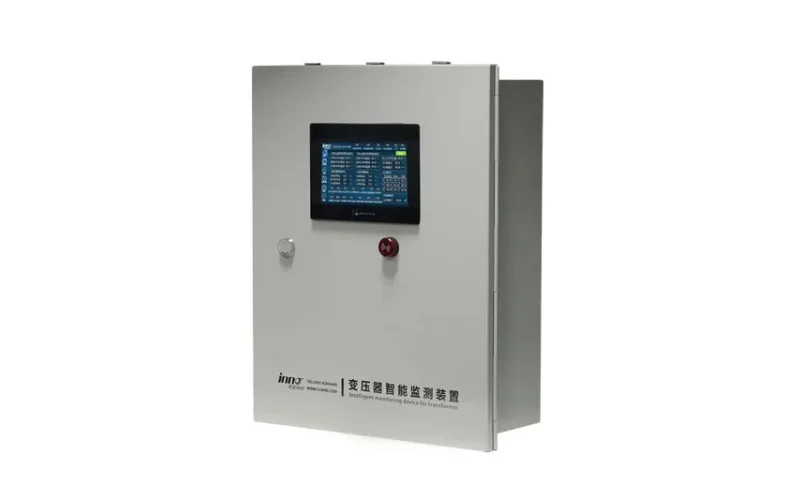
- For transformers requiring oil temperature, winding temperature and direct hot-spot monitoring in one architecture, consider a complete transformer temperature monitoring solution.
When engineers compare a transformer oil temperature gauge vs winding temperature gauge, the key question is not which instrument is better. The correct question is: which transformer temperature must be monitored, and what control or protection functions are required?
Oil temperature indicators and winding temperature indicators are both widely used on oil-immersed transformers, but they perform different functions. Selecting the wrong device can result in incomplete thermal information, incorrect replacement, or missing alarm and cooling-control functions.
This guide explains the practical differences between OTI and WTI, how each device works, when both are required, and when direct fiber optic winding temperature monitoring should be considered.
Table of Contents
- 1. Transformer Oil Temperature Gauge vs Winding Temperature Gauge
- 2. What Is a Transformer Oil Temperature Indicator (OTI)?
- 3. What Is a Transformer Winding Temperature Indicator (WTI)?
- 4. OTI vs WTI: Key Differences in Transformer Temperature Monitoring
- 5. OTI and WTI Alarm, Trip and Cooling Control Functions
- 6. WTI vs Fiber Optic Winding Temperature Measurement
- 7. How to Select OTI or WTI for a Transformer
- 8. Transformer OTI and WTI Replacement Guide
- 9. Frequently Asked Questions About OTI and WTI
1. Transformer Oil Temperature Gauge vs Winding Temperature Gauge
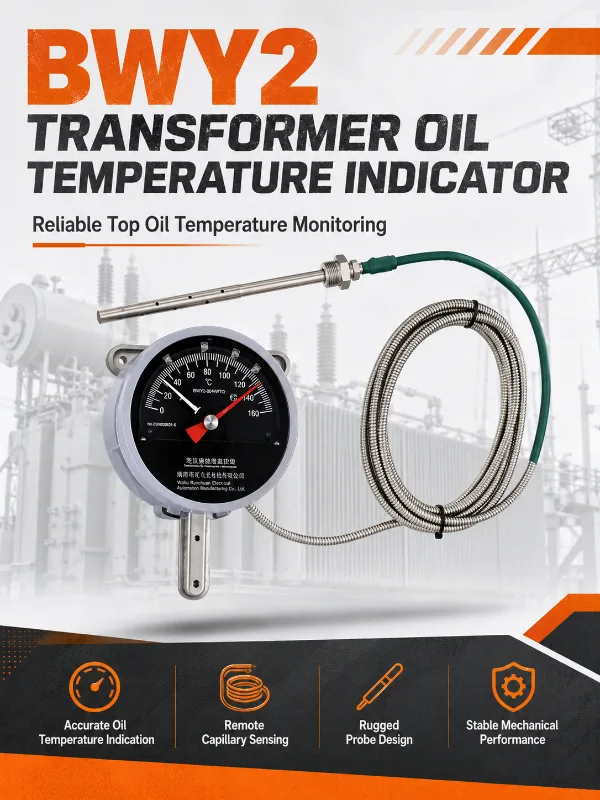
The main difference between a transformer oil temperature gauge and a transformer winding temperature gauge is the thermal condition they represent.
An oil temperature indicator (OTI) monitors transformer insulating oil temperature. A winding temperature indicator (WTI) is intended to indicate the thermal condition of the transformer winding and is commonly connected with cooling, alarm and trip functions.
| Comparaison | Oil Temperature Indicator (OTI) | Indicateur de température des enroulements (WTI) |
|---|---|---|
| Primary Parameter | Température de l'huile du transformateur | Transformer winding thermal condition |
| Common Abbreviation | OTI | WTI |
| Typical Measurement | Top-oil temperature | Winding temperature indication / thermal image |
| Contrôle du refroidissement | Available depending on model and configuration | Common application |
| Alarm Contacts | Available depending on model | Available depending on model |
| Trip Function | Possible depending on configuration | Commonly specified for winding over-temperature protection |
| Direct Winding Hot-Spot Measurement | No | Normally no for conventional WTI |
| Installation type | Oil-immersed transformer | Oil-immersed transformer |
For many power transformers, using both OTI and WTI provides better thermal information than relying on only one indicator.
2. What Is a Transformer Oil Temperature Indicator (OTI)?
2.1 Transformer Oil Temperature Gauge Working Principle
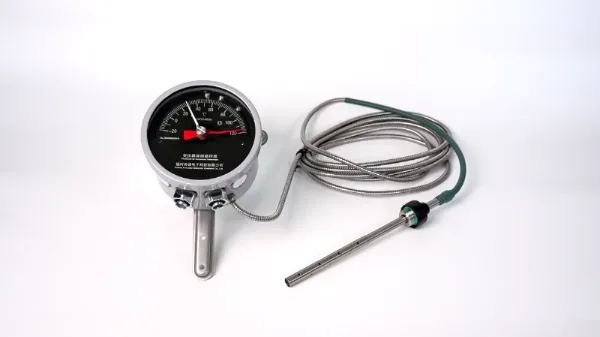
A indicateur de température de l'huile de transformateur is used to indicate the temperature of insulating oil, commonly the top-oil temperature of an oil-immersed transformer.
The sensing element is installed where it can respond to transformer oil temperature. The indicator then displays the measured temperature and, depending on the device configuration, may also provide electrical contacts or remote transmission outputs.
Oil temperature is an important transformer operating parameter because it reflects the overall thermal condition of the oil and cooling system.
2.2 What Does a Transformer OTI Monitor?
An OTI can help operators identify conditions such as:
- Increasing transformer oil temperature
- High loading conditions
- Reduced cooling performance
- High ambient temperature
- Abnormal thermal trends
However, oil temperature should not be interpreted as the actual winding hot-spot temperature. Local winding temperatures can be higher than the surrounding oil temperature.
2.3 Transformer Oil Temperature Indicator Products
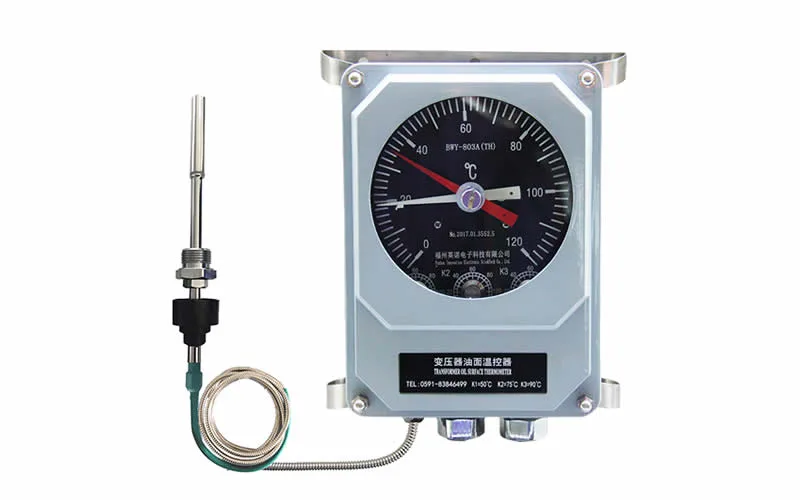
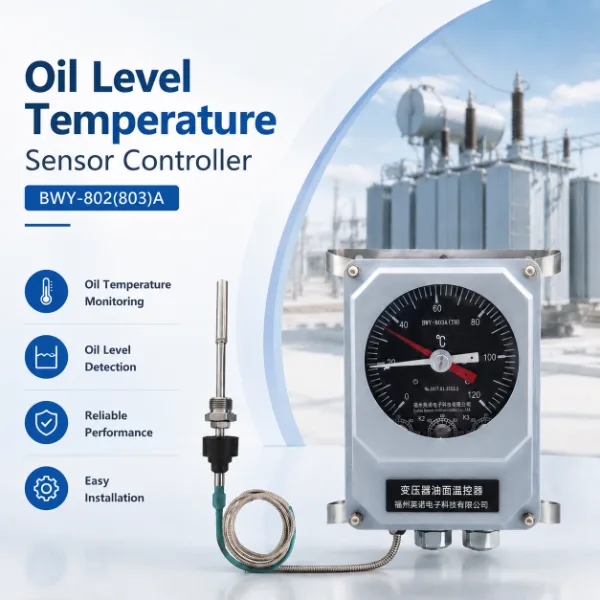
For conventional oil-temperature indication, INNO provides products including the BWY2 transformer oil temperature indicator et BWY-802/803A transformer oil temperature indicator.
If a project also needs transformer oil level and pressure monitoring, see the transformer oil temperature, level and pressure monitoring system.
3. What Is a Transformer Winding Temperature Indicator (WTI)?
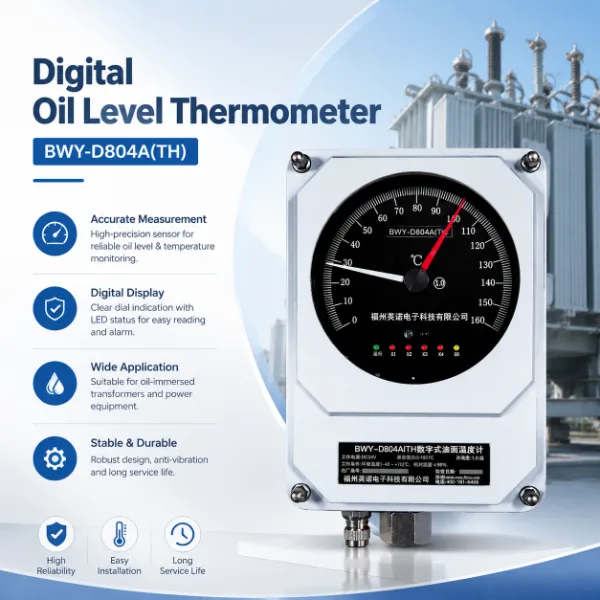
3.1 Transformer Winding Temperature Gauge Working Principle
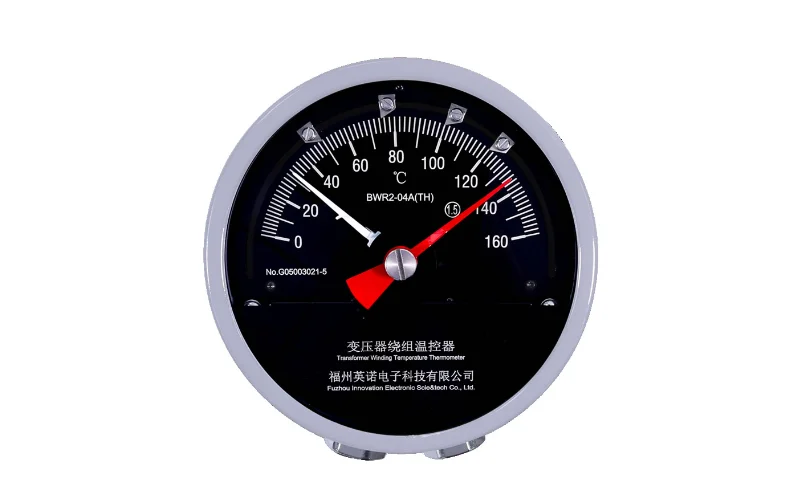
A indicateur de température des enroulements d'un transformateur is used to indicate the thermal condition of transformer windings.
In many conventional oil-immersed transformer designs, the WTI does not contain a sensor physically embedded at the hottest conductor location. Instead, the system produces a thermal representation of winding temperature based on transformer oil temperature together with a load-related heating effect.
This is why a conventional WTI should not automatically be described as a direct winding hot-spot sensor.
3.2 What Is a WTI Used For?
A transformer WTI can be used for several functions:
- Winding temperature indication
- Cooling fan control
- Oil pump control
- High-temperature alarm
- High-high temperature alarm
- Transformer trip signal
- Remote temperature transmission
The exact functions depend on the selected WTI model and project configuration.
3.3 Transformer Winding Temperature Indicator Products
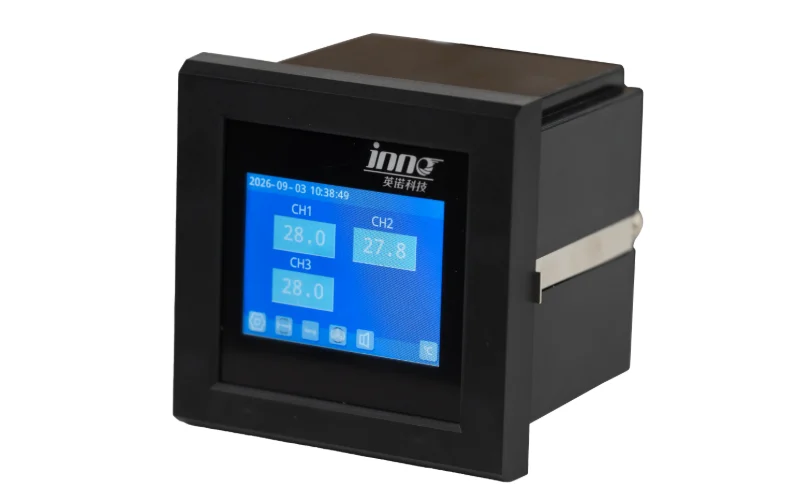
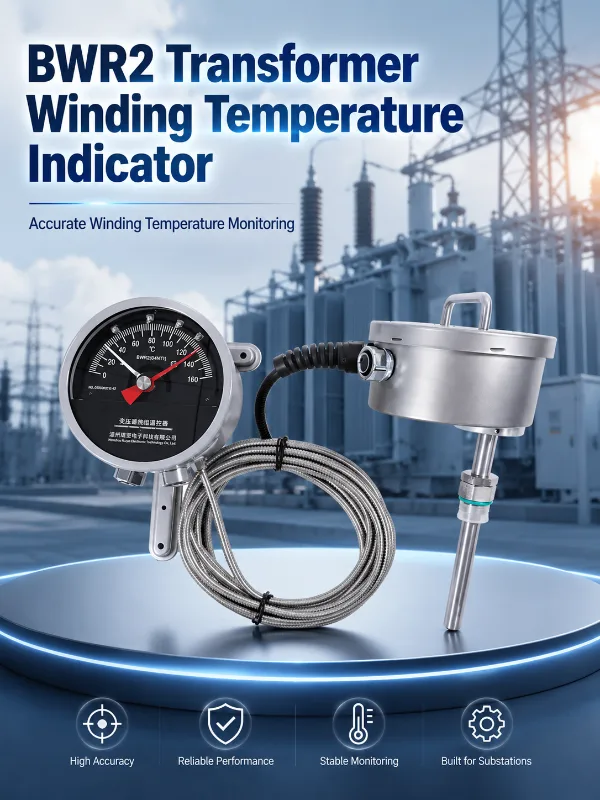
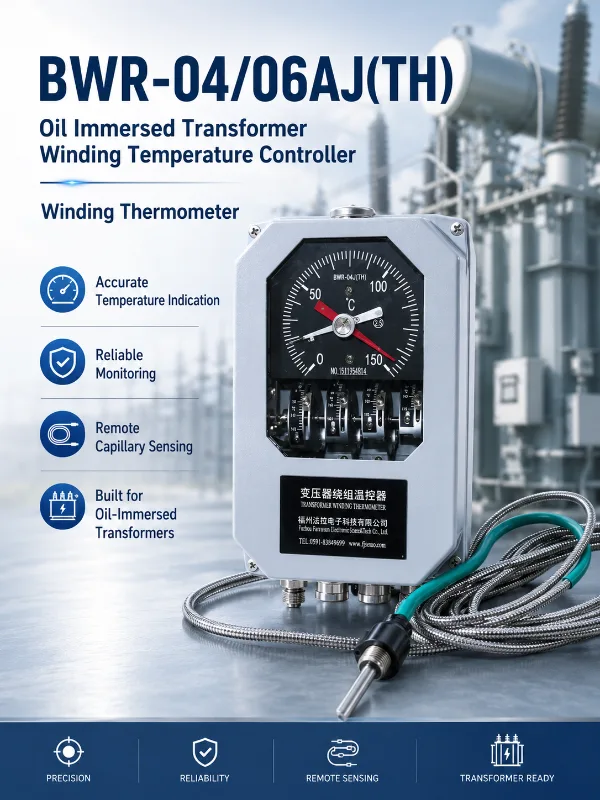
For conventional transformer winding temperature indication, INNO provides the Indicateur de température des enroulements du transformateur du réacteur BWR2 et BWR-04/06AJTH transformer winding temperature indicator.
These product categories are particularly relevant for transformer manufacturers, utilities and retrofit projects that require winding temperature indication together with alarm, cooling-control or remote monitoring functions.
4. OTI vs WTI: Key Differences in Transformer Temperature Monitoring
4.1 Top-Oil Temperature vs Winding Temperature
The most important difference between OTI and WTI is that they represent different parts of the transformer thermal system.
OTI: focuses on transformer oil temperature.
WTI: focuses on winding thermal condition.
As transformer loading increases, winding temperature can change more rapidly than bulk oil temperature. Oil has significant thermal mass, so its temperature response may lag behind changes inside the winding.
4.2 Why a Transformer May Need Both OTI and WTI
Using both indicators allows operators to compare the overall oil thermal condition with the winding thermal condition.
This is particularly useful for:
- Transformateurs de puissance
- Substation transformers
- Generator step-up transformers
- Industrial transformers
- Transformers operating under variable load
- Transformers using staged cooling systems
A wider power transformer monitoring system can combine temperature information with other transformer condition parameters.
4.3 OTI vs WTI Selection Summary
| Monitoring Requirement | Recommended Device |
|---|---|
| Transformer top-oil temperature | OTI |
| Conventional winding temperature indication | WTI |
| Cooling fan control based on winding thermal condition | WTI |
| Oil over-temperature alarm | OTI |
| Winding over-temperature alarm / trip | WTI |
| Direct winding hot-spot temperature | Embedded fiber optic sensor |
| Multi-point direct winding temperature | Multi-channel fiber optic monitoring system |
5. OTI and WTI Alarm, Trip and Cooling Control Functions
5.1 Transformer Temperature Alarm Contacts
Oil and winding temperature indicators can be supplied with configurable electrical contacts depending on model.
These contacts may be used for:
- High oil-temperature alarm
- High winding-temperature alarm
- Cooling fan start
- Cooling fan stop
- Cooling pump control
- High-high temperature alarm
- Transformer trip
Before ordering an OTI or WTI, engineers should define the required number of switching contacts and the function of each contact.
5.2 Transformer WTI Alarm and Trip Settings
Alarm and trip settings should be based on the transformer manufacturer's thermal limits, insulation system, cooling design and protection philosophy.
There is no single winding temperature alarm or trip value that should be applied to every transformer.
If you need more detail about temperature protection settings, see transformer winding temperature alarm and trip settings.
5.3 Transformer Cooling Fan and Pump Control
WTI devices are frequently used as part of staged transformer cooling control.
A typical sequence may be:
Normal Operation → Cooling Start → High Temperature Alarm → Trip
The temperature indicator therefore performs more than a display function. In many transformer applications, it is an important part of the cooling and protection control circuit.
6. WTI vs Direct Fiber Optic Winding Temperature Measurement
6.1 Does a WTI Directly Measure Transformer Winding Temperature?
Not necessarily. A conventional WTI commonly provides a thermal image or simulated indication of winding temperature instead of physically measuring the hottest point inside the transformer winding.
This is sufficient for many conventional transformer protection and cooling-control applications.
However, some critical transformers require direct measurement of actual winding temperatures.
6.2 Direct Transformer Winding Hot-Spot Measurement
For direct measurement, capteurs de température à fibre optique can be embedded at selected winding locations during transformer manufacturing or major refurbishment.
Because the sensing point is optical and electrically passive, fiber optic sensing is well suited to high-voltage and strong electromagnetic environments.
For direct measurement applications, see the fiber optic temperature sensor for transformer winding hot-spot monitoring.
Another option for embedded winding measurement is the polyimide fiber optic temperature sensor for transformer windings.
6.3 WTI vs Fiber Optic Temperature Sensor Comparison
| Feature | Conventional WTI | Fiber Optic Sensor |
|---|---|---|
| Indication de la température des enroulements | Oui | Oui |
| Direct Measurement at Sensor Location | Normally no | Oui |
| Embedded in Winding | Normally no | Oui |
| Contrôle du refroidissement | Common | Available through monitoring system |
| Alarm / Trip | Common depending on configuration | Available through interrogator / monitoring system |
| Multi-Point Measurement | Limited by device architecture | Well suited to multi-point measurement |
| High-Voltage EMI Immunity at Sensing Point | Depends on measurement arrangement | Excellent |
| Typical Application | Conventional monitoring, control and retrofit | Direct winding hot-spot monitoring |
6.4 When Should You Choose Fiber Optic Winding Temperature Monitoring?
Direct fiber optic sensing should be considered when the project requires:
- Actual internal winding temperature measurement
- Transformer hot-spot verification
- Multiple winding temperature points
- High-voltage electrical isolation
- Strong electromagnetic interference immunity
- Continuous direct temperature data
- Integration with digital transformer monitoring
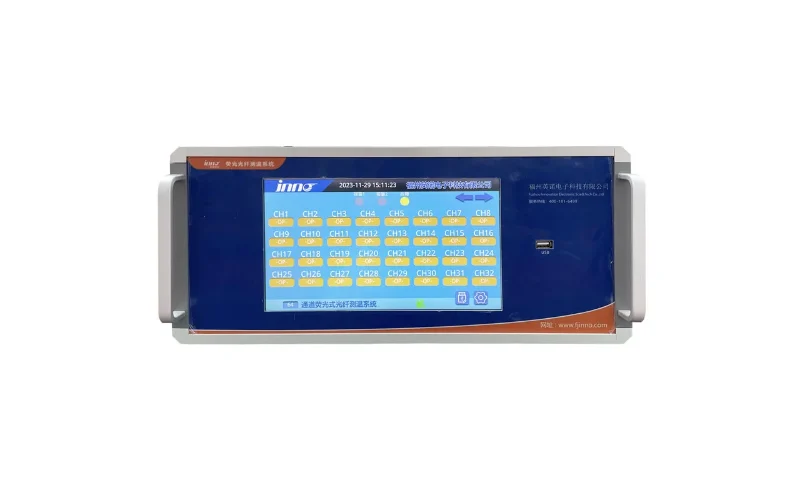
For applications requiring several temperature points, see the multi-channel fiber optic temperature measurement and monitoring system.
7. How to Select OTI or WTI for Transformer Temperature Monitoring
7.1 Choose an OTI When Oil Temperature Is the Main Requirement
An oil temperature indicator is the appropriate starting point when the requirement is primarily:
- Top-oil temperature indication
- Oil over-temperature alarm
- Local transformer temperature display
- Replacement of an existing oil temperature gauge
In this case, review INNO's indicateur de température de l'huile de transformateur options.
7.2 Choose a WTI When Winding Temperature and Cooling Control Are Required
A winding temperature indicator is more appropriate when the transformer requires:
- Winding thermal indication
- Cooling fan or pump control
- Winding temperature alarm
- High-temperature trip
- Replacement of an existing WTI
For this application, see the BWR2 winding temperature indicator.
7.3 Choose Both OTI and WTI When Both Thermal Parameters Matter
Many oil-immersed transformers benefit from both oil and winding temperature information.
Using both allows operators to compare oil thermal condition with winding thermal condition and provides more complete input for cooling and protection decisions.
7.4 Choose Fiber Optic Sensors When Direct Winding Temperature Is Required
If the project specification requires direct hot-spot temperature rather than conventional winding thermal indication, an embedded fiber optic system is more appropriate than relying only on a WTI.
For dedicated applications, see transformer winding hot-spot monitoring.
7.5 Choose an Online Monitoring System for Remote and Multi-Parameter Monitoring
If the requirement extends beyond a local dial indicator, consider whether the project also needs:
- Remote temperature transmission
- Multiple temperature channels
- 4–20 mA output
- RS485 communication
- Modbus integration
- PLC or DCS integration
- SCADA monitoring
- Alarm event recording
- Temperature trending
In these projects, a complete système de surveillance de la température des transformateurs may be more suitable than a standalone OTI or WTI.
8. Transformer OTI and WTI Replacement Guide
8.1 Replacing an Existing Transformer Oil Temperature Gauge
When replacing an OTI, do not select a new device based only on the temperature range.
Provide the supplier with:
- Existing OTI manufacturer and model
- Nameplate photograph
- Plage de températures
- Probe or sensing arrangement
- Capillary requirements, if applicable
- Mounting dimensions
- Number of alarm contacts
- Cooling-control requirements
- Remote output requirements
8.2 Replacing an Existing Transformer Winding Temperature Gauge
A WTI replacement requires additional attention because the device may be connected to the transformer cooling and protection circuits.
Check:
- Existing WTI model
- Temperature indication range
- CT or thermal-image arrangement
- Number of relay contacts
- Fan start and stop requirements
- Alarm contact settings
- Trip contact requirements
- 4–20 mA output requirements
- Remote communication requirements
- Mechanical installation dimensions
For replacement projects, products such as the BWR-04/06AJTH transformer winding temperature indicator can be evaluated according to the existing transformer requirements.
8.3 When Should an OTI or WTI Replacement Become a Monitoring Upgrade?
Replacing an old mechanical or analog indicator with another standalone device may be sufficient when the existing monitoring architecture still meets operating requirements.
However, an upgrade should be considered if the operator now requires:
- Remote temperature monitoring
- Digital data acquisition
- PLC / SCADA integration
- Temperature trend analysis
- More alarm channels
- Multiple winding measurement points
- Direct transformer hot-spot monitoring
For oil-immersed transformers requiring a broader monitoring architecture, see the oil-immersed transformer monitoring application.
8.4 OTI and WTI RFQ Checklist
Providing complete technical information can significantly reduce model-selection errors and quotation time.
| RFQ Information | What to Provide |
|---|---|
| Type de transformateur | Oil immersed / power transformer / distribution transformer |
| Transformer Rating | kVA or MVA |
| Voltage Class | HV / LV voltage |
| Required Device | OTI / WTI / both / online monitoring |
| Existing Model | Brand, model and nameplate photo |
| Plage de températures | Required indication range |
| Alarm Contacts | Quantity and function |
| Résultats du voyage | Required / not required |
| Contrôle du refroidissement | Fan / pump stages |
| Analog Output | 4–20 mA or other |
| Communication | RS485 / Modbus / other |
| Intégration de systèmes | PLC / DCS / SCADA |
| Project Type | New transformer / retrofit / replacement |
If you are replacing an existing OTI or WTI, send the model number, nameplate photo, wiring diagram and required outputs through the INNO contact page for model selection and quotation.
9. Frequently Asked Questions About Transformer OTI and WTI
9.1 What is the difference between OTI and WTI in a transformer?
OTI indicates transformer oil temperature, while WTI indicates the winding thermal condition. They monitor different parts of the transformer thermal system and are not direct substitutes for one another.
9.2 Is winding temperature higher than transformer oil temperature?
Winding temperature can be higher than bulk or top-oil temperature because electrical losses generate heat directly in the winding. Local winding hot spots can be higher again than the average winding thermal condition.
9.3 Does a transformer need both OTI and WTI?
Many oil-immersed power transformers use both. OTI provides oil-temperature information, while WTI provides winding thermal indication and is commonly used for cooling, alarm and trip functions.
9.4 Can an OTI be used instead of a WTI?
Not when winding thermal indication is specifically required. Oil temperature does not provide the same information as winding temperature.
9.5 Does a WTI measure the actual winding hot spot?
A conventional WTI normally does not directly measure the physical hottest conductor location. If direct internal hot-spot measurement is required, embedded fiber optic temperature sensors should be considered.
9.6 What is the difference between WTI and a fiber optic temperature sensor?
A conventional WTI provides winding thermal indication and is commonly used for transformer cooling and protection. A fiber optic sensor directly measures temperature at the specific location where the optical probe is installed inside the winding.
9.7 Which is better for transformer hot-spot monitoring?
If actual winding hot-spot temperature is required, embedded fiber optic sensing provides direct point measurement. If the requirement is conventional winding indication, fan control, alarm and trip, a WTI may be sufficient.
9.8 Can transformer OTI and WTI connect to SCADA?
Remote integration depends on the selected instrument and output configuration. Projects may require relay contacts, 4–20 mA, RS485 or Modbus communication. These requirements should be specified before ordering.
9.9 Can I replace an old transformer WTI with another brand?
Potentially, but compatibility must be checked. Compare the sensing arrangement, temperature range, contact functions, mounting, wiring, cooling-control requirements and remote outputs before selecting a replacement.
9.10 What information should I send when requesting an OTI or WTI quotation?
Send the transformer type and rating, existing OTI/WTI model, nameplate photograph, temperature range, required contacts, cooling functions, 4–20 mA or communication requirements, and whether the project is a new installation or replacement.
How to Choose the Right Transformer Temperature Monitoring Solution
The choice between a transformer oil temperature gauge and winding temperature gauge should be based on the actual monitoring objective.
- Choose OTI when the main requirement is transformer oil or top-oil temperature indication.
- Choose WTI when winding thermal indication, cooling control, alarm or trip functions are required.
- Choose both OTI and WTI when oil and winding thermal conditions need to be monitored separately.
- Choose fiber optic temperature sensors when direct winding hot-spot measurement is required.
- Choose a multi-channel online monitoring system when several temperature points must be transmitted to PLC, DCS or SCADA.
For a complete transformer thermal monitoring architecture, explore the transformer temperature monitoring solution, winding hot-spot monitoring application et multi-channel fiber optic temperature monitoring system.
Need help selecting or replacing a transformer OTI, WTI or winding temperature monitoring system? Send your existing model, transformer rating, monitoring requirements and output requirements through Contact INNO for configuration and quotation.
Related Transformer Temperature Monitoring Products
- Indicateur de température de l'huile de transformateur BWY2
- BWY-802/803A Transformer Oil Temperature Indicator
- Indicateur de température des enroulements du transformateur BWR2
- BWR-04/06AJTH Transformer Winding Temperature Indicator
- Fiber Optic Temperature Sensor for Transformer Winding Hot-Spot Monitoring
- Capteur de température à fibre optique en polyimide pour les enroulements de transformateurs
- Système multicanal de mesure et de surveillance de la température par fibre optique
- Solutions de surveillance de la température des transformateurs