
Surveillance de la température des transformateurs à sec
Monitor winding temperature, critical hot spots and thermal conditions in dry-type transformers using PT100 sensors and direct fiber optic temperature sensing.
Select the sensing method according to winding structure, measurement location, insulation requirements, electromagnetic environment and project objectives.
Why Winding Temperature Matters
Dry-type transformer temperature monitoring is largely built around winding thermal stress caused by loading, uneven load, cooling degradation, restricted airflow and thermal aging.
Unlike oil-immersed transformers, dry-type transformers do not rely on insulating oil for heat transfer, making winding temperature one of the most important operating indicators.
Temperature monitoring provides important thermal information and helps operators identify developing overheating conditions.
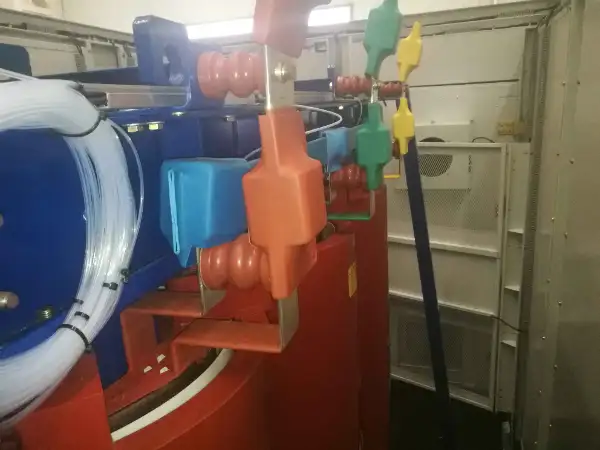
Where Should Temperature Be Measured?
- Windings — winding temperature, localized hot spots and phase-to-phase thermal differences.
- Core — additional thermal monitoring may be used where core heating is a concern.
- Connections & Terminals — temperature monitoring can help identify abnormal localized heating around electrical connections.
- Cooling Air & Enclosure — air and enclosure temperature can provide additional information about airflow and cooling conditions.
The most useful sensing locations depend on transformer construction, winding design, available sensor positions and the thermal risks that need to be monitored.
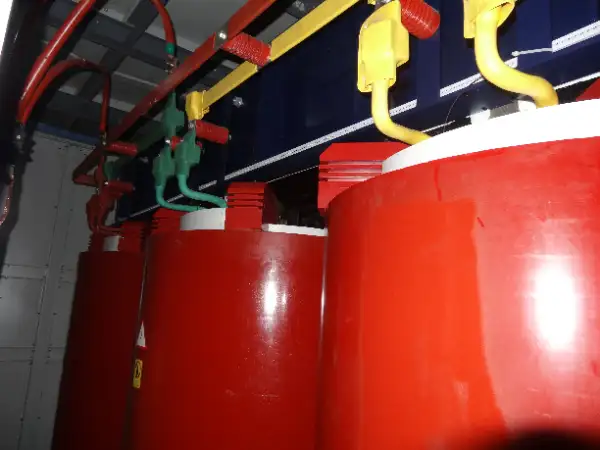
PT100 for Conventional Winding Temperature Monitoring
PT100 resistance temperature sensors are widely used for conventional winding temperature monitoring, three-phase comparison, alarm and protection logic, cooling fan control, and as an input for existing transformer temperature monitoring systems.
- Conventional winding monitoring
- Alarm and cooling control
- Existing PT100-based installations
- Standard dry-type transformer temperature control
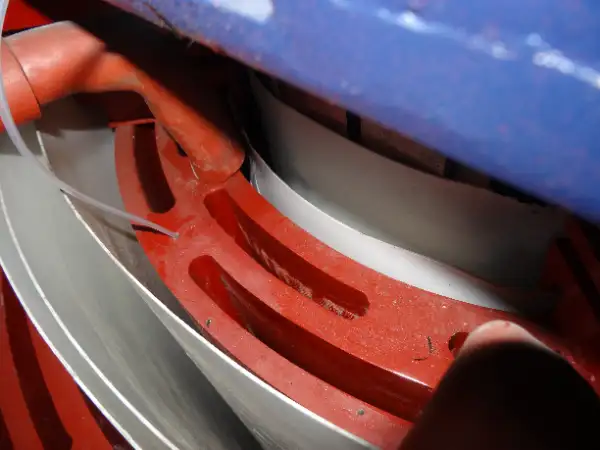
Mesure directe des points chauds par enroulement de fibre optique
Fiber optic sensors enable direct temperature measurement at selected winding locations without introducing conductive sensing elements at the measurement point — useful for internal hot spots, high-voltage locations, strong EMI environments and multi-point internal winding measurement, particularly when planned during transformer manufacturing.
- Critical winding hot spots
- High-voltage sensing locations
- Environnements à forts champs électromagnétiques
- New transformer embedded sensing
- Multi-point direct winding measurement
PT100 vs Fiber Optic: Which Should You Use?
| Exigence | PT100 | Fiber Optic |
|---|---|---|
| Conventional winding monitoring | Suitable | Suitable |
| Existing transformer design | Common choice | Depends on construction and sensor access |
| Critical hot spot monitoring | Depends on sensor location | Well suited for selected internal locations |
| High-voltage sensing | Installation dependent | Suitable for electrically passive sensing |
| EMI environment | Requires suitable installation | Strong immunity to interference |
| Cooling control | Commonly used | Can support control logic via the monitoring system |
| Alarm / protection | Suitable | Suitable via the appropriate monitoring system |
| Multi-point internal sensing | Depends on transformer design | Well suited |
| Retrofit | Often practical where accessible | Depends on winding access and construction |
| New transformer manufacturing | Suitable | Especially suitable when planned in advance |
You Don't Always Have to Choose One
PT100
- Conventional winding temperature
- Alarm
- Cooling control
- Existing installations
Fiber Optic
- Selected internal hot spots
- Direct winding measurement
- High-voltage locations
- EMI-intensive environments
PT100 and fiber optic sensing can be used together when conventional temperature control and direct hot spot visibility are both required.
Track Trends, Not Just Alarm Thresholds
Beyond the Alarm Threshold
- Temperature rise over time
- Repeated abnormal patterns
- Load-to-temperature relationship
- Persistent thermal deviations
Compare Phases and Cooling Response
- Phase-to-phase temperature difference
- Fan activation response
- Efficacité de refroidissement
- Persistent hotter winding locations
A temperature trend can provide more useful thermal information than a single isolated reading — a consistent deviation may indicate a condition that can help identify the need for further investigation.
From Temperature Measurement to Cooling and Protection
Temperature measurement can serve several purposes beyond local indication — local display, alarm, cooling fan control, protection logic and remote supervision.
New Transformer or Retrofit?
Nouveaux projets liés aux transformateurs
Planning sensor locations during transformer design and manufacturing provides greater flexibility for direct internal winding temperature monitoring.
- Plan PT100 locations during transformer design
- Place fiber optic sensors at selected winding hot spots
- Define phase and multi-point coverage
- Plan cooling and alarm requirements
- Prepare monitoring integration before commissioning
Modernisation des transformateurs existants
Adding fiber optic sensors to internal winding locations depends on transformer construction, winding accessibility and available sensing locations.
- Reuse existing PT100 sensors where appropriate
- Upgrade temperature monitoring devices
- Add accessible temperature sensing points
- Integrate cooling and remote monitoring
- Evaluate whether internal fiber optic sensing is physically feasible
Applications typiques
Transformateurs de distribution
Commercial buildings and distribution rooms — winding temperature, alarm and cooling.
Industrial Transformers
Factories and heavy industry — loading, thermal condition and continuous operation.
Renewable Energy & Storage
PV, wind and energy storage — varying load conditions and thermal monitoring.
Critical Facilities
Data centers, hospitals and rail transit — reliability and early thermal warning.
Not Sure Where to Place the Temperature Sensors?
Send us your transformer type, winding structure, existing temperature sensors, required monitoring points and whether the project is new-build or retrofit.
- Puissance nominale du transformateur
- Niveau de tension
- Structure d'enroulement
- Existing PT100 sensors
- Required sensing locations
- New-build or retrofit
Recommended Temperature Monitoring Options
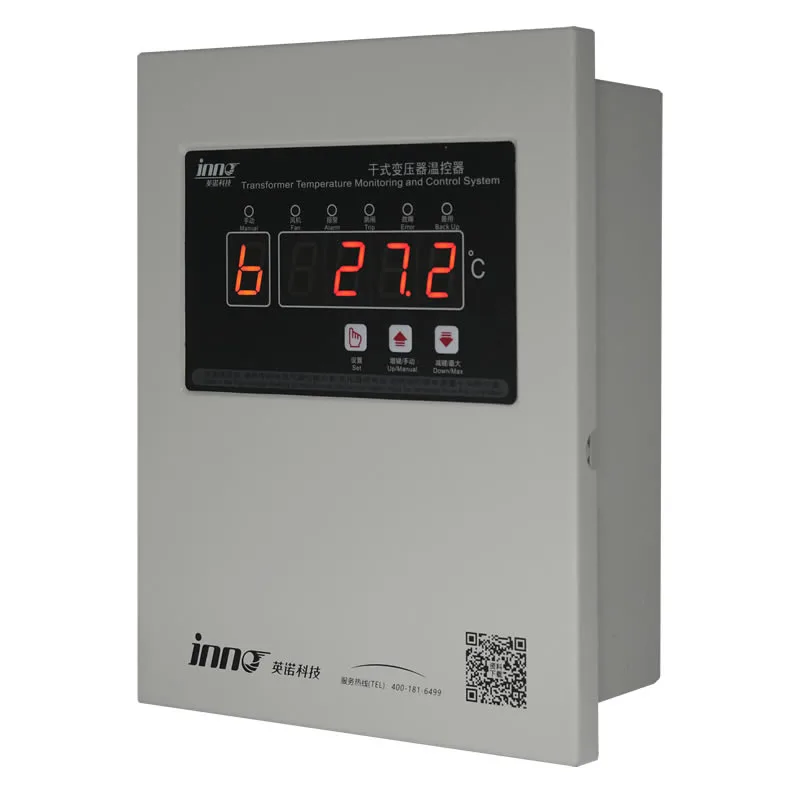
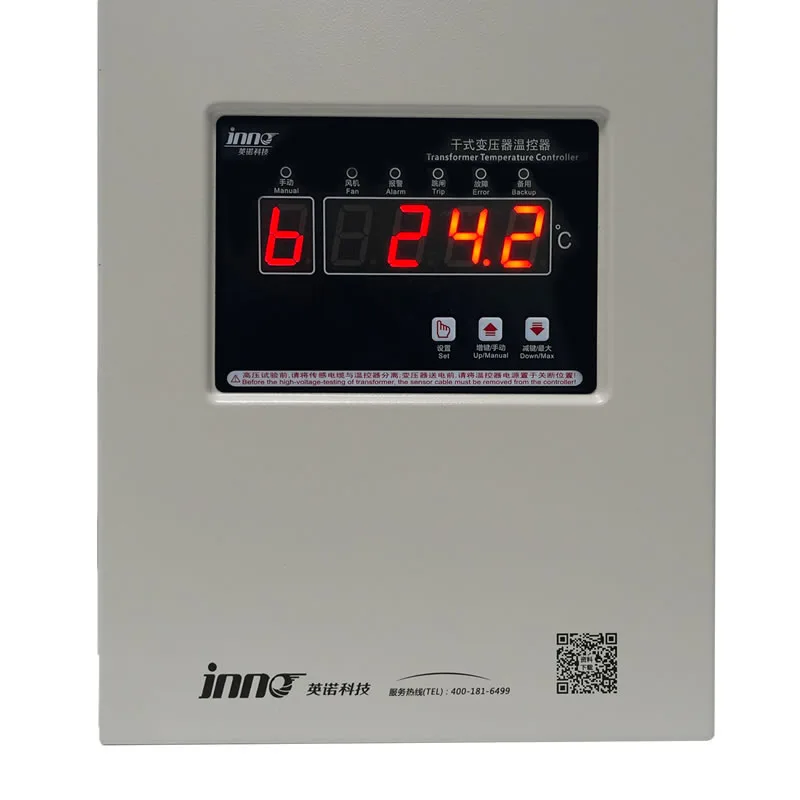
IB-Q201 Embedded PT100 Monitoring and Controller
Embedded, flush-mounted PT100 controller for three-phase winding temperature monitoring, alarm, trip and automatic cooling fan control, recessed into the transformer enclosure.
IB-L201 Wall-Mounted PT100 Monitor and Controller
Wall-mounted PT100 temperature monitor and controller for conventional winding temperature measurement, cooling fan control and alarm/trip protection.
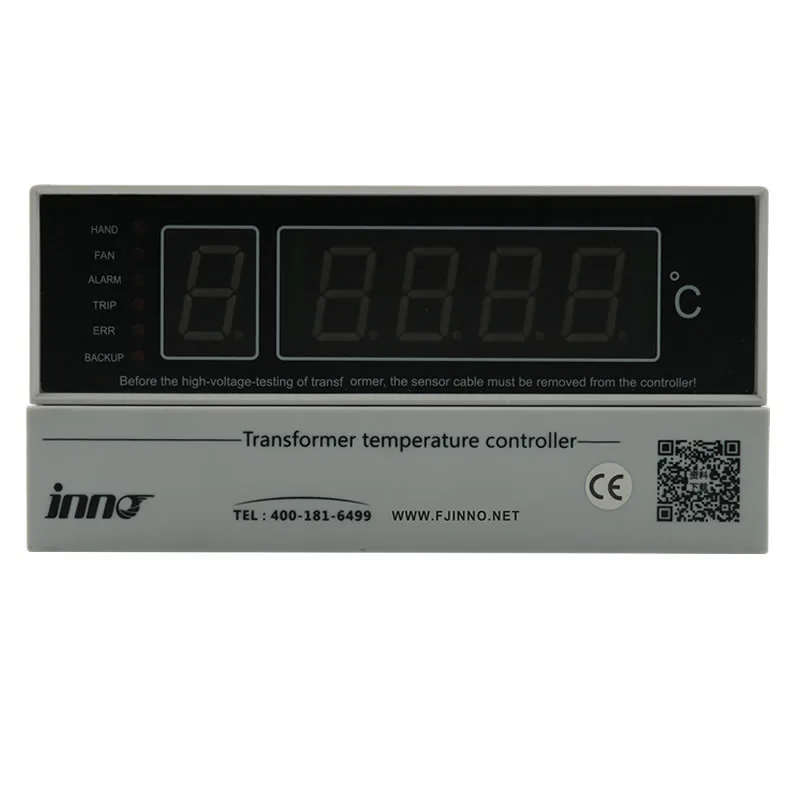
IB-S201 Panel-Mounted PT100 Monitor and Controller
Compact panel-mounted PT100 monitor and controller for transformer control cabinets, cast resin transformers and distribution systems.
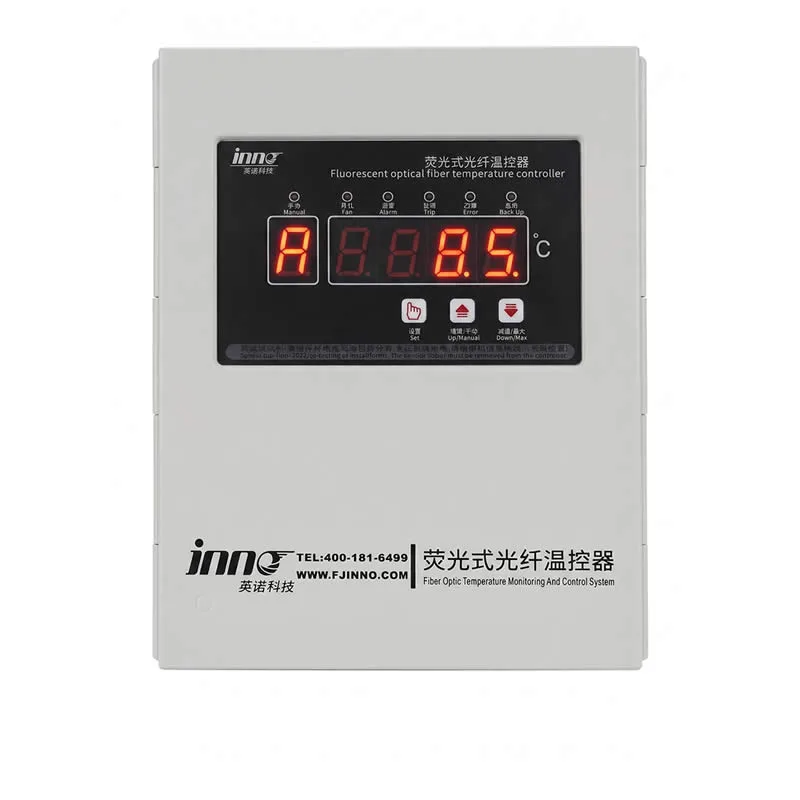
Système de surveillance et de régulation de la température par fibre optique fluorescente
All-optical fluorescent sensing for direct winding hot spot measurement, suitable for high-voltage locations and strong EMI environments, with integrated fan control and alarm/trip functions.
How to Choose the Right Sensing Configuration
Choose PT100 When
- Conventional winding temperature monitoring is required
- Existing PT100 sensing is already available
- Alarm and cooling control are primary requirements
- Retrofit accessibility favors conventional sensors
Consider Fiber Optic When
- Direct hot spot measurement is required
- Critical internal winding locations need monitoring
- High-voltage sensing is required
- Strong electromagnetic interference is present
- Internal sensing can be planned during manufacturing
Consider Both When
- Existing PT100 monitoring should be retained
- Additional hot spot visibility is required
- Different sensing technologies suit different measurement locations
The best sensing method depends on where the temperature must be measured, not simply on which sensor technology is more advanced.
What to Send Us
Informations sur le transformateur
- Puissance nominale
- Niveau de tension
- Structure d'enroulement
Suivi actuel
- PT100 sensors
- Temperature controller
- Cooling control
Project Requirement
- Required sensing locations
- Number of temperature points
- New-build or retrofit
- Exigence relative à la surveillance à distance
Drawings, winding layouts or photos of the existing monitoring arrangement are helpful when available.
Foire aux questions
Where should temperature sensors be installed in a dry-type transformer?
Windings are generally the most important location. Core, connections/terminals and cooling air or enclosure temperature can also be monitored depending on transformer construction and the risks that need to be tracked.
What is the difference between PT100 and fiber optic temperature sensing?
PT100 uses a resistance element for conventional winding temperature monitoring, while fiber optic sensing provides direct temperature measurement at selected winding locations without introducing conductive elements at the measurement point, which is useful in high-voltage or high-EMI locations.
Can PT100 and fiber optic sensors be used together?
Yes. A hybrid approach can retain PT100 for conventional temperature control while adding fiber optic sensors at selected critical winding hot spots.
How can winding hot spots be monitored directly?
Fiber optic sensors can be installed at selected internal winding locations to provide direct temperature information from critical points that may not be fully represented by conventional sensor locations.
Is fiber optic sensing suitable for high-voltage windings?
Fiber optic sensing is electrically passive at the measurement point and has strong immunity to electromagnetic interference, which makes it suitable for high-voltage measurement locations and strong-EMI environments.
Can existing PT100 sensors be reused?
In many cases, existing PT100 sensors can be integrated into an updated monitoring or control system, depending on sensor condition and compatibility.
Can an existing dry-type transformer be retrofitted with fiber optic sensors?
This depends on transformer construction, winding accessibility and whether the required internal sensing points can be physically accessed — it is not guaranteed for every existing transformer.
How many temperature measurement points are required?
The number and location of sensing points depend on transformer winding design, phase configuration, critical hot spots, monitoring objectives and whether the sensors are installed during manufacturing or retrofit.
Can temperature monitoring be connected to cooling control or SCADA?
Yes, depending on the selected controller — temperature information can be used for automatic fan control, alarm/trip protection and, where supported, remote or SCADA integration.
Build the Right Temperature Monitoring Configuration
Whether the project uses PT100, fiber optic sensing or a combination of both, the sensing configuration should be selected according to winding structure, measurement locations, insulation requirements and thermal monitoring objectives.