

Transformer Ageing Guide
Fecha de publicación:2026年10月11日 16:19:08
- Transformer ageing is the gradual deterioration of a transformer's insulation, mainly the cellulose paper around the windings, under thermal, chemical, electrical and mechanical stress.
- Winding hot-spot temperature has the strongest influence on thermal ageing, since paper degradation speeds up as local temperature rises.
- Moisture accelerates insulation deterioration and lowers dielectric strength, particularly when it is combined with high temperature.
- Oil condition and dissolved gas trends provide useful ageing and fault information, but neither gives remaining life on its own.
- Loading and cooling performance set how much thermal stress the insulation sees over its service life.
- Reliable ageing assessment combines temperature history, moisture, oil analysis and operating history rather than relying on age or a single measurement.
Índice
- Transformer Ageing Mechanisms
- Insulation Paper and Thermal Degradation
- Hot-Spot Temperature and Accelerated Aging
- Moisture, Oil Condition and Insulation Life
- Loading and Cooling Effects on Transformer Life
- Signs of Accelerated Insulation Deterioration
- Monitoring Ageing Indicators
- Transformer Life Expectancy and Loss of Life
- Remaining Life Assessment
- Transformer Ageing FAQ
1. Transformer Ageing Mechanisms
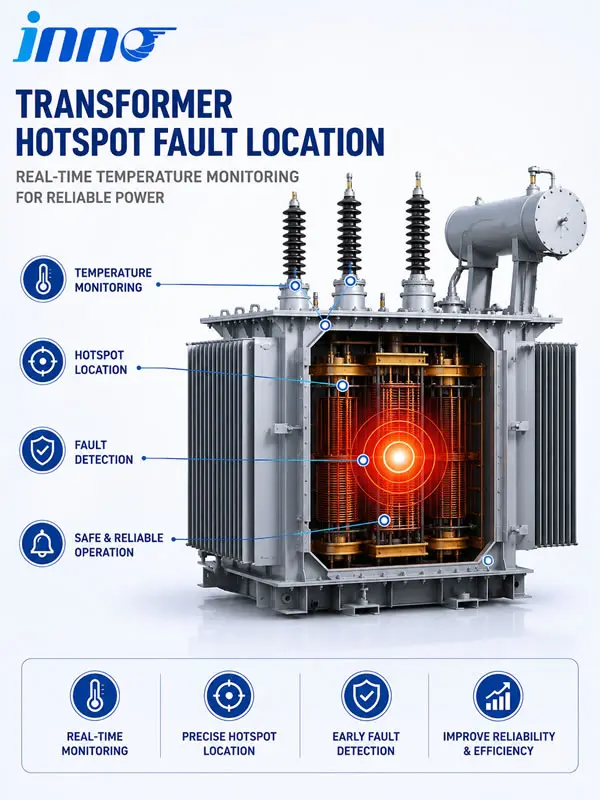
Transformer ageing is mainly associated with gradual deterioration of insulation and other internal materials under thermal, electrical, chemical and mechanical stress. Transformer aging, the American spelling, refers to the same process.
Several mechanisms act together, and their relative weight depends on design, loading and environment. Paper insulation is the critical element, because it cannot be replaced without rebuilding the winding.
1.1 Thermal Ageing
Heat drives chemical breakdown of cellulose insulation. Degradation is cumulative and irreversible, and its rate increases non-linearly as temperature rises, so short periods at high temperature can contribute disproportionately to total ageing.
1.2 Moisture and Oxidation
Water promotes hydrolysis of cellulose, while oxygen promotes oxidation of both paper and oil. Both reactions are accelerated by heat, and both produce byproducts such as acids and water that further drive deterioration.
1.3 Electrical and Mechanical Stress
Overvoltages and partial discharge can damage insulation locally. Short-circuit forces and vibration can loosen clamping or move windings, which exposes weakened paper to higher mechanical stress.
| Ageing Factor | Main Effect | Useful Indicator |
|---|---|---|
| High temperature | Speeds up cellulose breakdown and oil decomposition | Winding and top-oil temperature history |
| Humedad | Promotes hydrolysis and lowers dielectric strength | Moisture in oil with oil temperature, dielectric response |
| Oil oxidation | Forms acids and sludge that affect insulation and cooling | Oil acidity and oxidation indicators |
| Estrés eléctrico | Causes local insulation damage and gas generation | Partial discharge activity, dissolved gas trends |
| Tensión mecánica | Loosens clamping and can deform windings | Frequency response comparison, fault history |
| Cooling deterioration | Raises operating temperature at the same load | Temperature versus load trend, cooling equipment status |
2. Insulation Paper and Thermal Degradation
2.1 Cellulose Insulation Behavior
Cellulose insulation consists of long polymer chains that give paper its mechanical strength. Heat and water break those chains, and shorter chains mean weaker paper that is less able to withstand mechanical and electrical stress.
Oil can be filtered, dried or replaced during the life of the transformer. Paper degradation cannot be reversed, which is why paper condition largely defines insulation life.
2.2 Degree of Polymerization
Degree of polymerization (DP) describes the average chain length of cellulose and is widely used as a measure of paper ageing. A lower value reflects more advanced degradation. DP is measured on paper samples, which are rarely available from an in-service transformer, so indirect indicators are often used instead.
2.3 Byproducts of Paper Degradation
Paper breakdown releases carbon monoxide, carbon dioxide, water and furanic compounds into the oil. Trends in these byproducts can suggest ongoing cellulose degradation, although they depend on transformer design, oil volume and preservation system. Online tracking of related parameters is covered under transformer insulation monitoring, while this section stays on the ageing mechanism.
3. Hot-Spot Temperature and Accelerated Aging
3.1 Hot Spot vs Tank Temperature
Winding hot-spot temperature is more relevant to insulation thermal stress than general tank temperature. Top-oil temperature reflects bulk oil condition, while the hottest point of the winding sits above it and determines where the paper ages fastest.
Two transformers with the same top-oil temperature can therefore age at different rates, depending on winding design, loading and oil flow.
3.2 Temperature and Ageing Rate
Ageing rate grows rapidly with temperature at the point of highest thermal stress. Accelerated aging is most often associated with sustained or repeated periods when the hot spot runs above its normal level, rather than with a single brief excursion.
Loss of insulation life accumulates over time, so temperature history is more informative than a single reading.
3.3 Direct vs Calculated Hot-Spot Data
Hot-spot temperature can be calculated from top-oil temperature and load, or measured directly with probes placed in the winding. Direct measurement removes modelling assumptions at the measured points, and winding hot-spot temperature measurement describes how fiber optic sensing is applied for this purpose.
4. Moisture, Oil Condition and Insulation Life
4.1 Moisture in Paper and Oil
Most water in a transformer is held in the paper rather than the oil. Moisture redistributes between paper and oil as temperature changes, so a reading in oil must be interpreted together with oil temperature. Details on this relationship appear in transformer moisture monitoring.
Wet paper ages faster and offers lower dielectric strength. Water also lowers the temperature at which gas bubbles may form under heavy load, which adds a separate risk.
4.2 Oil Ageing and Oxidation
Oil oxidation produces acids and sludge. Sludge can deposit on windings and cooling surfaces, which reduces heat removal and adds to thermal stress. Broader oil parameters are summarized in transformer oil health monitoring.
Oil condition is useful, but it does not by itself determine remaining life. Oil can be treated or replaced, while paper condition stays with the transformer.
4.3 Condition Indicators and Their Limits
| Condition Indicator | What It Can Suggest | Limitation |
|---|---|---|
| Humedad | Dryness of insulation and risk of faster paper degradation | Oil readings depend on temperature; paper moisture is usually estimated |
| Estado del aceite | Contamination and oxidation of the insulating liquid | Oil treatment can improve values without changing paper condition |
| DGA trend | Thermal activity or cellulose decomposition when CO and CO2 are interpreted with other gases | Gas levels also depend on design, oil volume and fault history |
| Acidity / oxidation indicators | Progress of oil oxidation | Does not measure paper strength directly |
| Temperature history | Cumulative thermal stress on insulation | Needs reliable sensors and records; calculated hot spots rely on model assumptions |
5. Loading and Cooling Effects on Transformer Life
5.1 Loading and Temperature
Higher loading does not automatically mean unacceptable ageing. Its effect depends on the resulting temperature, the duration of the load and the cooling performance during that period.
Load raises winding and oil temperature, and overload periods with weak cooling can produce hot-spot conditions that age insulation faster. Reference values for expected heating under rated conditions are summarized in Límites y valores nominales del aumento de temperatura de los transformadores.
5.2 Cooling Performance and Thermal Cycles
Fan and oil pump condition, radiator cleanliness and oil circulation determine how effectively cooling holds temperature down. If cooling deteriorates, the same load produces higher temperature, which increases thermal stress without any change in operating practice.
Repeated thermal cycles add mechanical stress as materials expand and contract. Stable thermal behavior generally supports slower ageing than frequent large swings.
6. Signs of Accelerated Insulation Deterioration
The following indications may suggest faster-than-normal ageing, and each should be evaluated together with others:
- Persistent high winding or oil temperature at normal load
- Repeated overheating events
- Increasing moisture
- Abnormal gas trends, including rising carbon oxides
- Worsening oil condition
- Reduced cooling performance
- Repeated overload operation
- Abnormal insulation test indicators
No single item confirms accelerated ageing. Several indicators moving in the same direction raise confidence and justify closer diagnostic review.
7. Monitoring Ageing Indicators
7.1 Parameters to Track
Ageing develops over years, so long-term records carry the most value. Parameters worth tracking continuously or at regular intervals include temperatures, load, cooling status, gas trends, moisture and oil condition.
| Monitoring Parameter | Ageing Relevance | Uso típico |
|---|---|---|
| Winding / hot-spot temperature | Direct driver of thermal ageing of paper | Thermal history and alarm review |
| Temperatura máxima del aceite | Reference for overall heat removal | Comparison with winding temperature and load |
| Load and ambient temperature | Explain expected temperature level | Separating load effects from abnormal heating |
| Estado de enfriamiento | Shows whether heat removal matches demand | Checking fan and pump behavior against temperature |
| DGA trend | Indicates thermal activity and cellulose decomposition | Trend review and cross-checking |
| Humedad | Affects ageing rate and dielectric strength | Dryness tracking with oil temperature |
| Estado del aceite | Reflects oil degradation and contamination | Maintenance planning and oil treatment decisions |
| Alarm history | Records repeated abnormal events | Identifying recurring thermal or cooling problems |
7.2 Using Trends for Accelerated Ageing Assessment
Continuous monitoreo de la temperatura del transformador builds the temperature history that thermal ageing estimates depend on. Gas, moisture and oil data then add chemical evidence that either supports or contradicts the thermal picture.
Trend records are compared against the transformer's own baseline, since normal values differ between designs.
8. Transformer Life Expectancy and Loss of Life
8.1 Age Alone Does Not Determine Life
Transformer life expectancy is not determined by age alone. Two units of the same age can differ widely in remaining service life, depending on how they have been operated and maintained.
Typical service life depends on design and operating history, so a single figure applies poorly to individual units. Factors that matter most include:
- Estado del aislamiento
- Temperature history
- Humedad
- Loading history
- Cooling condition
- Estado del aceite
- Maintenance practice
- Fault history
8.2 Loss of Life as a Cumulative Concept
Loss of life describes the cumulative consumption of insulation life through thermal exposure. It is typically estimated from temperature and loading history using published loading guides, which makes it relative and dependent on model assumptions.
Such estimates help compare operating scenarios, but they do not replace measurements of actual insulation condition.
9. Remaining Life Assessment
9.1 Combining Inputs
Remaining life cannot be calculated accurately from one parameter alone. Assessment combines thermal history with direct and indirect evidence of insulation condition.
| Assessment Input | What It Contributes |
|---|---|
| Thermal history | Cumulative thermal stress the insulation has experienced |
| Hot-spot temperature data | Local thermal stress at the most critical winding positions |
| Insulation paper condition | Direct or indirect evidence of cellulose degradation |
| Humedad | Dryness level and its effect on ageing rate |
| Oil analysis | Oil degradation, contamination and byproducts of paper ageing |
| DGA | Gas patterns related to thermal faults and cellulose decomposition |
| Operating history | Loading, overloads, short-circuit events and maintenance |
| Diagnostic tests | Electrical and mechanical condition that affects continued service |
9.2 What Monitoring Can and Cannot Do
Monitoring data supports condition assessment and shows whether ageing indicators are stable or worsening. Online systems do not directly predict remaining life, and conclusions require engineering review and, where justified, laboratory or offline tests.
10. Transformer Ageing FAQ
10.1 What causes transformer ageing?
Ageing is caused mainly by thermal, chemical, electrical and mechanical stress on insulation. Heat and moisture break down cellulose paper, oxygen oxidizes oil, and electrical or mechanical events add local damage. These effects accumulate over time, and their combined rate depends on design, loading and maintenance.
10.2 How does temperature affect transformer insulation life?
Higher temperature speeds up chemical breakdown of cellulose, and the ageing rate rises non-linearly with temperature. Sustained or repeated periods at elevated temperature therefore consume insulation life faster than brief excursions. Temperature history gives a more useful picture of thermal stress than a single measurement.
10.3 Why is winding hot-spot temperature important?
The winding hot spot is the hottest point of the winding, where paper ages fastest. It runs above top-oil temperature, so tank or oil readings alone can understate thermal stress. Measured or calculated hot-spot data gives a more relevant basis for assessing insulation thermal ageing.
10.4 How does moisture accelerate transformer ageing?
Water promotes hydrolysis of cellulose, which shortens polymer chains and weakens paper. It also lowers dielectric strength and speeds up oil degradation. The effect increases with temperature. Because most moisture sits in the paper, oil measurements must be read together with oil temperature.
10.5 Can DGA show transformer ageing?
DGA can provide indications. Trends in carbon monoxide and carbon dioxide may be associated with cellulose degradation, and other gases show thermal or electrical activity. Interpretation depends on design, oil volume and fault history, so DGA supports an ageing assessment but does not establish remaining life.
10.6 Does transformer age determine remaining life?
No. Remaining life depends on insulation condition, temperature and loading history, moisture, cooling, oil condition, maintenance and fault history. Units of the same age can differ considerably. Age is one input to assessment, not a substitute for condition data.
10.7 How is transformer remaining life assessed?
Assessment combines thermal history, hot-spot data, insulation paper condition, moisture, oil analysis, DGA, operating history and diagnostic tests. No single parameter gives an accurate result. Engineers weigh the evidence together and update the assessment as new measurements become available.
10.8 Can online monitoring reduce transformer ageing?
Monitoring does not slow ageing directly. It can reveal conditions that accelerate it, such as persistent high temperature, cooling problems or rising moisture, so corrective action can be planned earlier. Its value depends on how monitoring data is reviewed and acted on.