
Fiber Optic Temperature Monitoring Solutions for Direct Winding Hot-Spot Measurement
Built on fluorescent fiber optic sensing, our fiber optic temperature monitoring solutions measure winding hot-spot temperature directly inside high-voltage equipment — with complete immunity to electromagnetic interference and no electrical potential at the sensing point.
- Direct hot-spot measurement instead of estimated or calculated temperature
- Full EMI immunity — safe for use inside energized high-voltage equipment
- Scalable from single-point to multi-channel, plant-wide deployments
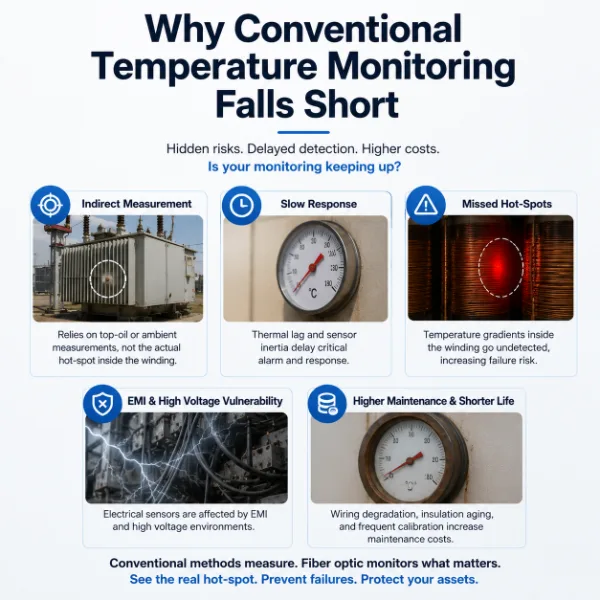
What Is Fiber Optic Temperature Monitoring?
Fiber optic temperature monitoring uses a fluorescent fiber optic sensor placed directly at the point that matters most — the winding hot-spot — and converts optical fluorescence decay time into a precise temperature reading. Because the sensing element is fully dielectric, it can be embedded safely inside energized equipment where conventional electrical sensors cannot be used.
- Sensor tip is installed directly on or near the winding conductor
- Fully dielectric fiber carries the optical signal — no metal, no electrical potential
- A demodulator converts the optical signal into a real-time temperature value
- Output is available via display, alarm relay, or RS485/Modbus for SCADA integration
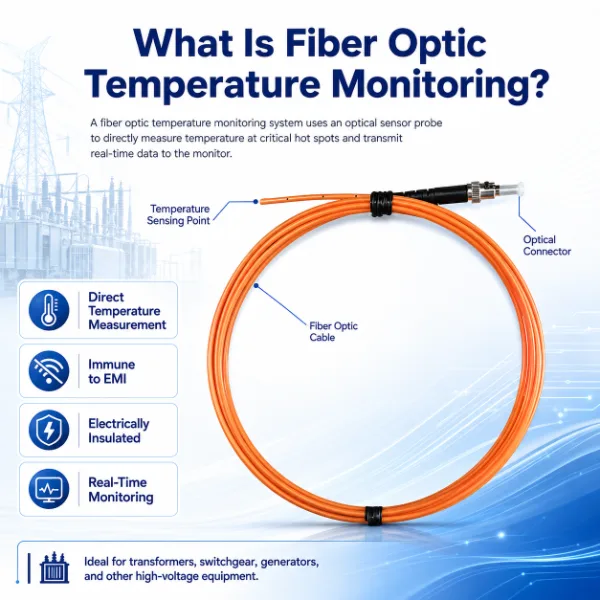
Why Conventional Temperature Monitoring Falls Short
Top-oil thermometers and current-based thermal models can only estimate winding hot-spot temperature indirectly. In high-voltage, high-EMI environments, that gap between estimated and actual temperature can hide developing faults until damage has already occurred.
- Winding hot-spots frequently run well above top-oil temperature readings
- Electrical temperature sensors are exposed to EMI and require insulation from live parts
- Calculated thermal models drift under variable load and ambient conditions
- Delayed detection of overheating shortens insulation life and raises failure risk
Fiber Optic Temperature Monitoring by Application
The same fluorescent fiber optic sensing principle is configured differently depending on where the hot-spot is and how many points need coverage.
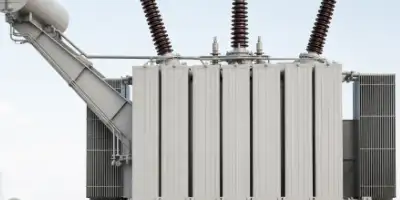
Oil-Immersed Transformer Windings
Sensor probes embedded at the winding hot-spot during manufacturing or retrofit, immune to the transformer's internal electromagnetic field.
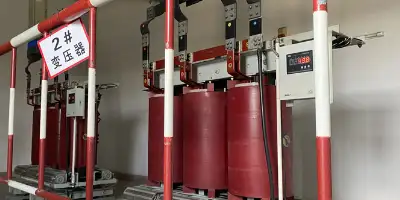
Dry-Type Transformer Windings
Multi-point sensing across low, medium and high voltage windings to prevent overheating in fire-sensitive indoor installations.
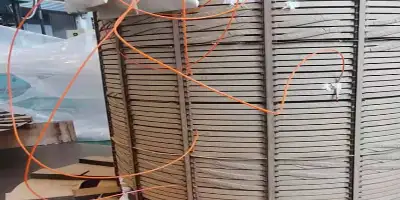
Winding Hot-Spot Monitoring
Direct hot-spot sensing that replaces estimated temperature calculations used in older monitoring systems.
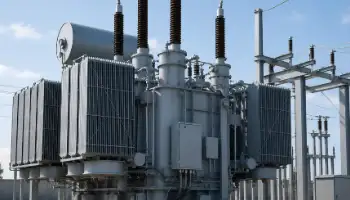
Monitoreo de transformadores de potencia
Multi-point winding temperature coverage for large generation and transmission transformers carrying the highest operational risk.
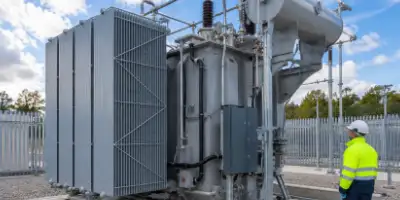
Monitoreo del aislamiento de los transformadores
Temperature data layered alongside insulation condition indicators to track aging risk over time.
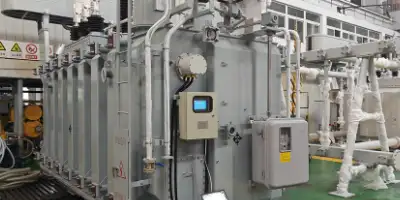
Monitoreo de transformadores en subestaciones
Multi-channel demodulators aggregate readings from several substation assets into one centralized monitoring point.
Transformer Winding Fiber Optic Monitoring Products
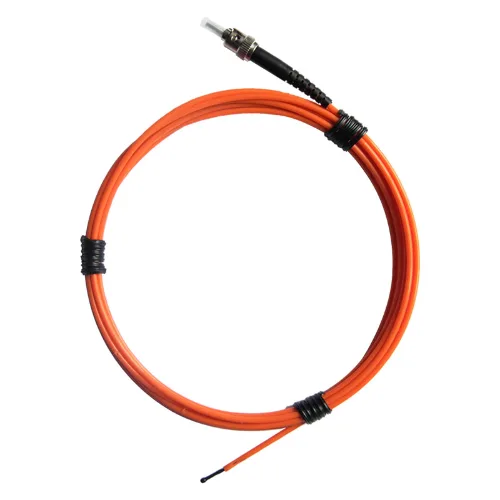
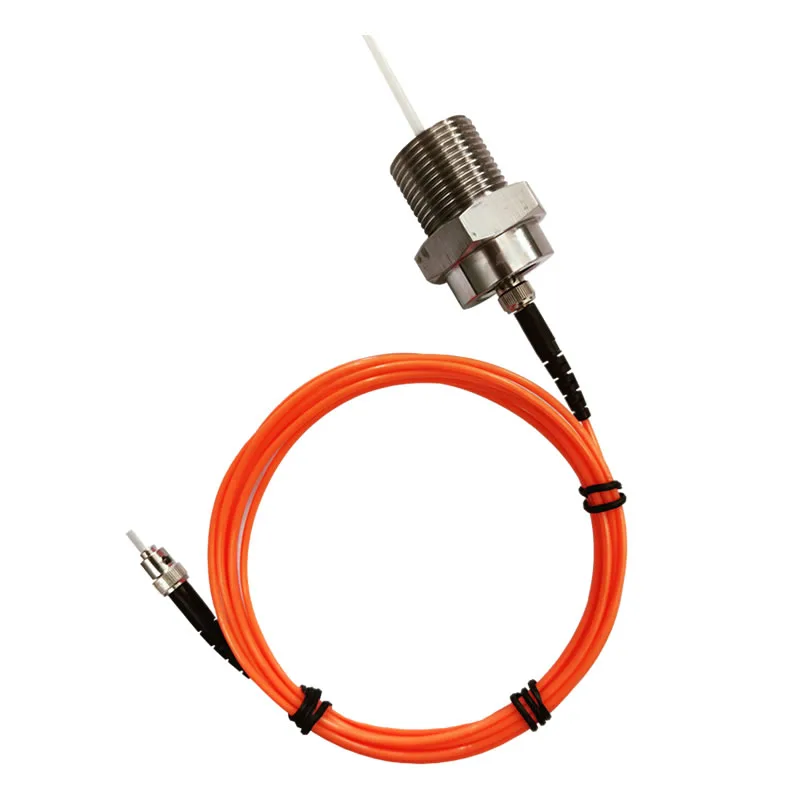
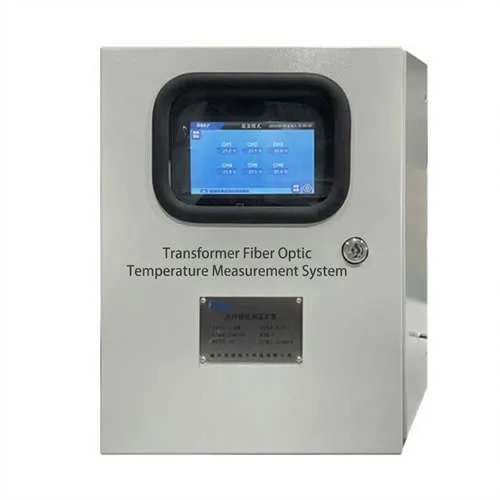
From the sensing probe to the complete tank-wall-penetrating system, our fiber optic temperature monitoring products are factory direct, in-house engineered, and configurable to your winding hot-spot requirements.
Fiber Optic Temperature Monitoring Configuration by Channel Count
Channel count is selected based on how many hot-spot points need to be covered per asset.
| Configuración | Typical Channels | Typical Use Case | SCADA / RS485 Output |
|---|---|---|---|
| Single & 3-Channel | 1–3 | Dry-type transformer, small motor winding | ✓ |
| 6-Channel | 6 | Three-phase transformer, multi-point winding | ✓ |
| Multi-Channel | 8–32 | Power transformer, GIS bay monitoring | ✓ |
| 64-Channel | 64 | Substation-wide, plant-wide centralized monitoring | ✓ |
Exact channel count, probe length, and enclosure rating are configured per project. Contact our engineering team for a configuration matched to your equipment.
How Fluorescent Fiber Optic Temperature Sensing Works
Excitation Pulse
A light pulse is sent down the fiber to a fluorescent crystal at the sensor tip.
Fluorescent Decay
The crystal fluoresces and decays at a rate that varies precisely with temperature.
Optical Return Signal
The decay signal travels back through the same dielectric fiber to the demodulator.
Salida de temperatura
The demodulator converts decay time into a temperature reading, alarm signal, or RS485 output.
What Does a Transformer Winding Fiber Optic Temperature Monitoring System Include?
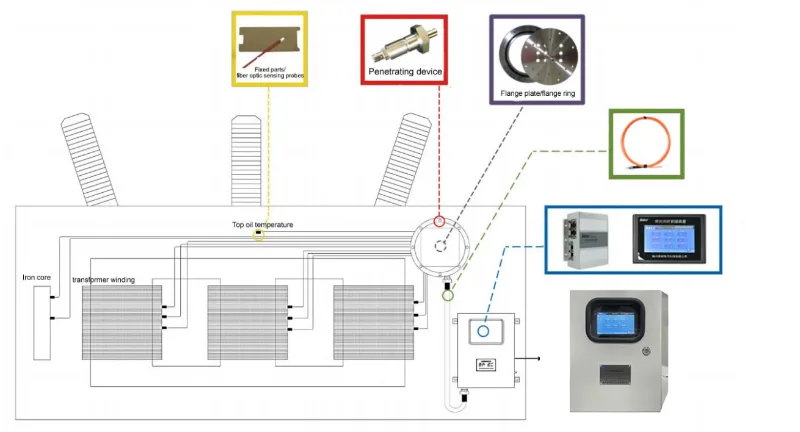
A complete transformer winding fiber optic temperature monitoring system is built around the IF-TF series monitor, its internal and external sensor probes, and the feed-through/flange hardware used to route the fiber into the tank. Optional accessories are added based on the installation environment.
- IF-TF series transformer winding fiber optic temperature monitor
- Internal fiber optic temperature sensor probe
- External fiber optic temperature sensor probe
- Feed-through / flange assembly
Accesorios opcionales
- Control cabinet — integrated (all-in-one) or split enclosure
- Protective cover — required when a split enclosure is used
- Mounting hardware
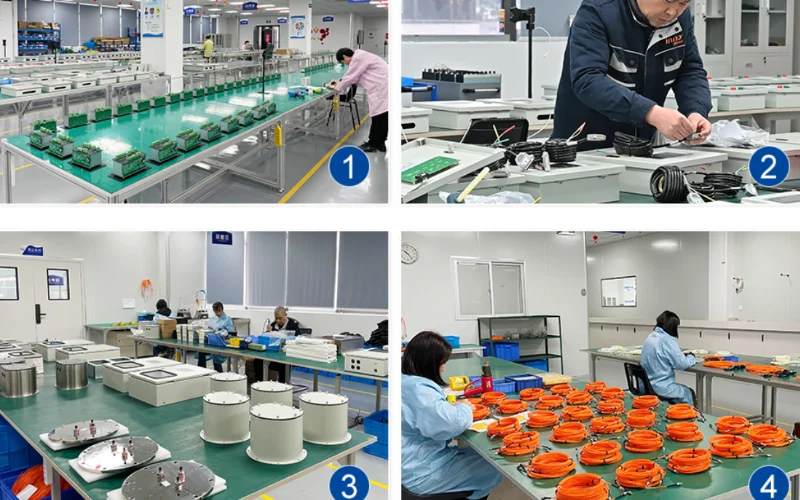
Fiber Optic Temperature Monitoring, Engineered and Customized In-House
We design and manufacture fluorescent fiber optic temperature monitoring hardware end to end — from the sensor probe to the demodulator — giving us the flexibility to tailor a configuration to your specific transformer, switchgear, or plant-wide monitoring requirements.
- In-house R&D and manufacturing of sensor probes and demodulator hardware
- Configurations tailored to voltage class, channel count, and probe length
- Custom enclosure ratings and mounting options for indoor, outdoor, or GIS environments
- Apoyo de ingeniería desde la consulta inicial hasta la puesta en marcha
Fiber Optic Temperature Monitoring FAQ
What is fiber optic temperature monitoring?
Fiber optic temperature monitoring uses a fluorescent fiber optic sensor placed directly at a hot-spot to measure temperature in real time, converting optical fluorescence decay into an accurate temperature reading.
Why use fiber optic sensors instead of conventional electrical temperature sensors?
Fiber optic sensors are fully dielectric, giving them complete immunity to electromagnetic interference and allowing safe installation directly inside energized high-voltage equipment where electrical sensors cannot be used.
Where is the sensor typically installed?
The sensor tip is installed directly at the expected hot-spot location, such as the winding conductor, rather than at an indirect point like the tank surface.
What is the difference between the sensor and the measurement system?
The fiber optic temperature sensor is the probe installed at the hot-spot, while the measurement system is the demodulator/host hardware that reads the sensor and outputs usable data.
What is the difference between hot-spot temperature and top-oil temperature?
Top-oil temperature reflects the average oil condition in the tank, while hot-spot temperature is the actual peak temperature inside the winding, which is often significantly higher.
How accurate is fluorescent fiber optic temperature sensing?
Yes — this method delivers high measurement accuracy, typically within ±1°C, across a working range of roughly -40°C to +200°C, which is precise enough to track winding hot-spot behavior directly.
Does the fiber optic sensor need periodic calibration?
No. The fluorescent sensing element does not drift with age or usage, so it does not require the periodic recalibration that electrical temperature sensors typically need.
What is the typical service life of a fiber optic sensor probe?
Yes — with no active electronics at the sensing tip, the probe is designed for a service life of 20+ years, matching the operating life of the transformer itself.
Is fiber optic temperature monitoring safe for use inside energized equipment?
Yes. The fully dielectric fiber carries no electrical potential, so it can be installed directly on live windings without creating a shock or arc-flash hazard.
How does fiber optic sensing perform under strong electromagnetic fields?
Because the signal is carried optically rather than electrically, fiber optic sensors are unaffected by the strong electromagnetic fields present inside energized high-voltage equipment.
Can fiber optic temperature data be integrated with SCADA?
Yes. The measurement system outputs data via RS485/Modbus for integration with SCADA or centralized condition monitoring platforms.
Is fiber optic temperature monitoring suitable for dry-type transformers?
Yes. Dry-type transformers commonly rely on fiber optic winding temperature monitoring as their primary condition indicator, since they do not use oil for DGA-based monitoring.
Can the system trigger an early warning before insulation damage occurs?
Yes. Because the reading tracks the actual hot-spot rather than an estimate, alarm thresholds can be set to flag rising temperature well before insulation is damaged.
Can fiber optic temperature monitoring replace dissolved gas analysis (DGA)?
The two methods are complementary rather than interchangeable — fiber optic monitoring gives a real-time temperature trend, while DGA detects gases produced by insulation breakdown over time.
Does the fiber optic probe affect the transformer's dielectric strength?
No. The probe and fiber are made of dielectric materials designed to withstand the same insulating oil and electrical stresses as the surrounding winding insulation.
Can fiber optic temperature monitoring be used in gas-insulated switchgear (GIS)?
Yes. The same dielectric sensing principle applies to GIS bays and other enclosed high-voltage assemblies where electrical sensors would be impractical.
What output formats does the measurement system provide to plant operators?
Readings are available as a local display value, a relay-driven alarm signal, or a digital RS485/Modbus feed to a SCADA or monitoring platform.
Can the system distinguish between multiple winding hot-spots on the same asset?
Yes. Each sensor probe reports its own independent reading, so temperature differences between winding phases or points can be compared directly.
How does fiber optic monitoring help extend transformer service life?
By tracking the actual hot-spot temperature, operators can manage loading and cooling decisions around real insulation stress rather than a conservative estimate, reducing unnecessary thermal aging.
What maintenance is required for a fiber optic temperature monitoring system?
Maintenance is limited mainly to periodic visual inspection of external connections and demodulator function checks, since the sensing probe itself has no moving parts or active electronics.
Cuenta con la confianza de empresas de servicios públicos y fabricantes de transformadores de todo el mundo
Our fiber optic temperature monitoring systems are deployed across power utilities, transformer OEMs, and industrial plants in developed markets throughout North America, Europe, and Asia-Pacific.
Switching to direct hot-spot sensing gave our engineering team a much clearer picture of real loading margins than the previous thermal model ever did.
Equipo de Ingeniería de Servicios PúblicosAlemania
The dielectric probes let us monitor winding points we simply couldn't instrument before, without introducing any electrical risk into the design.
Fabricante de transformadoresJapan
Integration with our existing SCADA platform was straightforward, and the RS485 output has stayed reliable through years of continuous service.
Operador de red eléctricaEstados Unidos
Having real hot-spot data has helped us justify loading decisions with far more confidence during peak demand periods.
Fabricante de equipos eléctricosCorea del Sur
Not Sure Which Fiber Optic Temperature Monitoring Configuration Fits Your Equipment?
Tell us your equipment type and the hot-spot locations you need to cover — our engineering team will recommend the right sensor and channel configuration.