

O que é um relé de Buchholz em um transformador?
发布时间:23 de outubro de 2026, 12:14:12
- A Buchholz relay is a gas- and oil-operated protection device installed in the pipe between the main tank and conservator of suitable oil-immersed transformers.
- Slowly developing internal faults may generate gas that accumulates in the relay and initiates an alarm.
- Severe internal faults can create rapid oil movement toward the conservator and operate the trip mechanism.
- Buchholz protection is normally associated with conservator-type oil-immersed transformers, and alarm and trip stages do not by themselves identify the exact fault source.
- DGA, protection records and inspection should be used to investigate the cause of any relay operation.
Índice
- 1. What Is a Buchholz Relay?
- 2. How Does Buchholz Protection Work?
- 3. Buchholz Alarm vs Trip
- 4. What Faults Can Operate a Buchholz Relay?
- 5. Buchholz Relay vs Pressure Relief Device
- 6. Buchholz Relay vs DGA
- 7. What to Check After Relay Operation
- 8. Buchholz Relay FAQ
1. What Is a Buchholz Relay?
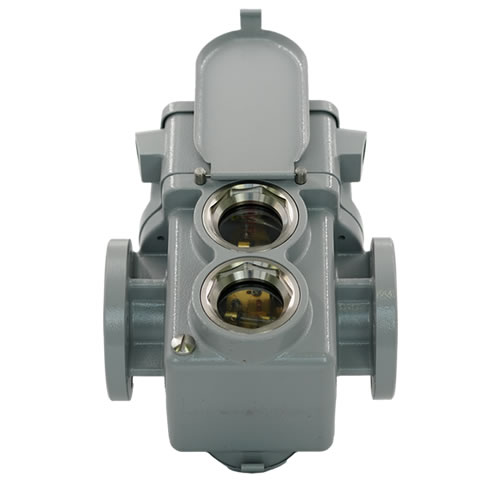
A Buchholz relay, also called a gas relay on a transformer, is a gas-operated and oil-surge-operated protection device. It sits in the pipe between the transformer main tank and the conservator. Gas or oil moving from the tank toward the conservator passes through the relay, which can operate contacts for alarm or trip.
Not every oil-immersed transformer uses this device. Sealed and hermetically sealed transformers, and units without a conservator, may use other protection arrangements. A Buchholz relay does not measure oil pressure or dissolved gas concentration.
| Destaque | Buchholz Relay |
|---|---|
| Tipo de transformador | Oil-immersed transformers with a conservator arrangement |
| Localização típica | Pipe between main tank and conservator |
| Primary Inputs | Gas accumulation and oil surge; some designs also respond to low oil level |
| Função de alarme | Contact operated by gas accumulation, depending on relay design |
| Trip Function | Contact operated by oil surge, depending on relay design |
2. How Does Buchholz Protection Work?
2.1 Gas Accumulation
Slowly developing internal abnormalities can decompose insulation or oil and generate gas. Because the pipework rises toward the conservator, gas can collect in the relay chamber. Accumulated gas changes the relay's internal mechanism and may operate an alarm contact, depending on relay design.
Gas in the relay does not always mean a severe transformer fault. It requires investigation, since the gas may come from several sources.
2.2 Rapid Oil Surge
Severe internal faults can cause rapid gas generation and sudden oil movement toward the conservator. This oil surge can operate the trip mechanism of the relay. Response depends on fault severity and relay design, and no general operating value applies to every unit.
3. Buchholz Alarm vs Trip
Alarm and trip stages respond to different physical effects. A Buchholz relay alarm is often associated with gas collection, while a trip is often associated with oil surge. Neither stage maps cleanly to minor or major faults, so actual behavior depends on design and configuration.
| Condição | Typical Relay Response | What It May Suggest | Recommended Follow-Up |
|---|---|---|---|
| Slow gas accumulation | Alarme | May indicate a developing internal abnormality | Investigate gas, DGA and operating history |
| Rapid oil surge | Viagem | May indicate a potentially severe internal event | Follow protection and diagnostic procedures |
4. What Faults Can Operate a Buchholz Relay?
Several internal conditions can generate gas or move oil:
- Deterioração do isolamento
- Localized overheating
- Internal arcing
- Winding or connection faults
- Core-related overheating
- Oil decomposition
- Internal gas formation
- Rapid oil displacement caused by a severe internal event
Relay operation indicates an abnormal internal condition, while root-cause identification requires additional evidence. That evidence includes DGA, temperature data, protection relay records and inspection.
5. Buchholz Relay vs Pressure Relief Device
Buchholz relays respond primarily to gas accumulation and/or oil surge in suitable conservator-type transformers. A pressure relief device (PRD) responds to excessive internal tank pressure, and a pressure sensor measures pressure. These functions are different and complement each other. Neither the relay nor the PRD replaces the other.
| Dispositivo | Responds To | Localização típica | Primary Function | Typical Output |
|---|---|---|---|---|
| Buchholz Relay | Gas accumulation and/or oil surge | Pipe between main tank and conservator | Gas / oil movement protection | Alarm and trip contacts, depending on design |
| Pressure Relief Device | Excessive internal tank pressure | Transformer tank, depending on design | Pressure relief | Mechanical indication or alarm contact, depending on design |
| Pressure Sensor | Measured pressure | Transformer tank or oil-system fitting | Pressure measurement and monitoring | Signal output, depending on model |
6. Buchholz Relay vs DGA
A Buchholz relay is an event-driven protection device. It responds when gas accumulation or oil movement reaches the relay mechanism. DGA is a condition-monitoring and diagnostic method that measures gases dissolved in transformer oil.
Online DGA can trend dissolved gases before or between protection events. Gas patterns and rates of change add context that a relay contact does not provide. DGA does not replace Buchholz protection, and the relay does not replace DGA.
| Método | Objetivo principal | Data Type | Continuous Trend | Protection Action |
|---|---|---|---|---|
| Buchholz Relay | Detect gas accumulation or oil surge | Contact status (alarm / trip) | No, event-driven | Yes, through alarm or trip circuits |
| DGA online | Track dissolved gases in oil | Gas concentrations and trends | Sim | Monitoring and alarm information, not a replacement for protection relays |
INNOFZ describes análise de gás dissolvido monitoring for oil-immersed transformers. Its online DGA monitoring system page lists seven fault gases measured by gas chromatography, an adjustable sampling cycle with a minimum of 2 hours or less, and MODBUS and IEC 61850 output. It also lists live installation on energized transformers.
Buchholz relay information can be evaluated together with DGA, oil temperature, winding temperature, oil pressure, oil level, protection relay records and alarm history. Protection event plus condition data plus trend history supports better fault assessment. The monitoramento de transformadores imersos em óleo application and the wider monitoramento de transformadores solution describe how these parameters can be combined.
7. What to Check After Relay Operation
Resetting a relay does not resolve the root cause. A review after alarm or trip typically includes:
- Determine whether the alarm or trip element operated
- Review transformer protection records and other protection operations
- Inspect visible transformer condition, including leakage where relevant
- Check oil level and pressure-related indications
- Review oil temperature and winding temperature
- Obtain and assess transformer oil and gas information
- Review DGA results
- Compare recent loading history
Inspection, testing and return-to-service decisions should follow transformer manufacturer procedures and site safety rules. Relay operation then becomes one input to transformer alarm assessment and wider transformer diagnostics.
8. Buchholz Relay FAQ
8.1 What is the purpose of a Buchholz relay?
A Buchholz relay protects suitable oil-immersed transformers by responding to internal gas accumulation and oil surge. It can give an alarm for gas collection and a trip signal for rapid oil movement. It indicates an abnormal internal condition but does not identify the exact fault.
8.2 What is the difference between Buchholz alarm and trip?
The alarm element is typically associated with gas accumulation, and the trip element with rapid oil surge. Actual behavior depends on relay design and configuration. Neither stage should be read as a simple minor or major fault label, and both require investigation.
8.3 Which transformers use a Buchholz relay?
Buchholz relays are normally used on conservator-type oil-immersed transformers, where the relay sits between the main tank and conservator. Sealed or hermetically sealed units and transformers without a conservator may use different protection arrangements, so not every oil-immersed transformer has one.
8.4 What should be checked after a Buchholz relay operates?
Check whether alarm or trip operated, then review protection records, oil level, oil and winding temperature, visible leakage, pressure indications, loading history and DGA results. Do not treat relay reset as root-cause resolution. Follow manufacturer procedures and site safety rules before any return-to-service decision.