

¿Cómo elegir un sensor de temperatura para el devanado de un transformador?
Fecha de publicación:12 de octubre de 2026, 17:07:10
- Transformer winding temperature sensors should be selected according to transformer type, measurement location, voltage environment and whether direct hot-spot measurement is required.
- Sensores de temperatura de fibra óptica are suitable for direct winding hot-spot measurement in high-voltage and strong electromagnetic environments.
- PT100 and other RTD sensors are commonly used at electrically suitable and accessible temperature measurement points, especially in dry-type transformers.
- Oil-immersed transformer winding hot spots require different sensor installation methods from dry-type transformer windings.
- Sensor accuracy alone is not enough; insulation, installation position, response time, signal transmission and monitoring system compatibility also affect measurement performance.
Índice
- 1. Define the Winding Temperature Measurement Requirement
- 2. Fiber Optic vs PT100 Winding Temperature Sensors
- 3. Direct Hot-Spot Measurement with Fiber Optic Sensors
- 4. Where PT100 and RTD Sensors Are Suitable
- 5. Oil-Immersed vs Dry-Type Transformer Applications
- 6. Key Sensor Selection Factors
- 7. Connecting Sensors to a Temperature Monitoring System
- 8. Transformer Winding Temperature Sensor FAQ
1. Define the Winding Temperature Measurement Requirement
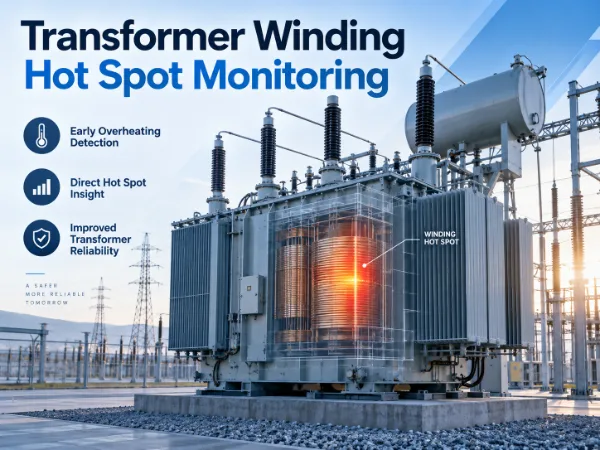
Winding temperature measurement can mean several different things. Some applications require direct measurement at a predicted winding hot spot, while others only need temperature information from accessible winding surfaces, cooling air, transformer oil or nearby structural locations.
Measurement objective should therefore be defined before selecting a sensor. Direct hot-spot measurement, general thermal protection and cooling control do not necessarily require the same sensing technology.
| Requisitos de medición | Ubicación típica | Common Sensor Approach |
|---|---|---|
| Direct winding hot-spot measurement | Selected winding conductor or winding insulation location | Sensor de temperatura de fibra óptica |
| Dry-type winding temperature | Designed winding sensor position | PT100 / RTD or fiber optic sensor |
| Temperatura máxima del aceite | Transformer oil | RTD, temperature indicator or other oil-temperature sensor |
| Control de enfriamiento | Winding or designed thermal monitoring point | RTD connected to temperature controller |
2. Fiber Optic vs PT100 Winding Temperature Sensors
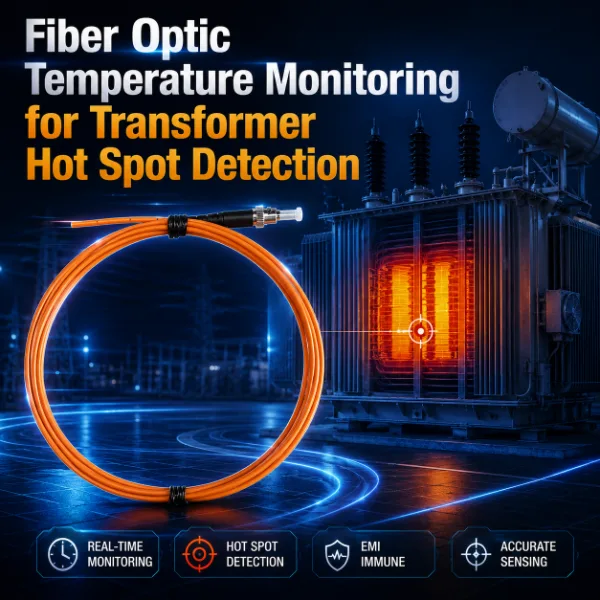
Fiber optic and PT100 sensors can both be used in transformer temperature monitoring, but their application conditions are different. Sensor choice depends heavily on electrical isolation requirements and where the sensing element must be installed.
Fiber optic sensing uses an electrically insulating optical path, making it particularly suitable for direct measurements in high-voltage windings. PT100 sensors use changes in electrical resistance to determine temperature and are widely used where conventional electrical wiring can be safely incorporated into the transformer design.
| Característica | Sensor de fibra óptica | PT100 / RTD |
|---|---|---|
| Electrical isolation | Very suitable for high-voltage environments | Depends on installation and insulation design |
| Inmunidad a las interferencias electromagnéticas | Immune to electromagnetic interference along the optical sensing path | Electrical signal may require suitable wiring and shielding |
| Direct winding hot-spot measurement | Suitable when properly embedded during transformer manufacture or winding work | Application depends on voltage level and transformer design |
| Dry-type transformer use | Applicable | De uso común |
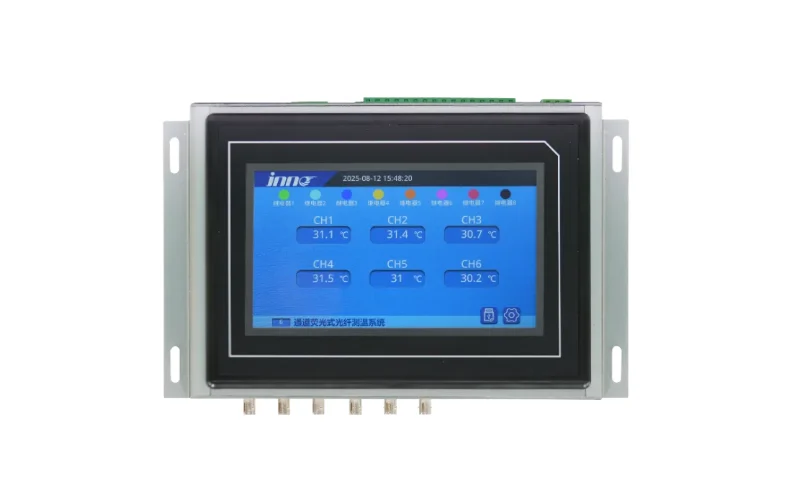
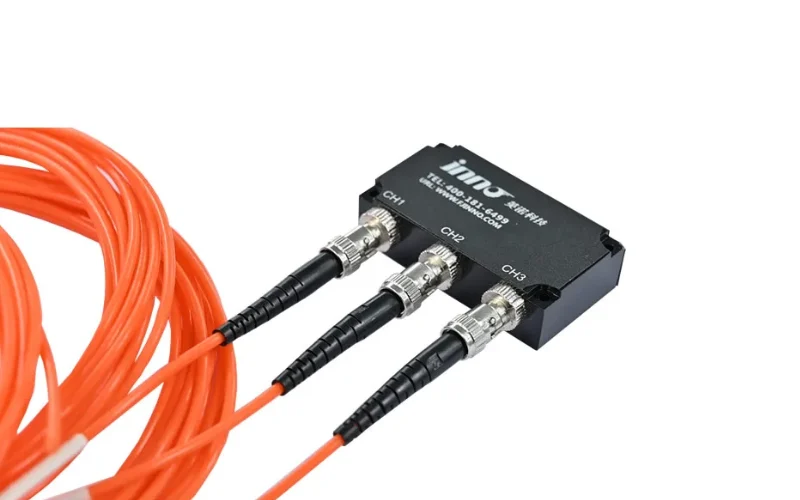
| Remote electronic readout | Requires optical temperature measurement instrument | Requires RTD-compatible monitor or controller |
3. Direct Hot-Spot Measurement with Fiber Optic Sensors
Direct winding hot-spot measurement is one of the strongest applications for optical sensing. A properly positioned sensor de temperatura de fibra óptica can provide temperature data from selected locations inside a transformer winding without introducing a conductive electrical sensing path.
Sensor probes are normally positioned at locations identified during transformer thermal design. Installation therefore needs to be considered during transformer manufacturing, winding assembly or a suitable refurbishment process rather than treated as a simple external retrofit.
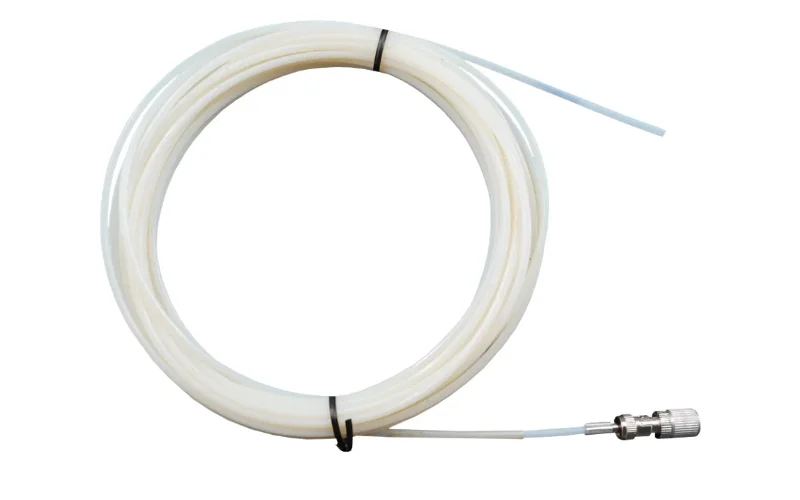
INNOFZ also provides dedicated polyimide fiber optic temperature sensors for transformer windings and armored designs for applications requiring different mechanical protection and installation arrangements.
3.1 Why Measure the Hot Spot Directly?
Winding hot-spot temperature is closely related to local thermal stress on insulation. Top-oil temperature and modeled winding temperature remain useful operating parameters, but they do not always represent the temperature at a specific internal winding location.
Direct sensors can therefore complement calculated thermal models when actual winding temperature information is required. More detail on this measurement approach is covered in INNOFZ's transformer winding hot-spot temperature monitoring technical resource.
4. Where PT100 and RTD Sensors Are Suitable
PT100 sensors remain widely used because they are simple, mature and compatible with many temperature monitoring and control devices. Dry-type transformers commonly use RTD sensors installed at designed locations within or close to the windings.
PT100 sensors can also measure oil temperature, cooling-system temperature and other accessible thermal points when the transformer design permits. Electrical insulation and wiring arrangements must be appropriate for the voltage environment.
Conventional RTDs should not automatically be treated as equivalent to an optically isolated sensor embedded directly in a high-voltage oil-immersed winding. Measurement location and transformer construction determine whether PT100, fiber optic sensing or another method is appropriate.
5. Oil-Immersed vs Dry-Type Transformer Applications
Transformer construction significantly changes the sensing strategy. Oil-immersed units often require direct winding sensors to withstand transformer oil, winding assembly processes and high electric-field environments. Purpose-designed fiber optic sensors for oil-immersed transformer windings provide one option when direct internal temperature measurement is required.
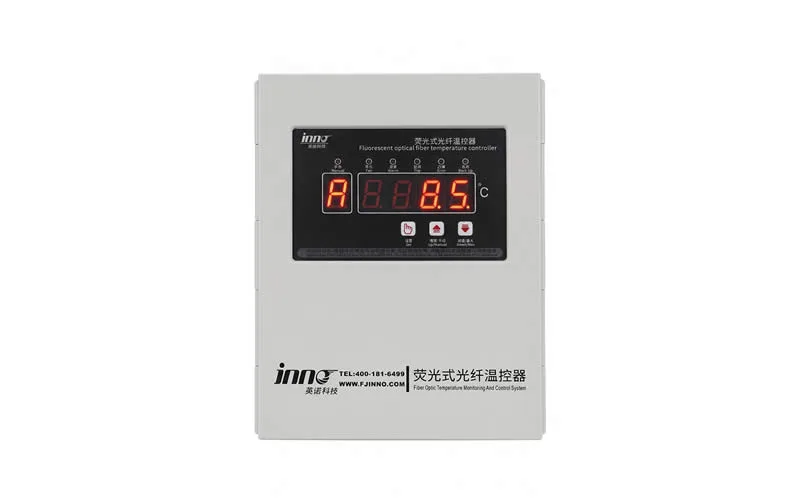
Dry-type transformers provide more flexibility for conventional RTD sensing. PT100 sensors can be incorporated into winding temperature control systems for display, alarm and cooling fan control, while fiber optic sensing remains useful where electrical isolation or direct measurement at specific thermal points is required.
| Solicitud | Fibra óptica | PT100 / RTD |
|---|---|---|
| Oil-immersed winding hot spot | Well suited to direct measurement | Depends strongly on transformer insulation design |
| Dry-type winding | Adecuado | De uso común |
| Top-oil measurement | Possible but not normally necessary | Common solution |
| Strong EMI / high electric field | Strong advantage | Requires appropriate electrical design |
| Cooling fan control | Can provide measurement input through monitoring instrument | Commonly integrated with temperature controllers |
6. Key Sensor Selection Factors
Sensor selection should start from the measurement point rather than from sensor technology alone. Direct winding measurement introduces different requirements from oil-temperature measurement or general cooling control.
- Transformer type: oil-immersed and dry-type designs require different installation methods.
- Measurement location: identify whether the target is a winding hot spot, general winding temperature, top oil or another thermal point.
- Electrical isolation: high-voltage winding locations require careful consideration of conductive sensor wiring.
- Temperature range: sensor and monitoring instrument must cover the expected operating range.
- Accuracy and resolution: select according to the monitoring objective rather than using unnecessary specifications.
- Response time: faster response can be useful where load and temperature change rapidly.
- Mechanical construction: probes must tolerate installation forces, insulation processing and long-term transformer operation.
- Monitoring interface: confirm compatibility with the required display, alarm, relay, communication or SCADA interface.
7. Connecting Sensors to a Temperature Monitoring System
A temperature sensor only provides the measurement point. Practical transformer monitoring also requires signal processing, display, alarm logic and communication where remote supervision is needed.
Multiple winding sensors can be connected to a sistema de monitoreo de la temperatura del transformador so temperature trends can be compared with transformer load and cooling status. Long-term trend information is often more useful than evaluating one isolated temperature reading.
Alarm and trip settings should follow transformer design requirements, manufacturer recommendations and the site's protection philosophy. Universal temperature thresholds should not be applied to every transformer without considering insulation class, cooling method, loading and sensor location.
8. Transformer Winding Temperature Sensor FAQ
8.1 What sensor is used to measure transformer winding temperature?
PT100 RTDs and fiber optic temperature sensors are both used. PT100 sensors are common in dry-type transformers and other electrically suitable measurement locations, while fiber optic sensors are particularly useful for direct winding hot-spot measurement in high-voltage and strong electromagnetic environments.
8.2 Can a PT100 sensor measure transformer winding temperature?
Yes. PT100 sensors are commonly installed at designed winding measurement positions in dry-type transformers. Suitability inside high-voltage oil-immersed windings depends on the transformer insulation and electrical design, so conventional PT100 installation should not automatically be treated as equivalent to an embedded fiber optic sensor.
8.3 Why use fiber optic sensors for transformer winding hot spots?
Fiber optic sensing provides electrical isolation and immunity to electromagnetic interference along the optical sensing path. These characteristics allow probes to be positioned at selected winding locations where conventional electrically connected sensors may be difficult to use safely.
8.4 Where should a winding temperature sensor be installed?
Sensor position depends on transformer thermal design and the intended measurement. Direct hot-spot probes should be located at predicted high-temperature winding positions, while RTDs used for general winding monitoring or cooling control are installed at locations specified by the transformer manufacturer or design engineer.