

What Is a Transformer Pressure Sensor?
Дата публикации:2026年10月24日 16:30:07
- A transformer pressure sensor measures pressure in a transformer oil or tank-related system and converts the pressure condition into a usable measurement signal.
- Pressure data can help indicate changes in oil-system or tank conditions, and oil temperature affects oil expansion and therefore pressure behavior.
- Pressure sensors provide measurement data, while pressure relief devices provide mechanical pressure relief.
- Pressure gauges mainly provide local indication, whereas sensors or transmitters may provide remote signals.
- Pressure readings should normally be interpreted together with oil temperature, oil level, alarms and other transformer condition information.
Содержание
- 1. What Does a Transformer Pressure Sensor Measure?
- 2. How Does Pressure Sensing Work?
- 3. Pressure Sensor vs Pressure Gauge
- 4. Pressure Sensor vs Pressure Relief Device
- 5. What Causes Transformer Pressure to Change?
- 6. Online Pressure Monitoring and Alarms
- 7. Choosing a Transformer Pressure Sensor
- 8. Transformer Pressure Sensor FAQ
1. What Does a Transformer Pressure Sensor Measure?
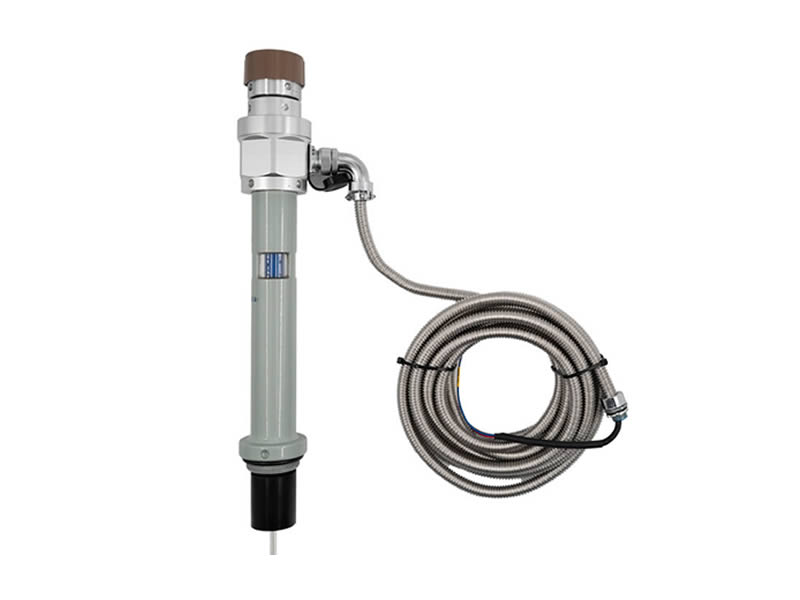
A transformer pressure sensor measures pressure at a designed point in the transformer oil or tank-related system. Depending on transformer design, monitoring point and sensor configuration, that point may be the tank, an oil-system fitting or another defined connection. Installation positions are therefore not identical across all transformers.
Pressure measurement can be used to observe tank pressure condition, oil-system pressure, pressure trends, abnormal pressure change and alarm conditions. Pressure alone does not identify the exact internal fault, so it works as one indicator among several.
| Параметр | What It Indicates | Typical Monitoring Purpose |
|---|---|---|
| Давление | Pressure condition of the tank or oil system | Observe trends and abnormal pressure change |
| Температура масла | Overall thermal condition of the oil | Assess loading, cooling and oil expansion effects |
| Уровень масла | Oil volume in the conservator or oil chamber | Detect oil loss or abnormal level change |
| DGA | Fault gases dissolved in the oil | Track developing thermal or electrical conditions |
| Температура намотки | Winding or hot-spot temperature | Evaluate thermal stress on insulation |
2. How Does Pressure Sensing Work?
The sensing chain is straightforward. Pressure at the sensing point acts on a sensing element, which responds through physical deformation or an electrical change. The response is converted into pressure information, which a local monitor or an online monitoring system then receives.
Common sensing technologies include strain-based and piezoresistive elements, as well as mechanical designs. The working principle of a specific device should be taken from its own documentation and not assumed from the product category.
2.1 Sensor
Pressure sensors perform the sensing step and produce a measurement signal. Signal form varies with the design.
2.2 Pressure Transmitter
Pressure transmitters typically add signal conditioning and provide a standardized electrical output for remote monitoring. Product naming overlaps between manufacturers, so a device called a sensor may include conditioning, and a transmitter may be built around a basic sensor. Actual functions follow the specific product.
3. Pressure Sensor vs Pressure Gauge
A transformer pressure gauge, often described as an oil pressure gauge for a transformer, mainly provides local visual indication. A sensor produces a pressure measurement signal, and a transmitter typically conditions that signal for remote monitoring.
| Устройство | Primary Function | Локальное отображение | Electrical Output | Удаленный мониторинг |
|---|---|---|---|---|
| Pressure Gauge | Local pressure indication | Да | Contacts or outputs on some designs | Not by itself |
| Pressure Sensor | Pressure measurement signal | Зависит от конструкции | Да | Through a connected system |
| Pressure Transmitter | Measurement with conditioned output | Зависит от конструкции | Yes, typically standardized | Yes, by configuration |
Actual functionality depends on the specific product design, and some gauges include switch contacts or outputs.
4. Pressure Sensor vs Pressure Relief Device
Measurement is not pressure relief. A pressure sensor measures pressure, while a pressure relief device (PRD) relieves excessive internal pressure when its designed operating point is reached. A sensor does not protect the tank by releasing pressure. The relief function is covered in detail in the article on how a transformer pressure relief device works.
| Устройство | Основное назначение | Measures Pressure | Relieves Pressure | Типичный результат |
|---|---|---|---|---|
| Pressure Sensor | Pressure measurement | Yes, continuously | Нет | Electrical signal or data |
| Pressure Gauge | Local indication | Yes, as a local reading | Нет | Dial, sometimes contacts |
| Pressure Relief Device | Relieve excessive pressure | Нет | Yes, at its designed operating point | Mechanical indication or alarm contact, by design |
5. What Causes Transformer Pressure to Change?
5.1 Temperature and Oil Expansion
Transformer oil expands as temperature rises and contracts as temperature falls. Pressure behavior may follow oil temperature, depending on tank and oil-system design. A temperature-related change is therefore expected, and higher temperature does not automatically mean dangerous pressure.
5.2 Abnormal Pressure Change
Pressure change that does not follow temperature may be associated with:
- Abnormal heating
- Internal gas generation
- An electrical fault
- An oil-system problem
- Tank or sealing condition
- Incorrect oil level
- Unusual operating conditions
Pressure rise does not always mean an internal fault. Each possibility requires further assessment with related data.
| Параметр мониторинга | Что это показывает | Why It Matters Together |
|---|---|---|
| Давление | Tank and oil-system pressure | Adds mechanical information that temperature alone cannot show |
| Температура масла | Thermal condition and oil expansion | Pressure without temperature context can be misleading |
| Уровень масла | Oil volume in the system | Level and pressure can both change with oil-system conditions |
| DGA | Fault gases dissolved in oil | Supplies internal gas-condition information that pressure sensing cannot provide |
DGA does not measure pressure, and pressure sensing does not measure gases. Dissolved gas analysis and pressure data answer different questions, so combining them gives a fuller picture of oil-system condition.
6. Online Pressure Monitoring and Alarms
Online transformer pressure monitoring may provide continuous measurement, trend history, pressure alarms where the device supports them, remote indication and integration with a transformer monitoring system. Communication outputs depend on the device, so none should be assumed.
INNOFZ currently lists no standalone pressure sensor product. Pressure is covered by an integrated Система контроля температуры, уровня и давления трансформаторного масла, model IB-YKTCF-OL/OP, designed for oil-immersed distribution transformers. It mounts at the position traditionally used for an oil level gauge and provides RS485 communication with IP68 protection. Its listed pressure range is 71–181 kPa absolute with ±2 kPa accuracy, values specific to that device.
The same unit also integrates a pressure relief valve, which is a separate function from pressure measurement. Pressure alarms, where supported, work best when read against temperature, oil level and operating history, in the same way any transformer alarm calls for verification before action.
7. Choosing a Transformer Pressure Sensor
| Элемент выбора | Что необходимо подтвердить |
|---|---|
| Тип трансформатора | Oil-immersed design, sealed or conservator type |
| Pressure measurement point | Available tank or oil-system connection |
| Expected pressure range | Range covers normal and abnormal conditions; absolute or gauge reference |
| Required accuracy | Accuracy and resolution suited to trend observation |
| Выходной сигнал | Signal type required by the monitoring equipment |
| Дистанционный мониторинг | Communication interface and data format |
| Требования к системе сигнализации | Whether high or low pressure alarm outputs are needed |
| Environmental protection | Ingress protection and outdoor suitability |
| Electrical connection | Power supply, cable and connector arrangement |
| Monitoring compatibility | Interface with existing temperature, oil level or SCADA systems |
| Installation conditions | Mounting thread, access and clearance |
Pressure monitoring is one part of oil-immersed transformer condition monitoring. Broader мониторинг масляных трансформаторов can combine pressure, oil level, oil temperature, winding temperature, DGA, partial discharge, bushing condition, OLTC condition and alarm history. Projects spanning several parameters can start from the wider мониторинг трансформатора range.
8. Transformer Pressure Sensor FAQ
8.1 What does a transformer pressure sensor measure?
A transformer pressure sensor measures pressure at a designed point in the transformer oil or tank-related system and converts it into a measurement signal. Measurement location depends on transformer design and sensor configuration. Pressure data shows condition and trends but does not identify the exact fault by itself.
8.2 What is the difference between a transformer pressure sensor and pressure gauge?
A pressure gauge mainly provides local visual indication, while a pressure sensor produces a measurement signal for monitoring equipment. Pressure transmitters usually add a conditioned electrical output for remote use. Functions overlap between products, so each model's documentation should confirm what it provides.
8.3 Is a pressure sensor the same as a pressure relief device?
No. A pressure sensor measures pressure and supplies data, while a pressure relief device opens to relieve excessive internal pressure at its designed operating point. Sensing does not relieve pressure. Some integrated units combine both functions in one assembly, but the functions remain separate.
8.4 Why should transformer pressure be monitored with oil temperature?
Transformer oil expands as temperature rises, so pressure can change with oil temperature depending on tank design. Without temperature context, a normal thermal change may look abnormal, or a real abnormality may be missed. Reading pressure with oil temperature and oil level improves interpretation.