




What Is a Transformer Conservator Tank?
发布时间:2026年10月24日 16:50:26
- A transformer conservator tank is an auxiliary oil reservoir connected to the main tank of many oil-immersed transformers to accommodate oil expansion and contraction as temperature changes.
- Oil moves between the main tank and the conservator as transformer oil volume changes, so conservator oil level varies during normal operation.
- Many conservator-type transformers use an oil level indicator to show the relative oil level, and a breather to manage air exchange on relevant designs.
- Buchholz relays are commonly installed in the pipe between the main tank and the conservator where the transformer design uses this protection arrangement.
- Conservator condition, oil level, temperature and pressure-related data can support broader transformer condition assessment.
Índice
- 1. What Does a Transformer Conservator Tank Do?
- 2. How Does a Conservator Tank Work?
- 3. Why Conservator Oil Level Changes
- 4. Conservator Tank vs Main Transformer Tank
- 5. Bladder and Diaphragm Conservator Designs
- 6. Buchholz Relay, Breather and Oil Level Indicator
- 7. Conservator Monitoring and Inspection
- 8. Transformer Conservator Tank FAQ
1. What Does a Transformer Conservator Tank Do?
The conservator, also called the oil conservator tank or transformer oil expansion tank, provides space for oil volume changes. Its main functions are:
- Accommodating oil expansion as the transformer heats up
- Providing space for oil contraction as it cools
- Helping maintain suitable oil volume within the transformer oil system
- Providing a location for oil level indication
- Forming part of the oil management arrangement on suitable oil-immersed transformers
Not every oil-immersed transformer uses a conservator tank. Sealed and hermetically sealed transformers may manage oil expansion in other ways, so the arrangement depends on transformer design.
| Componente | Primary Function | Typical Relationship |
|---|---|---|
| Main Transformer Tank | Contains the active parts and the primary oil volume | Connected to the conservator by oil piping |
| Conservator Tank | Accommodates oil volume expansion and contraction | Mounted above the main tank on conservator-type designs |
| Oil Level Indicator | Shows the relative oil level | Fitted on the conservator, depending on design |
| Breather | Manages air exchange and moisture control | Connected to the conservator air space on relevant designs |
| Buchholz Relay | Responds to gas accumulation and oil surge | Installed in the pipe between main tank and conservator |
2. How Does a Conservator Tank Work?
Oil movement follows a simple sequence. Transformer load or ambient conditions change the oil temperature, the oil expands or contracts, and the volume change moves oil between the main tank and the conservator. Conservator oil level then rises or falls.
The conservator is not primarily a pressure relief device. Abnormal internal pressure is handled by the transformer design and by protection devices intended for that purpose.
2.1 Oil Expansion
Higher oil temperature generally increases oil volume. The extra oil flows upward into the conservator, which keeps the main tank filled and gives the added volume somewhere to go.
2.2 Oil Contraction
Lower oil temperature generally decreases oil volume. Oil returns from the conservator to the main tank, and conservator level drops accordingly. Both movements are part of normal operation.
3. Why Conservator Oil Level Changes
Oil level changes during normal operation because oil volume changes with temperature. Normal factors include transformer loading, oil temperature, ambient temperature and the operating cycle of the unit, so level is not expected to stay fixed.
Abnormal level change may be associated with:
- Oil leakage
- Incorrect oil quantity
- An indicator problem
- Conservator bladder or diaphragm issues, where applicable
- Maintenance error
- Abnormal oil-system condition
Low oil level does not automatically mean leakage, and high oil level does not automatically mean a fault. Level should be interpreted together with oil temperature and recent operating history. The article on the transformer oil level indicator covers gauge types and level alarms in more detail.
4. Conservator Tank vs Main Transformer Tank
The main transformer tank holds the active transformer components and the main insulating oil volume. The conservator is an auxiliary reservoir and should not be described as the main oil tank.
| Destaque | Main Transformer Tank | Conservator Tank |
|---|---|---|
| Primary Function | Houses the active part in insulating oil | Accommodates oil volume change |
| Oil Volume | Primary oil volume | Auxiliary volume sized for expansion and contraction |
| Major Transformer Components | Core, windings and internal connections | No active components |
| Oil Expansion Role | Source and return of oil during volume change | Receives and returns the oil |
| Typical Oil Level Indication | Usually none in conservator-type designs | Oil level indicator, depending on design |
| Localização típica | Base of the transformer | Above or beside the main tank, linked by piping |
5. Bladder and Diaphragm Conservator Designs
In a conventional conservator, the oil surface can exchange air with the atmosphere through a breather arrangement. Moisture and oxygen reaching the oil are the concern, and the breather is there to limit them.
Other designs use a separation element. Depending on transformer design, a rubber bladder or a diaphragm can reduce direct contact between transformer oil and outside air. Not every modern transformer uses one, and the choice depends on the manufacturer's design.
| Design | Oil-Air Separation | Typical Characteristic |
|---|---|---|
| Conventional Conservator | Oil surface exchanges air through the breather | Simple arrangement; breather condition matters for moisture control |
| Bladder Conservator | Flexible bag separates oil from air | Reduces direct contact; bladder condition becomes an inspection item |
| Diaphragm Conservator | Flexible membrane separates oil from air | Reduces direct contact; diaphragm condition becomes an inspection item |
6. Buchholz Relay, Breather and Oil Level Indicator
6.1 Buchholz Relay
On suitable conservator-type oil-immersed transformers, a Buchholz relay may be installed in the pipe between the main tank and the conservator. It responds to gas accumulation and oil surge, and it is neither an oil level indicator nor a pressure relief device. Its operation is explained in the article on the Buchholz relay.
6.2 Breather
Breather arrangements help manage the air exchange that accompanies conservator oil volume changes on relevant designs. Desiccant breathers, commonly filled with silica gel, are used to reduce moisture entering with the incoming air.
6.3 Oil Level Indicator
Depending on design, an oil level indicator provides visual or electrical information about conservator oil level. Magnetic gauges are common for local indication, and some models add alarm contacts.
7. Conservator Monitoring and Inspection
Conservator condition is judged from several observations taken together: oil level, oil temperature, leakage, pressure-related condition, alarm history, Buchholz relay operation where applicable, breather condition, and bladder or diaphragm condition where applicable. Oil level data becomes more meaningful when compared with oil temperature.
| Monitoring Item | What to Check | Possible Meaning |
|---|---|---|
| Nível de óleo | Reading against oil temperature and earlier readings | Movement that does not follow temperature may indicate oil loss or incorrect quantity |
| Temperatura do óleo | Loading and ambient conditions | Provides the context for expected level movement |
| Leakage | Gaskets, valves, joints and tank surfaces | Visible oil loss can suggest a leak and requires further investigation |
| Breather Condition | Desiccant condition and free air passage | Can suggest moisture ingress or restricted air exchange |
| Buchholz Alarm | Relay indication and any collected gas | May indicate an internal abnormality; requires further investigation |
| Pressure Data | Pressure trend against temperature and level | Unusual change can suggest an abnormal oil-system condition |
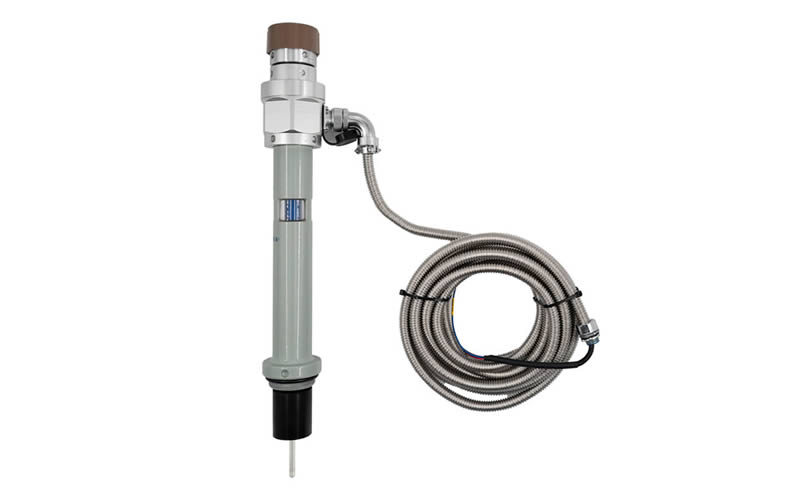
Combined monitoring can bring oil level, oil temperature, pressure and alarm status into one view. INNOFZ lists an integrated sistema de monitoramento da temperatura, do nível e da pressão do óleo do transformador, model IB-YKTCF-OL/OP, designed for oil-immersed distribution transformers. It mounts at the position traditionally used for an oil level gauge and provides RS485 communication with IP68 protection.
Conservator condition is only one part of oil-immersed transformer assessment. Broader monitoramento de transformadores imersos em óleo may combine oil temperature, oil level, pressure, DGA, winding temperature, bushing condition, OLTC condition and alarm history. Gas information from análise de gás dissolvido adds chemical evidence that level and pressure data cannot provide, and projects covering several parameters can start from the wider monitoramento de transformadores range.
8. Transformer Conservator Tank FAQ
8.1 What is the purpose of a conservator tank in a transformer?
A conservator tank accommodates the expansion and contraction of transformer oil as temperature changes. It lets oil move between the main tank and an auxiliary reservoir, helps keep the main tank full, and provides a place for oil level indication on conservator-type oil-immersed transformers.
8.2 Why does oil level change in a transformer conservator?
Transformer oil volume changes with temperature. As load and ambient conditions raise oil temperature, oil expands into the conservator and the level rises. As it cools, oil returns to the main tank and the level falls. Normal movement is expected, so level should be read against oil temperature.
8.3 Do all oil-immersed transformers have a conservator tank?
No. Many conservator-type designs use one, but sealed and hermetically sealed transformers may manage oil expansion differently and have no conservator. The arrangement depends on transformer design, voltage class and manufacturer practice.
8.4 What is the difference between a transformer conservator and the main tank?
The main tank contains the active components and the primary oil volume. The conservator is an auxiliary reservoir above or beside it that accommodates oil expansion and contraction. It holds no core or windings, and it typically carries the oil level indicator on conservator-type designs.