

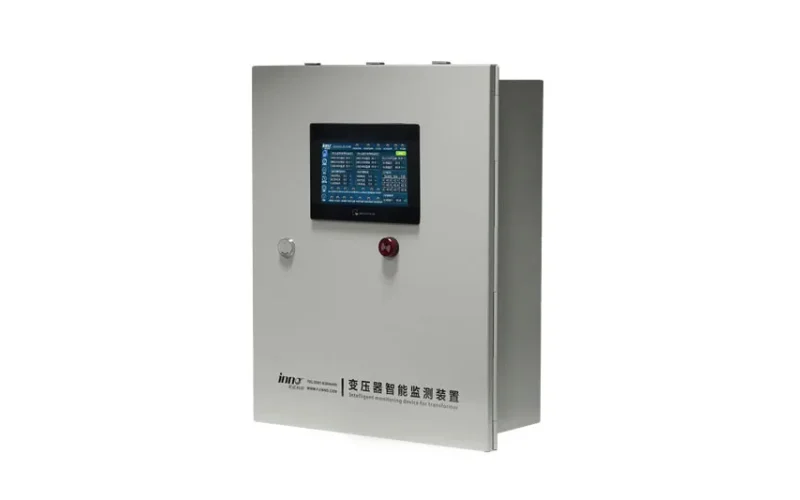
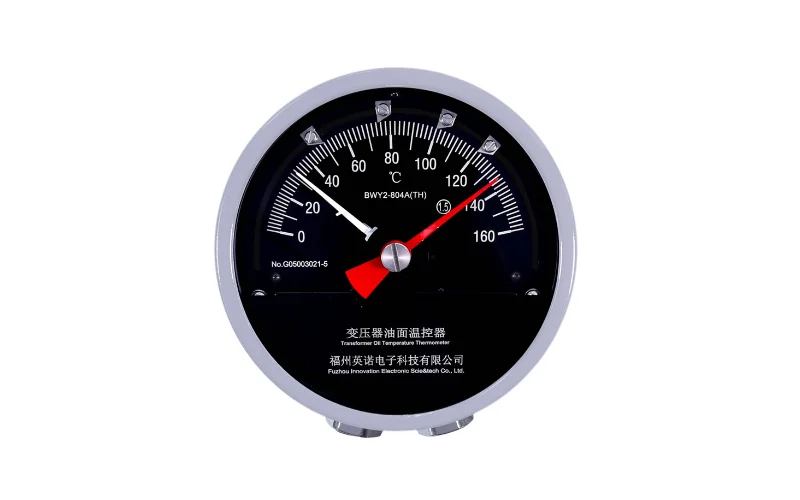
O que é um indicador de temperatura do óleo em um transformador?
发布时间:23 de outubro de 2026, às 10:34:13
- Oil temperature indicators (OTI) measure and display the temperature of the insulating oil in a transformer, normally the top-oil temperature.
- OTI instruments are mainly used on oil-immersed transformers, where a sensing bulb sits in a thermometer pocket and a dial shows the reading locally.
- OTI contacts for alarm, trip or cooling control, and remote signals, are available depending on model and configuration.
- Winding temperature is a different quantity, and oil temperature does not equal winding hot-spot temperature.
- Continuous monitoring can combine OTI data with WTI, PT100 or fiber optic temperature sensors for a broader thermal assessment.
Índice
- 1. What Does an Oil Temperature Indicator Measure?
- 2. How Does a Transformer OTI Work?
- 3. Top-Oil Temperature vs Winding Temperature
- 4. OTI Alarm, Trip and Cooling Functions
- 5. OTI vs WTI
- 6. Choosing an Oil Temperature Indicator
- 7. Oil Temperature Indicator Products
- 8. Oil Temperature Indicator FAQ
1. What Does an Oil Temperature Indicator Measure?
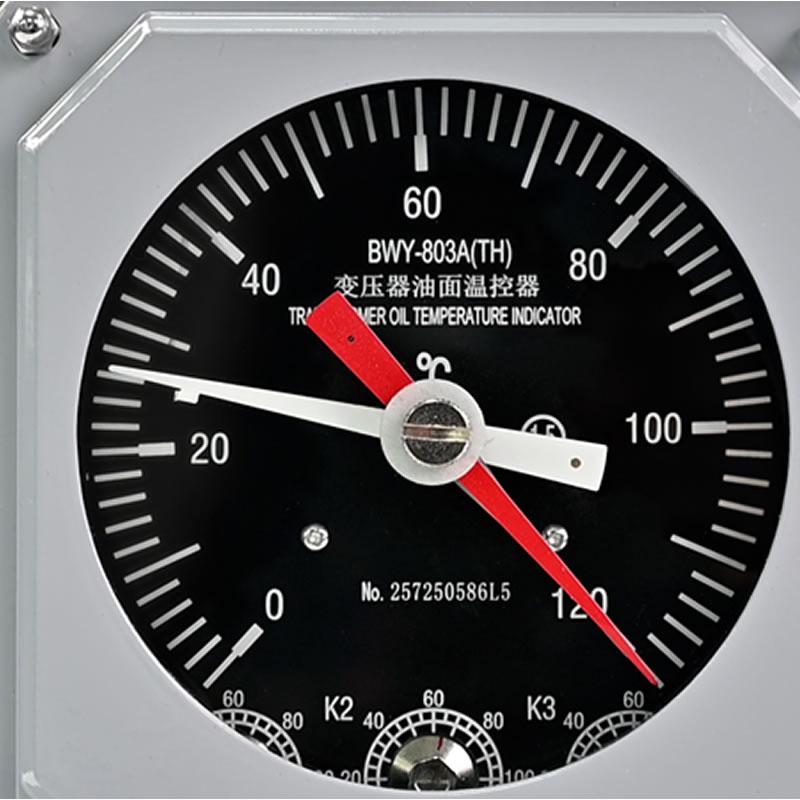
A transformer oil temperature indicator shows the temperature of the insulating oil, particularly top-oil temperature at the designed pocket location. It is not a general internal temperature gauge. The reading describes the oil only.
Top-oil temperature reflects transformer loading and cooling performance, and it changes slowly because oil has high thermal mass. The indicated value also depends on where the sensing bulb sits, so the pocket position set by the transformer design matters. Winding hot-spot temperature can be higher than the oil reading.
| Parâmetro | O que isso representa | Uso típico |
|---|---|---|
| Temperatura máxima do óleo | Temperature of the oil in the upper part of the tank | Oil over-temperature alarm, cooling control, local reading |
| Temperatura do enrolamento | Indicated or simulated temperature of the winding | Winding protection and cooling control |
| Winding Hot-Spot Temperature | Temperature at the hottest winding location | Loading decisions, insulation ageing assessment |
| Temperatura ambiente | Air temperature around the transformer | Reference for load and cooling evaluation |
2. How Does a Transformer OTI Work?
OTI construction varies between designs. The description below follows the capillary-type mechanical structure of the INNOFZ BWY-802/803A series, and other models may differ.
2.1 Sensing Bulb, Capillary and Dial
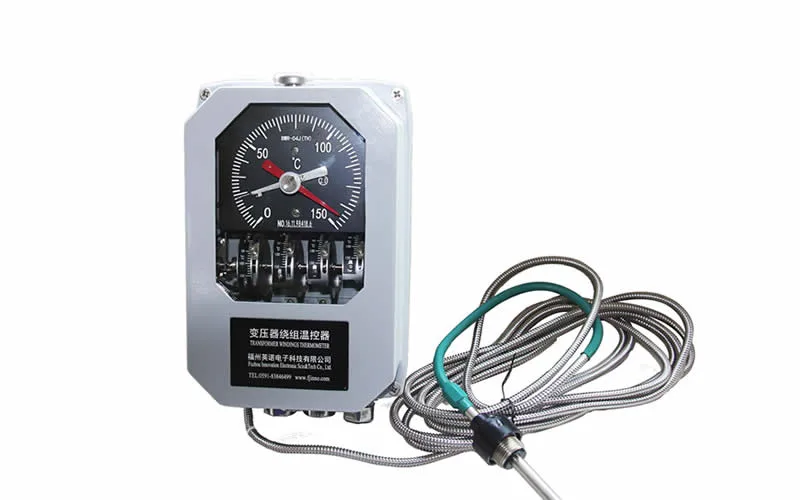
The temperature sensing bulb is inserted into the transformer oil pocket. When oil temperature changes, the medium inside the sealed system expands or contracts. The capillary carries that change to an elastic element in the instrument body, and an internal mechanism moves the pointer on the dial indicator.
2.2 Contacts and Remote Signal
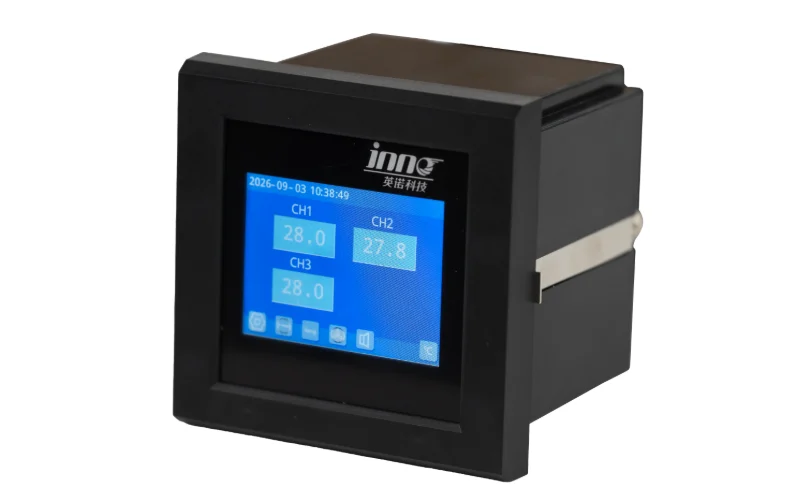
Adjustable temperature switches in the same instrument operate alarm, protection or cooling circuits. For remote indication, a Pt100 resistance signal can feed a digital display or temperature controller, and some models offer a 4–20 mA output. Remote options depend on the selected model.
3. Top-Oil Temperature vs Winding Temperature
An OTI is not a WTI. The OTI indicates oil temperature, while a WTI indicates or simulates winding temperature, depending on instrument design.
Conventional WTI instruments commonly derive a thermal image from top-oil temperature plus a load-current-related heating effect. They therefore give an estimate, not a direct measurement inside the winding. The principle and its limits are covered in INNOFZ's winding temperature indicator guide. Direct fiber optic sensors can measure selected winding hot spots at their installed positions.
| Método | Measured / Indicated Parameter | Typical Sensor Location | Aplicação típica |
|---|---|---|---|
| OTI | Oil temperature, usually top-oil | Thermometer pocket in the oil | Local oil temperature indication, alarm, cooling control |
| WTI | Indicated or simulated winding temperature | Oil pocket, with load-related heating added | Winding temperature indication, cooling, alarm, trip |
| PT100 | Temperature at the sensing element | Depends on installation, such as an oil pocket or an embedded dry-type position | Electrical temperature signal for controllers and monitors |
| Sensor de fibra óptica | Direct temperature at the probe position | Embedded at selected winding locations | Direct hot-spot monitoring |
4. OTI Alarm, Trip and Cooling Functions
Beyond the dial reading, an OTI may provide the following, depending on model and configuration:
- High-temperature alarm contact
- Trip contact for over-temperature protection
- Cooling fan or oil pump control contact
- Remote signal output, such as Pt100 or 4–20 mA
Not every OTI includes all of these. Contact quantity, contact rating and output type differ by model, so they should be defined before ordering.
Set points are not universal. Alarm, trip and fan-start temperatures should follow transformer manufacturer recommendations, transformer design, cooling mode, operating conditions and the site protection philosophy.
5. OTI vs WTI
WTI and OTI in transformer service are complementary, and many oil-immersed units carry both. The table gives a short summary. The full comparison is in the transformer oil temperature gauge vs winding temperature gauge guide.
| Destaque | OTI | WTI |
|---|---|---|
| Parâmetro primário | Oil temperature, usually top-oil | Winding temperature, indicated or simulated |
| Typical Transformer Type | Oil-immersed | Oil-immersed |
| Exibição local | Yes, dial indicator | Yes, dial indicator |
| Alarm / Trip Contacts | Depending on model | Depending on model |
| Controle de resfriamento | Depending on model and configuration | Inscrição comum |
| Medição direta do ponto quente | Não | Generally no direct internal hot-spot measurement for conventional WTI |
Only fiber optic sensing provides direct measurement at the winding.
6. Choosing an Oil Temperature Indicator
An oil temperature gauge replacement or new specification should be checked against the items below, not against temperature range alone.
| Item de seleção | O que verificar |
|---|---|
| Tipo de transformador | Power, distribution or special oil-immersed transformer |
| Faixa de temperatura | Range that covers normal operation and alarm settings |
| Alterar contatos | Number of contacts and their functions |
| Alarm / Trip Requirements | Alarm only, or trip contact also needed |
| Dial Size and Readability | Reading distance and mounting height |
| Remote Output | Pt100, 4–20 mA, digital display or RS485 conversion |
| Capillary and Installation | Capillary length, bulb size, pocket thread and insertion depth |
| Ambient and Enclosure | Operating temperature, humidity and protection grade |
| System Compatibility | Signal type accepted by the existing monitoring system |
An OTI gives local oil-temperature indication, while wider transformer temperature monitoring may combine OTI, WTI, PT100 or direct fiber optic measurement depending on transformer design. INNOFZ lists these options under its transformer temperature monitor category, and the solução de monitoramento da temperatura de transformadores shows how they fit into one architecture.
7. Oil Temperature Indicator Products
INNOFZ offers two conventional OTI series: the BWY-802/803A Transformer Oil Temperature Indicator e o Indicador de temperatura do óleo do transformador BWY2. Values below come from the current product pages.
| Especificações | BWY-802/803A | BWY2 |
|---|---|---|
| Faixa de medição | 0–100°C or 0–120°C | de -20 °C a 140 °C |
| Precisão | Class 1.5; maximum error ±1.8°C at the 0–120°C detection point | Class 1.5; maximum error ±2.4°C at the detection point |
| Adjustable Switch Contacts | Three | 2–4 |
| Potência nominal do interruptor | 220 V CA / 3 A, 220 V CC / 1,5 A | 220 V CA / 5 A |
| Signal Output | Pt100 resistance signal | Pt100; 4–20 mA on selected models |
| Exibição remota | Connects to a digital display temperature controller | Optional digital display with RS485 communication |
| Proteção | IP55 | IP55 |
| Temperature Bulb | Φ14, insertion depth ≥150 mm | Φ14 × 150 mm |
| Rosca de montagem | M27 × 2 | M27 × 2 mm |
| Comprimento capilar | 5 m | Set by the last digits of the instrument number |
8. Oil Temperature Indicator FAQ
8.1 What is an OTI in a transformer?
An OTI is an oil temperature indicator, an instrument that shows the insulating oil temperature of an oil-immersed transformer, usually top-oil temperature. Depending on the model, it may also provide alarm, trip or cooling-control contacts and a remote signal.
8.2 What temperature does a transformer OTI measure?
A transformer OTI measures oil temperature, typically at the top-oil pocket location. It does not measure winding temperature or winding hot-spot temperature. The indicated value depends on sensor position and on transformer loading and cooling.
8.3 What is the difference between OTI and WTI?
An OTI indicates oil temperature, while a WTI indicates or simulates winding temperature. Conventional WTI instruments generally do not measure the winding hot spot directly. Many oil-immersed transformers use both instruments because they show different thermal conditions.
8.4 Can an oil temperature indicator provide alarm and trip contacts?
Many models can, but it depends on model and configuration. Contact quantity, rating and function vary. Alarm and trip set points should follow the transformer manufacturer recommendations and the site protection philosophy, so confirm the contact requirements before selecting an instrument.