

Transformer Reliability: Oil Condition Monitoring Guide 2027
Veröffentlichungsdatum:2026年11月3日 17:30:42
- Oil-immersed transformer reliability depends heavily on the oil-paper insulation system, so insulating oil condition is one of the earliest readable signs of insulation stress.
- Gases dissolved in the oil can expose developing thermal and electrical abnormalities well before external symptoms appear.
- Moisture accelerates cellulose aging and erodes dielectric margin, and the oil reading alone understates where most of that water sits.
- Oil temperature sets the aging pace. It also changes how moisture, level and pressure data must be read.
- Oil level and pressure supply mechanical and oil-preservation evidence, but neither replaces DGA or laboratory oil analysis.
- No single oil measurement settles condition. Trends, load context and cross-checks do.
Inhaltsverzeichnis
- Why Oil Condition Affects Transformer Reliability
- Which Oil Parameters Reveal Reliability Risk?
- DGA and Developing Internal Faults
- Moisture, Oil Aging and Paper Insulation
- Temperature, Oil Level and Pressure Trends
- Online Monitoring vs Laboratory Oil Analysis
- Oil Condition Monitoring Products and Selection
- Building an Oil-Based Reliability Monitoring Strategy
- Transformer Reliability FAQ
1. Why Oil Condition Affects Transformer Reliability
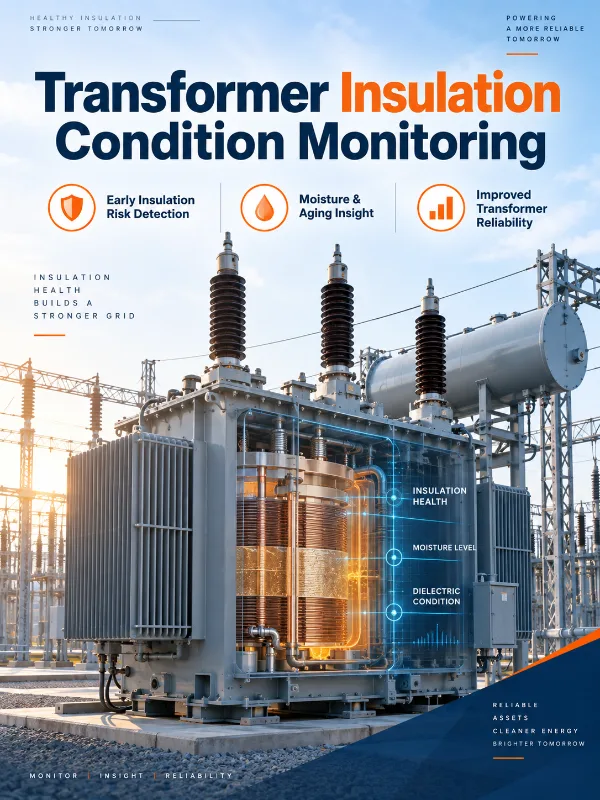
Oil and cellulose insulation age together. Insulating oil provides electrical insulation, carries heat to the cooling surfaces, and holds the gases and by-products that faults and aging release. That last function makes it a condition-information medium as well.
Temperature, moisture, oxidation, contamination and fault gases each change the oil, and each can accelerate deterioration of the paper it surrounds.
Oil condition is a major reliability input, but it is not the whole of transformer condition assessment. Windings, bushings, the tap changer and cooling hardware can fail without leaving a clear oil signature.
2. Which Oil Parameters Reveal Reliability Risk?
Measurement practice for each parameter is covered under Zustandsüberwachung von Transformatoröl. Here the question is narrower: what does each reading say about failure risk? Transformer oil analysis combines chemical, electrical and physical tests with operating context, and the table follows that logic.
| Oil Condition Parameter | Was dies bedeutet | Reliability Relevance | Online or Periodic |
|---|---|---|---|
| Dissolved Gases | Thermal, discharge and arcing activity; cellulose decomposition (CO, CO₂) | Gas trends and generation rate flag developing abnormalities; meaning depends on gas pattern and load | Online or periodic |
| Feuchtigkeit | Water stress in oil; indirect indication of water in paper | Reduces dielectric margin and speeds cellulose aging; needs oil temperature for context | Online sensor, laboratory verification |
| Öltemperatur | Thermal stress and cooling behavior | Sets aging rate and moisture distribution; top-oil is not the winding hot spot | Online |
| Acidity | Oxidation by-products | Acids and sludge can attack insulation and impair heat transfer | Periodic |
| Dielectric Strength | Resistance to electrical breakdown; sensitive to water and particles | A falling trend reduces margin against switching and fault transients | Periodic |
| Interfacial Tension | Polar contaminants and early oxidation | Early evidence of oil degradation before sludge forms | Periodic |
| Dissipation Factor / Power Factor | Dielectric losses from contamination and aging products | Rising losses point to deteriorating insulating quality | Periodic |
| Furans / 2-FAL | Cellulose degradation by-products | Supports insulation aging assessment; not a direct remaining-life measurement | Periodic |
| Ölstand | Oil inventory and preservation-system behavior | A level inconsistent with oil temperature can justify checks for leakage or conservator behavior | Online |
| Tank / Öldruck | Pressure behavior relative to temperature | Departure from the normal pressure-temperature relationship calls for investigation; causes depend on design | Online |
Each row follows the same chain: condition, mechanism, risk, evidence, decision. Higher moisture means reduced dielectric margin and faster cellulose degradation. That raises insulation risk, which moisture trend, temperature and oil analysis can confirm, and the outcome is an inspection, drying or maintenance decision.
Interpretation depends on that context. High moisture is not automatic failure. Acetylene does not mean severe arcing in every situation. A furan result is not a stopwatch on remaining life. Trend, load, temperature, transformer design and a commissioning baseline decide what a number means.
3. DGA and Developing Internal Faults
3.1 What Fault Gases Add to Reliability Assessment
Transformer fault gas monitoring answers one question the other oil tests cannot: is something abnormal happening inside the tank right now? H₂, CH₄, C₂H₆, C₂H₄ and C₂H₂ point to discharge and thermal activity, while CO and CO₂ relate to cellulose.
For reliability, generation rate matters more than a single concentration. A moderate but stable gas level usually carries less urgency than a fast climb from a low base. IEEE C57.104-2019 addresses rate of gas formation for this reason. Ratio methods and fault-type diagrams are covered in Analyse von gelöstem Gas in Transformatoren, so they are not repeated here.
3.2 Online DGA Monitoring in Practice
Periodic sampling leaves blind intervals between laboratory results. A fault that evolves over hours can pass through that gap unseen, and an online DGA monitor is built to close it. The INNOFZ online DGA monitoring system extracts gases from circulating oil and separates them by gas chromatography.
Online DGA Monitoring System – Key Parameters
| Parameter | Current Product Specification | Reliability Monitoring Role |
|---|---|---|
| Detected gases | H₂, CH₄, C₂H₆, C₂H₄, C₂H₂, CO, CO₂ | Covers discharge, thermal and cellulose-related gas signatures |
| Hydrogen range | 2 – 2.000 μl/l | Early discharge indication |
| Acetylene range | 0,1 – 500 μl/l | Low-end sensitivity for arcing-related gas |
| Sampling cycle | Einstellbar; mindestens ≤ 2 Stunden | Shortens blind intervals between laboratory samples |
| Extraction and analysis | Dynamic vacuum membrane degassing; gas chromatography with TCD / FID detectors | Supports repeatable gas measurement |
| Diagnostic method | Built-in ratio-based fault diagnosis; product documentation references IEC 60599 and IEEE C57.104 for DGA interpretation | Turns concentrations into a fault classification for engineer review |
| Kommunikation | RS-485 (MODBUS RTU/TCP), IEC 61850, RJ-45 Ethernet; optional 4–20 mA | Feeds substation SCADA for trend review |
| Datenspeicherung | ≥ 10 Jahre Aufzeichnungen an Bord | Preserves long-term condition history |
| Installation | Energized transformer; oil inlet/outlet valve connection | Allows retrofit without an outage |
| Optional moisture in oil | 1 – 100 μL/L, ± 15% | Adds moisture to the same oil connection |
4. Moisture, Oil Aging and Paper Insulation
Water lives in both oil and paper, and the split changes with temperature. Warm oil holds more of it, so the oil ppm value rises and falls with load even when total water has not moved. Most of the water sits in the cellulose, so oil ppm alone cannot describe total insulation moisture. Continuous Feuchtigkeitsüberwachung bei Transformatoren that records oil temperature at the sensor lets the reading be normalized and trended.
Moisture accelerates cellulose degradation and lowers dielectric performance. Cellulose aging in turn releases more water, which makes a wet, old transformer harder to dry than a wet, young one.
A moisture rise does not name its own cause. Rising CO and CO₂ alongside it may indicate paper degradation as a contributor, though that needs confirmation. A rise with no gas change is no more conclusive. Read it against oil temperature and oil-paper moisture equilibrium, since oil values lag the paper after load changes. Then check sealing condition, breather and conservator condition where applicable, recent maintenance or oil handling, and the length and consistency of the measurement trend.
Several laboratory indicators complete the picture without turning this into a test manual. Acidity and interfacial tension track oxidation. Dielectric strength shows how water and particles erode breakdown margin. Dissipation factor reflects contamination and aging products. Furans trace cellulose degradation, and they are best read as supporting evidence rather than a direct remaining-life figure. IEC 60422 describes in-service evaluation of mineral insulating oil and covers these tests.
5. Temperature, Oil Level and Pressure Trends
5.1 Oil Temperature as a Thermal Stress Record
Top-oil temperature reflects loading and cooling effectiveness, and it drives oxidation, sludge formation and water release from paper. It does not equal the winding hot spot, which governs paper aging directly.
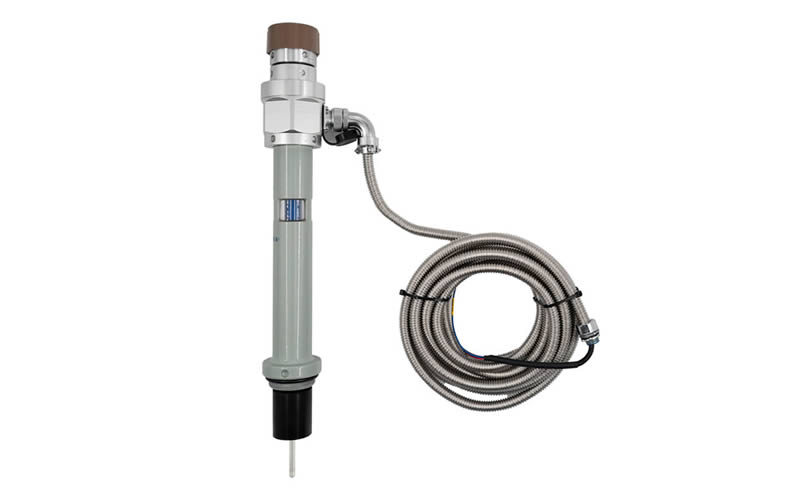
Local top-oil indication usually comes from a transformer oil temperature indicator, often called an OTI gauge. Continuous oil-condition monitoring needs that temperature trended with level, pressure and load. The BWY2-Transformatoröl-Temperaturanzeige provides adjustable switch contacts for cooling control and over-temperature alarm. It also offers Pt100 output, an optional 4–20 mA output and an optional remote digital display with RS485.
5.2 Level and Pressure Context
Oil temperature changes oil volume, so oil level should follow temperature. Pressure behavior may follow too, depending on transformer design, particularly in sealed units. A level trend inconsistent with its normal temperature relationship can justify checks for leakage, conservator behavior, oil handling or measurement error. Pressure departing from its normal relationship with oil temperature requires further investigation, with possible causes depending on transformer design. Trend correlation carries more weight here than any instantaneous value.
The INNOFZ transformer oil monitoring system (model IB-YKTCF-OL/OP) combines these measurements in one oil-immersed transformer monitoring device.
Transformer Oil Temperature, Level & Pressure Monitoring System – Key Parameters
| Parameter | Current Specification | Zweck der Überwachung |
|---|---|---|
| Öltemperatur | -45.0°C to +200.0°C; ±2°C up to +100.0°C, ±2% above; 0.1°C resolution | Thermal stress trend |
| Ölstand | Float-based detection with local viewing window | Oil inventory trend against temperature |
| Druck | 71–181 kPa absolute; ±2 kPa; 1 kPa resolution | Pressure-temperature relationship trend |
| Data update | ≤ 0.2 s for temperature, level and pressure | Fast capture of changes |
| Kommunikation | RS485; address 1–247; 1200 to 38400 bps, default 9600 | Integration with gateways, PLCs and SCADA |
| Environmental protection | IP68; ambient -40°C to +70°C | Outdoor operation |
| Anwendung | Oil-immersed distribution transformers; fits the conventional oil level gauge position | Single-point retrofit on the tank |
Continuous temperature, level and pressure trends provide context that contact-only alarms cannot. A low-level contact reports a result. A level trend that departs from its temperature relationship gives earlier grounds for inspection.
6. Online Monitoring vs Laboratory Oil Analysis
Online transformer monitoring and laboratory oil testing answer different questions. Online systems supply continuous trends, rate of change, event capture and remote data. Laboratories supply broader chemical and physical testing, verification and detailed diagnostics. Neither replaces the other. Online results are also checked against laboratory samples, as discussed in Online-DGA im Vergleich zur Ölprobenentnahme.
| Verfahren | Strength | Einschränkung | Best Reliability Use |
|---|---|---|---|
| Online-DGA | Continuous gas trends and rate of change | Limited to the gases the analyzer measures | Early warning for developing thermal or electrical faults |
| Online Moisture / Temperature / Level / Pressure | Continuous correlation of related variables | Does not measure oxidation or chemical aging | Context for insulation stress and oil preservation |
| Periodic Laboratory Oil Analysis | Wide test range and verification of online data | Discrete snapshots between sampling dates | Aging assessment, confirmation and detailed diagnosis |
7. Oil Condition Monitoring Products and Selection
Selection follows the parameter that needs coverage, not a product catalog.
| Product / Method | Primärparameter | Typical Reliability Role | Typische Anwendung |
|---|---|---|---|
| Online-DGA-Überwachungssystem | Seven fault gases | Continuous fault-gas trending | Critical and aging oil-immersed transformers |
| Überwachungssystem für Temperatur, Füllstand und Druck von Transformatoröl | Oil temperature, level, pressure | Oil preservation and thermal context | Ölgefüllte Verteilungstransformatoren |
| BWY2 Temperaturanzeige für Transformatoröl | Öl-Spitzentemperatur | Local indication, cooling control, alarm | Oil-immersed power transformers and control cabinets |
| Periodic Laboratory Oil Analysis | Chemical, electrical and physical oil properties | Verification and aging assessment | All oil-filled units on a scheduled basis |
8. Building an Oil-Based Reliability Monitoring Strategy
Monitoring scope should follow transformer size, voltage class, criticality, failure consequence, existing sensors, maintenance strategy and design. Three broad tiers show how that plays out:
- Basic operational visibility: oil temperature, oil level, protective contacts and periodic oil analysis.
- Condition-based monitoring: DGA, moisture, temperature, level and pressure with trend analysis.
- Critical asset: multi-parameter continuous monitoring, load correlation, SCADA integration and a defined maintenance workflow.
Whatever the tier, the decision flow is the same:
Oil condition data → trend comparison → abnormality identification → cross-check with load, temperature and protection data → condition assessment → maintenance priority.
Software can sort and flag, but it does not predict every failure. An engineer reviews the cross-checks before any maintenance decision.
Oil condition is one reliability domain. Overall health also depends on winding temperature, partial discharge, bushings, the tap changer, cooling and loading. Transformer health monitoring brings those domains together.
9. Transformer Reliability FAQ
9.1 How does transformer oil condition affect reliability?
Oil and paper age together. Moisture, oxidation, contamination and fault gases can accelerate deterioration of the insulation system. Oil condition therefore gives early evidence of insulation stress, though winding, bushing and tap-changer problems may not show up in the oil.
9.2 Which transformer oil parameters should be monitored online?
Dissolved gases, moisture, oil temperature, oil level and pressure suit continuous monitoring. Acidity, interfacial tension, dielectric strength, dissipation factor and furans generally remain periodic laboratory tests. The right scope depends on transformer criticality and design.
9.3 Can online oil monitoring replace laboratory oil analysis?
No. Online monitoring provides continuous trends and early warning. Laboratory analysis adds wider chemical and physical testing and verifies online sensors. Strong programs use both and investigate any large disagreement between them.
9.4 Which oil test gives the earliest warning of transformer faults?
DGA usually gives the earliest oil-based warning of developing thermal and electrical faults, particularly when gas generation rate is trended. It does not detect every fault, so interpret it alongside moisture, temperature, load and laboratory results.