
What Is a Fiber Optic Temperature Sensor Extension Cable?
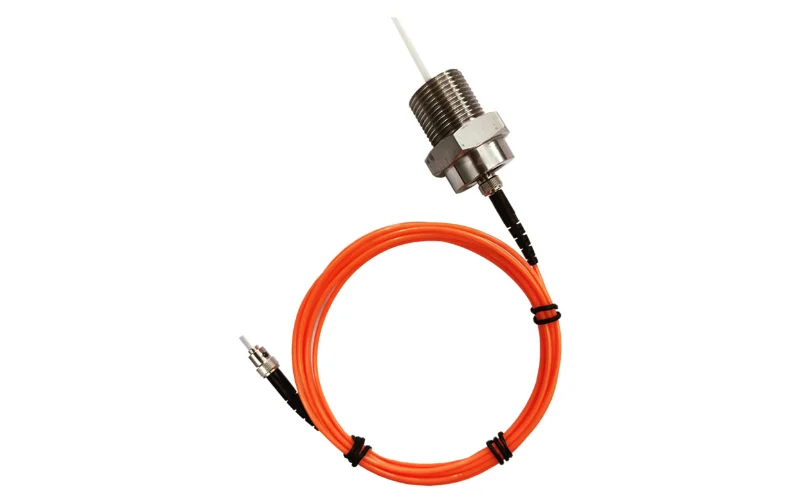
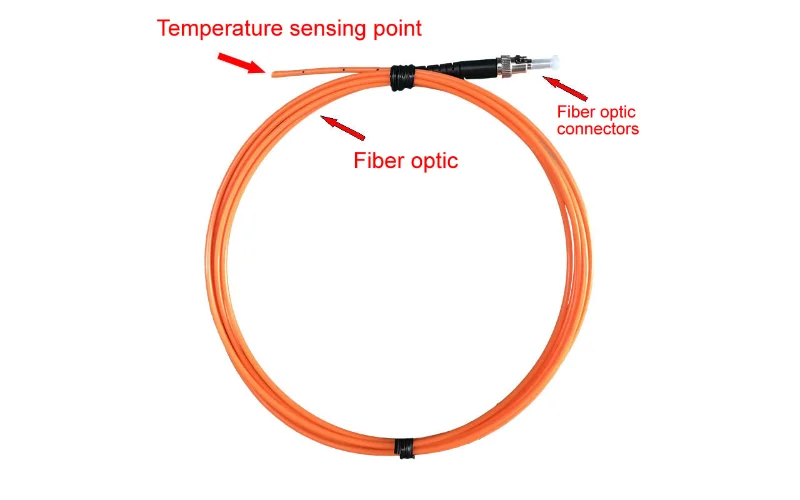
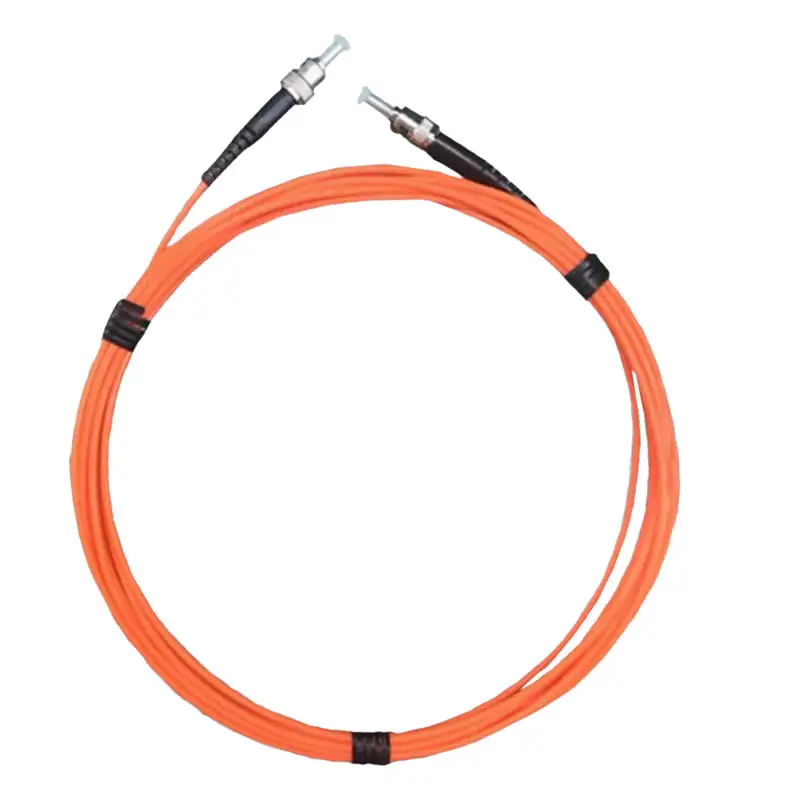
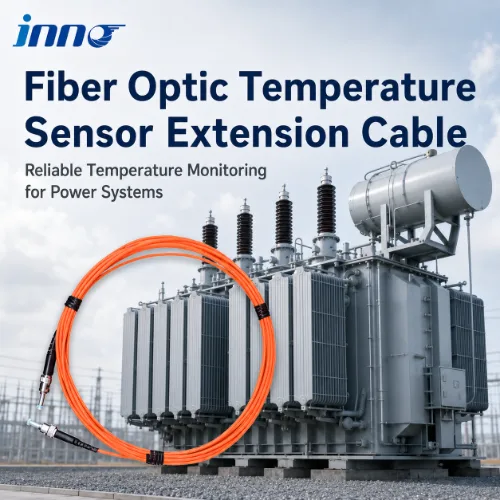
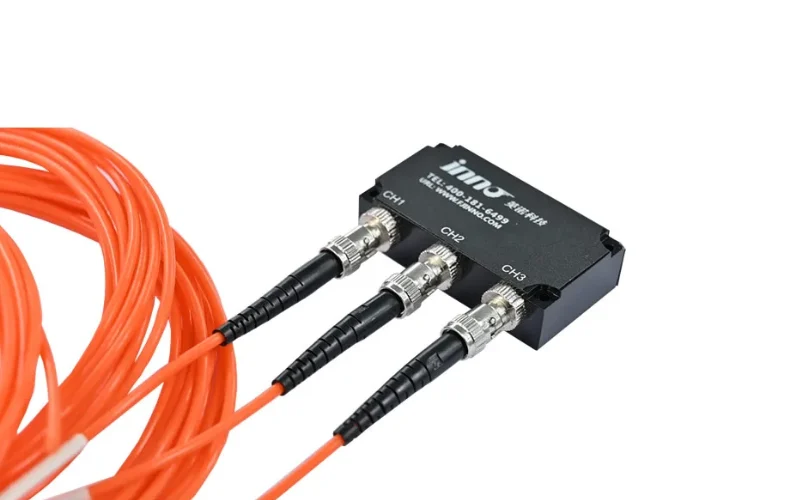
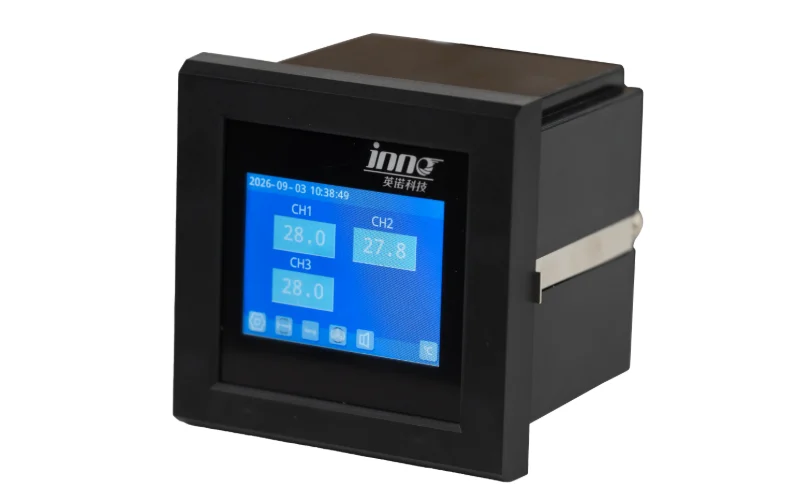
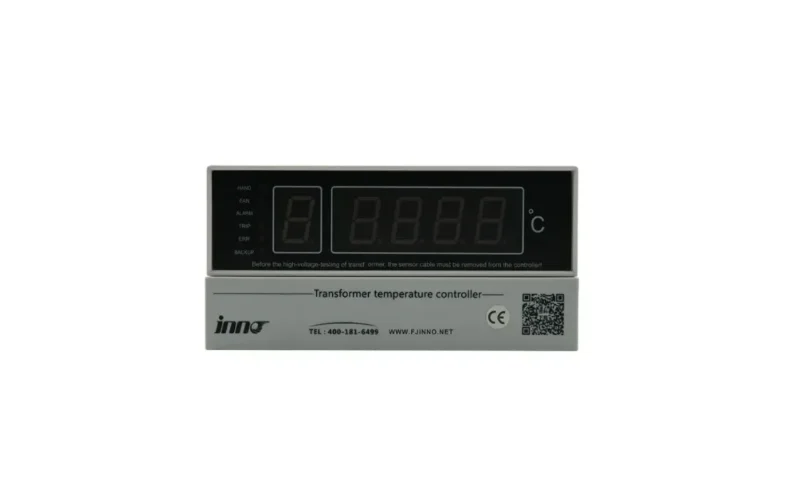
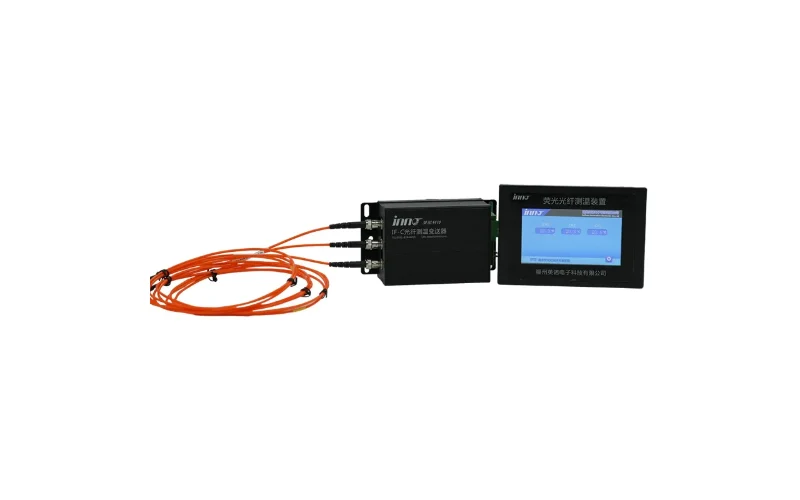
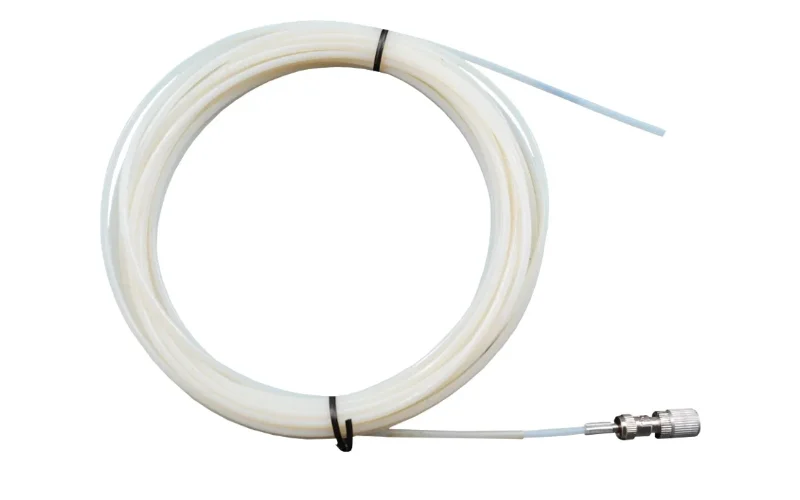
A fiber optic temperature sensor extension cable is an all-dielectric optical transmission cable designed to extend the signal path between a fluorescent fiber optic temperature probe and its transmitter unit. In transformer monitoring installations, the sensing probe is located deep inside the winding — submerged in transformer oil or embedded in resin — while the transmitter is mounted on the control panel outside the equipment. The extension cable bridges this distance, carrying optical signals in both directions with no electrical conductors and no signal degradation across its operating range.
INNO extension cables are manufactured specifically for compatibility with fluorescent fiber optic temperature measurement systems used in oil-immersed transformer winding temperature monitoring, dry-type transformer protection, and high-voltage power equipment applications. The PTFE (Teflon) outer jacket, quartz fiber core, and ST connector terminations are selected to withstand the mechanical, thermal, and chemical demands of substation environments over long service periods.
المواصفات الفنية
| المعلمة | المواصفات |
|---|---|
| نوع الألياف | الألياف البصرية الكوارتزية |
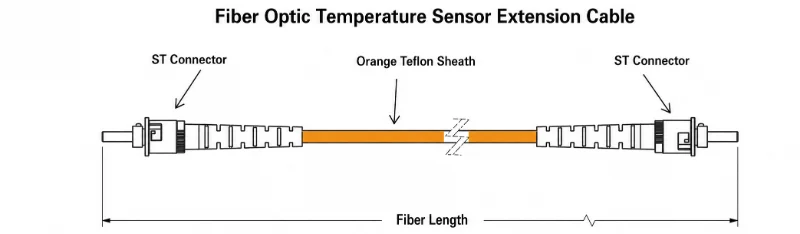
| Outer Jacket Material | PTFE (Teflon) |
| Jacket Outer Diameter | 2.4 mm |
| Connector Type | ST connector (both ends) |
| Cable Length | 1 m standard; 0–20 m customizable |
| نطاق درجة حرارة التشغيل | من −40 درجة مئوية إلى +260 درجة مئوية |
| مقاومة الجهد العالي | 100 كيلوفولت |
| Chemical Resistance | Resistant to transformer oil, acids, alkalis, and common industrial chemicals |
| المرونة | High — suitable for routing through confined spaces and cable conduits |
| Compatible Systems | INNO fiber optic temperature transmitters and all standard ST-interface fluorescent sensing systems |
| الشهادات | CE, RoHS, ISO 9001 | UL, IECEx, ATEX, CSA, TÜV (customizable) |
الميزات الرئيسية
PTFE (Teflon) Jacket — Chemical and Thermal Protection
The outer jacket is extruded from PTFE, one of the most chemically inert materials in industrial use. PTFE is fully resistant to transformer mineral oil, natural ester oil, silicone oil, and the full range of acids and alkalis encountered in substation and industrial environments. It maintains its mechanical integrity and insulating properties across the entire −40°C to +260°C operating range — far beyond the limits of standard PVC or nylon-jacketed cables. This makes the extension cable equally suitable for routing inside oil-filled transformer tanks, through cable trays exposed to weather, or in chemical processing environments.
Quartz Fiber Core — Low Loss, Long Distance Signal Transmission
The quartz fiber optic core provides low optical attenuation across the cable length, ensuring the fluorescence signal from the sensing probe reaches the transmitter with sufficient intensity for accurate temperature calculation. Quartz fiber maintains its optical properties across the full operating temperature range and is immune to the radiation environments present in some high-voltage substation installations. Unlike plastic optical fiber (POF) alternatives, quartz fiber does not degrade in UV exposure, high-temperature environments, or oil-immersed conditions.
100 KV High Voltage Resistance — Safe in High-Voltage Environments
The PTFE jacket and quartz fiber core contain no metallic conductors. This all-dielectric construction means the cable itself presents no conductive path between the high-voltage winding and the grounded transmitter. The 100 KV voltage resistance rating confirms the cable has been tested to withstand high-voltage stress without dielectric breakdown — a mandatory requirement for any cable routed through or adjacent to high-voltage transformer windings. This property also makes the extension cable compatible with the fiber optic feedthrough fittings used on transformer tank walls, where the cable must cross the boundary between the high-voltage interior and the grounded exterior.
ST Connectors — Secure, Low-Loss Termination
Both ends of the extension cable are terminated with precision ST fiber optic connectors. ST connectors provide a bayonet-lock coupling mechanism that resists accidental disconnection from vibration — an important feature in substation environments where transformer switching operations generate mechanical shock. The connectors are compatible with the input ports on all INNO fiber optic temperature transmitters and with standard ST-interface optical equipment. Each connector is polished and end-face inspected before shipment to ensure insertion loss is within specification.
High Flexibility — Easy Routing in Confined Installations
Despite the protective PTFE jacket and robust construction, the 2.4 mm diameter cable remains highly flexible. It can be routed through transformer tank penetrations, along cable trays, through conduit, and around corners without requiring special tools or risk of exceeding the fiber's minimum bend radius. This flexibility is especially important when retrofitting extension cables into existing installations where routing paths may be constrained by existing cabling, structural elements, or the transformer tank geometry.
Customizable Length — 0 to 20 m
Extension cables are manufactured to the exact length required for each installation. Standard lengths are available from 1 m for compact installations where the transmitter mounts directly adjacent to the transformer, up to 20 m for larger transformers or installations where the control panel is located at a distance. Specifying the correct length at the time of order eliminates excess cable that would need to be coiled and managed in the installation, and ensures the optical power budget is maintained across the cable run.
Applications in Transformer Temperature Monitoring
Oil-Immersed Power Transformer Winding Temperature Monitoring
In oil-immersed transformer installations, the مسبار درجة الحرارة بالألياف الضوئية is inserted directly into the winding and the probe cable exits the transformer tank through a sealed fiber optic feedthrough fitting. Depending on the transformer tank dimensions and control panel location, additional cable length may be required to reach the transmitter. The extension cable connects at the feedthrough fitting external connector and runs to the transmitter ST input port.
Because the extension cable may pass through areas with residual oil contamination, high ambient temperatures near the transformer radiators, or outdoor weather exposure, the PTFE jacket and full operating temperature range of −40°C to +260°C provide reliable long-term performance under all site conditions. The 100 KV voltage resistance rating ensures safe performance even in proximity to high-voltage busbars and transformer terminals.
Dry-Type Transformer Applications
For dry-type transformers installed indoors, the extension cable routes from the probe connector on the transformer enclosure to the transmitter mounted on the switchgear panel or control cabinet. Indoor routing typically involves short cable runs of 1 m to 5 m. The PTFE jacket provides chemical resistance to cleaning agents and the high-flexibility construction allows routing through cable clips along the enclosure exterior without kinking.
Replacement and Extension of Existing Installations
Extension cables are also used to extend the reach of existing fiber optic temperature monitoring installations when transmitter locations change, or to replace damaged cable sections without disturbing the sensing probe inside the transformer. ST-to-ST optical splicing via a mating adapter allows a new extension cable to be inserted into an existing fiber path without requiring any disassembly of the probe end of the system.
Compatibility
INNO fiber optic extension cables are designed as direct compatible components for INNO fluorescent fiber optic temperature transmitter systems. They are also compatible with any fiber optic temperature measurement system that uses ST connector interfaces, including systems from other manufacturers where the original probe cable requires extension or replacement.
When ordering extension cables for use with non-INNO systems, please confirm the following with our technical team:
- Fiber type (quartz / plastic) — our cables use quartz fiber only
- Connector type (ST is standard; other connector types available on request)
- Optical power budget — longer cable runs may require verification against transmitter sensitivity specifications
- Temperature and chemical environment — confirm PTFE jacket suitability for your specific installation conditions
Ordering and Customization
Extension cables are manufactured to order with the following customizable parameters:
Cable Length (0–20 m)
Specify the exact length required from the probe exit point (transformer feedthrough or enclosure connector) to the transmitter input port. Allow for routing path length, not straight-line distance. For installations with future flexibility requirements, specifying a slightly longer cable is preferable to having a cable that is marginally too short.
Connector Type
Standard termination is ST connector on both ends. Alternative connector types are available on request for integration with systems using different interface standards. Specify the connector type required at each end when ordering.
Jacket Color
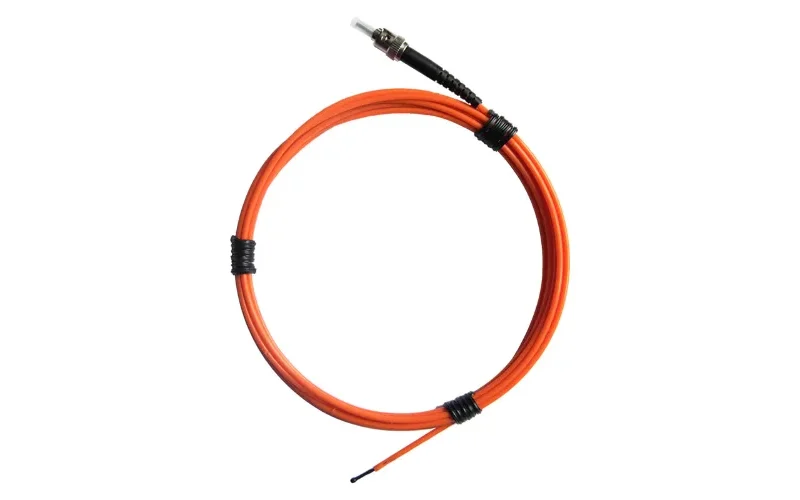
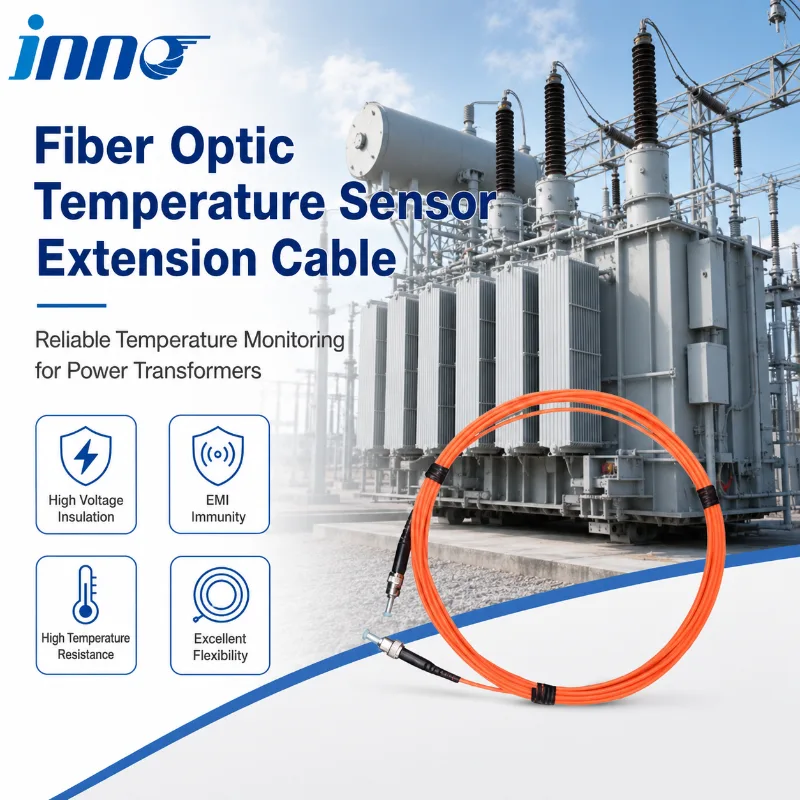
Standard jacket color is orange (as shown). Alternative colors are available for installations requiring cable identification by color coding.
Bundle Quantities
Extension cables can be supplied individually or in bulk quantities for multi-channel installations or spare parts inventory. Contact our sales team for volume pricing on orders of 10 units or more.
الأسئلة الشائعة
What is the difference between the extension cable and the probe cable?
The probe cable is the fiber optic element integrated with the sensing probe itself — it exits the probe tip and typically has a bare fiber or factory-fitted connector at the far end. It is usually short (0.5 m to 2 m) and is designed to withstand the specific conditions at the measurement point (oil immersion, winding contact, high temperature at the probe tip). The extension cable connects to the probe cable at its output connector and extends the signal path to the transmitter over a longer distance. Extension cables are replaceable field components; probe cables are typically replaced only as part of the probe assembly.
Can the extension cable be routed inside the transformer tank?
Yes. The PTFE jacket and quartz fiber construction are fully rated for oil immersion and the internal temperature environment of an oil-immersed transformer. However, routing the extension cable inside the tank is unusual in practice — the probe cable is typically long enough to reach the tank wall feedthrough from the winding, and the extension cable runs externally from the feedthrough to the transmitter. If your installation requires internal routing of the extension cable, confirm the exact temperature and oil compatibility requirements with our technical team.
Does cable length affect measurement accuracy?
Within the specified 0–20 m range, cable length has negligible effect on temperature measurement accuracy. The fluorescence signal decay time measurement used in this technology is insensitive to optical power level variations caused by cable length, as long as sufficient signal reaches the detector. For lengths approaching 20 m, it is advisable to confirm signal budget with our technical team, particularly if the cable includes multiple connectors or splice points.
Can I connect two extension cables in series to exceed 20 m?
It is physically possible to connect cables in series using ST mating adapters, but each additional connector introduces insertion loss that reduces the optical signal reaching the transmitter. Whether a series connection is practical depends on the transmitter's minimum signal sensitivity specification. For runs exceeding 20 m, contact our engineering team — custom longer cables may be available, or an assessment of signal budget for a series connection can be performed.
What happens if the extension cable is damaged?
A damaged or broken extension cable will result in a loss of optical signal, which the transmitter will typically report as a sensor fault or open-circuit alarm. Because the extension cable is an external, field-replaceable component, it can be replaced without opening the transformer or disturbing the probe. Disconnect the damaged cable at both ST connector ends, connect the replacement cable, and confirm the transmitter returns to normal reading. We recommend keeping one spare extension cable per monitored transformer on site for rapid fault recovery.
Is the cable UV resistant for outdoor installations?
PTFE has excellent UV resistance and does not degrade under prolonged outdoor sun exposure, unlike PVC-jacketed cables which can become brittle with UV exposure over time. For outdoor installations in direct sunlight, the PTFE jacket provides long-term mechanical stability without additional UV protection conduit. For installations in extreme UV environments or where mechanical impact protection is required, armored or conduit routing is recommended regardless of jacket material.
What certifications does the extension cable carry?
Standard extension cables carry CE and RoHS certification. Manufacturing is conducted under ISO 9001 quality management system. Additional certifications — UL, IECEx, ATEX, CSA, TÜV — are available on request for installations requiring specific regulatory compliance. Specify certification requirements at the time of order as lead times may differ for certified variants.
Can I order a custom length that is not a round number?
Yes. Extension cables are manufactured to exact specified lengths. If your installation requires 7.5 m or 13.2 m, that is the length we will manufacture. Precise length specification eliminates excess cable management issues and ensures the optical budget calculation is accurate. Specify length to the nearest 0.1 m when ordering.
Why Choose INNO Fiber Optic Extension Cables
INNO manufactures fiber optic temperature measurement components as a dedicated product line — extension cables, probes, and transmitters are all designed as a matched system. When you order an INNO extension cable, you are ordering a component that has been dimensionally and optically matched to our probe and transmitter specifications, not a generic fiber optic patch cord adapted for this application.
Factory direct supply. No distributors. In-house R&D and manufacturing. CE, RoHS, ISO 9001 certified. OEM and ODM configurations available for customers requiring custom jacket colors, connector types, or branded packaging.
Contact our technical team with your installation drawing or cable length requirement to receive a quotation and lead time confirmation.