

Single Channel Fiber Optic Temperature Sensing Module — OEM Integration for High-Voltage Power Equipment
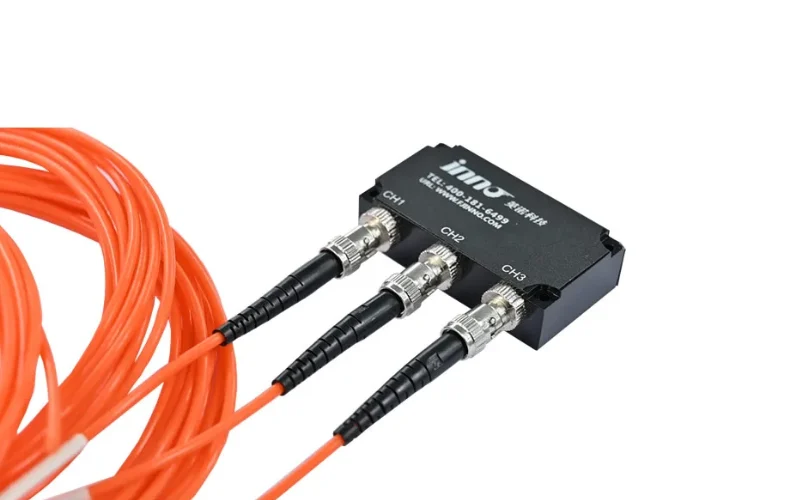
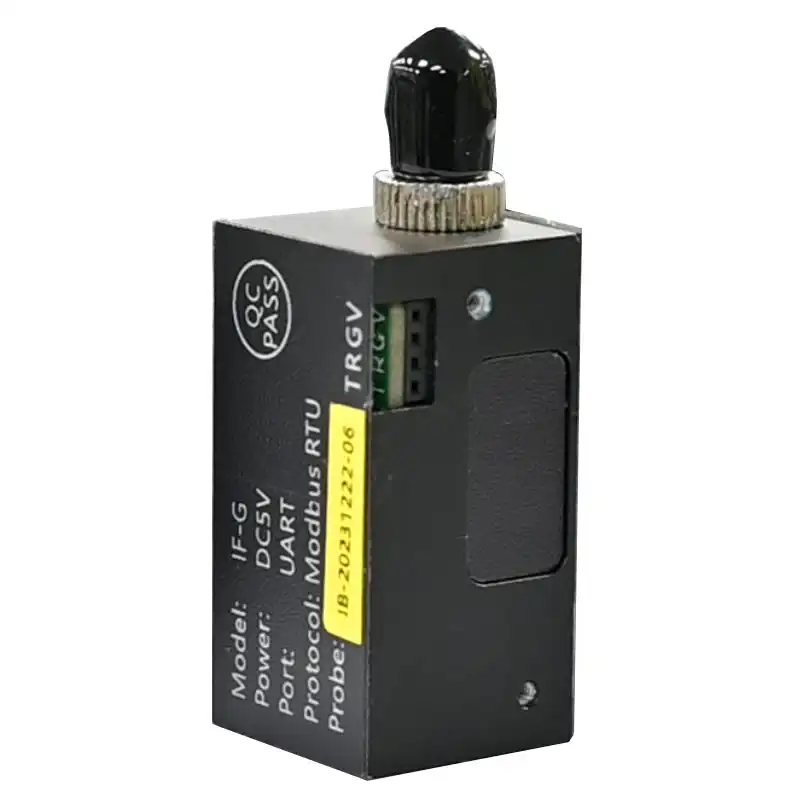
The INNO single channel fiber optic temperature sensing module is a compact, self-contained measurement unit built around fluorescent quartz fiber optic sensing technology. It delivers one direct-contact temperature reading — accurate, stable, and completely immune to electromagnetic interference — through an RS485 / Modbus-RTU interface ready for integration into OEM equipment, protection relays, transformer monitors, and power system control platforms.
Where multi-channel transmitter systems are designed for complete substation installations, this single channel module addresses a different requirement: embedding accurate fiber optic temperature measurement capability into an existing product or system with minimal footprint, minimum power draw, and direct firmware integration. The module ships calibration-free — no factory calibration step, no field recalibration, no drift correction required over the product lifetime.
Especificações Técnicas
| Parâmetro | Especificações |
|---|---|
| Número de canais | 1 (single channel) |
| Fonte de alimentação | DC 5V / AC/DC 220V (customizable) |
| Faixa de temperatura | de −40 °C a +260 °C (faixa superior personalizável) |
| Precisão da medição | ±1 °C (é possível personalizar para uma precisão maior) |
| Resolução | 0,1 °C |
| Resultados da comunicação | RS485 / Modbus-RTU |
| Fiber Type | Quartz fiber optic (fluorescent sensing) |
| Probe Fiber Length | 0–20 m (customizable) |
| Probe Connector | ST connector |
| High Voltage Resistance | 100 kV |
| Calibration Requirement | None — adaptive measurement, no LD value calibration required |
| Construção da sonda | All-dielectric, no metal conductors, PTFE-jacketed fiber |
| Minimum Bend Radius (long-term) | 13.2 cm |
| Minimum Bend Radius (short-term) | 4.4 cm |
| Certificações | CE, RoHS, ISO 9001 | UL, IECEx, ATEX, CSA, TÜV (personalizável) |
Como funciona a detecção de temperatura por fibra óptica fluorescente
The sensing probe tip contains rare earth fluorescent material. The module transmits a short excitation light pulse through the quartz fiber to the probe tip. The fluorescent material absorbs the pulse and emits a return fluorescence signal whose intensity decays exponentially after the excitation ends. The rate of this decay — the fluorescence lifetime — varies predictably and repeatably with temperature.
The module measures the fluorescence decay time constant and converts it to a temperature value using a fixed material characteristic curve. No external reference, no bridge circuit, no electrical signal at the measurement point. The measurement is inherently absolute — it derives temperature from a physical property of the fluorescent material, not from a resistance or voltage that can drift with component aging or environmental stress.
This is why the module requires no calibration on delivery and no recalibration in service. The fluorescence lifetime-temperature relationship of the rare earth material is stable over the product lifetime under all operating conditions within the rated range.
Key Advantages for OEM Integration
No Calibration — Zero Assembly Line Impact
Conventional temperature sensors — thermocouples, RTDs, thermistors — require individual calibration against a traceable reference standard before shipment, and periodic recalibration in service. The fluorescent fiber optic module uses adaptive measurement referenced to the intrinsic property of the sensing material. There is no calibration coefficient to assign, no calibration certificate to manage, and no recalibration interval to schedule. For OEM customers integrating this module into volume-produced equipment, this eliminates an entire manufacturing step and removes a recurring field service requirement.
Complete EMI/RFI Immunity — Stable Readings in High-Voltage Environments
The quartz fiber carries only optical signals. There are no electrical conductors between the sensing tip and the module — no signal wire to act as an antenna, no grounding path to create noise coupling, no impedance to be affected by stray capacitance or magnetic flux. A fiber optic temperature probe immune to EMI/RFI performs identically in a laboratory bench setup and in direct contact with a transformer winding carrying tens of kiloamps of fault current. For OEM equipment operating near high-power electronics, motor drives, transformer windings, or switching busbars, this immunity eliminates a measurement error source that affects every conventional sensor technology.
100 KV Electrical Isolation — Safe for High-Voltage Contact Measurement
The all-dielectric fiber optic assembly provides complete galvanic isolation between the measurement point and the module electronics. There is no conductive path through the sensing system at any voltage. The 100 KV rating — tested to industrial frequency voltage for 5 minutes — means the module can be used with probes in direct contact with high-voltage transformer windings, busbar conductors, or cable insulation surfaces without any risk of voltage breakdown through the measurement system. This is the enabling property for direct winding hot spot measurement in monitoramento da temperatura do transformador applications.
Compact Single Channel Architecture for Embedded Integration
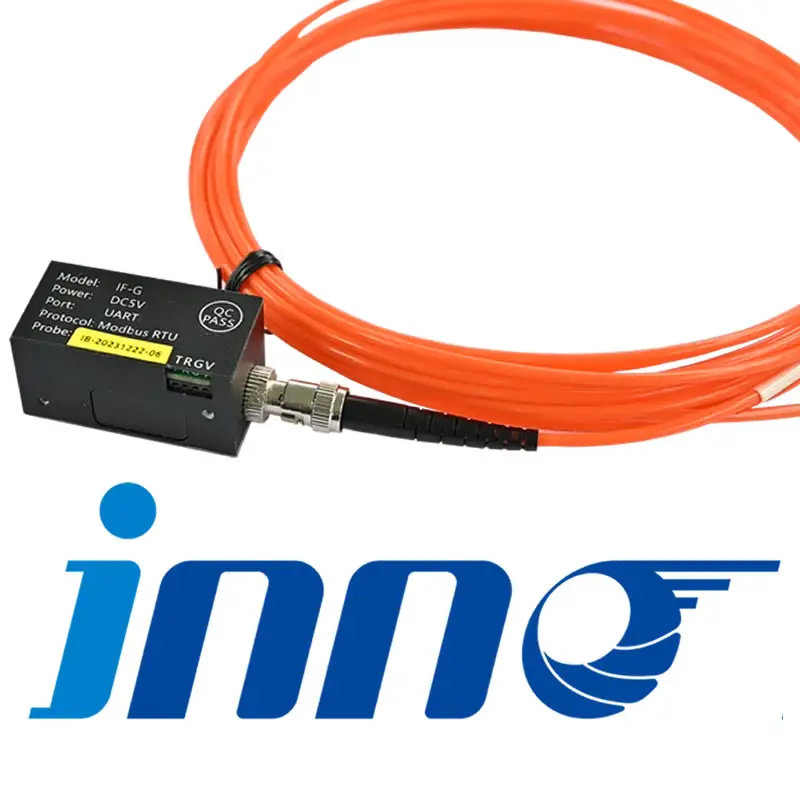
The single channel module format is designed for embedding inside OEM equipment enclosures where a full multi-channel transmitter would be oversized, overpowered, or physically incompatible. DC 5V supply option allows powering directly from standard embedded system power rails. The RS485 / Modbus-RTU interface connects directly to microcontrollers, PLCs, and protection relay communication buses. The compact module size and single ST connector input minimize the PCB footprint and wiring complexity compared to integrating a standalone transmitter.
Fiber Probe: No Metal, No Maintenance, Long Service Life
O fiber optic temperature sensor probe contains no metallic components at any point — not in the sensing tip, not in the fiber optic cable, not in the ST connector housing ferrule. PTFE jacket over the quartz fiber provides chemical resistance to transformer oil, acids, alkalis, and industrial solvents across the full −40°C to +260°C operating range. The probe requires no maintenance, no replacement schedule, and no periodic inspection beyond visual check of connector cleanliness. Typical field service life exceeds ten years in continuous operation.
Primary Applications
OEM Transformer Protection and Monitoring Equipment
The most common OEM application for the single channel module is integration into transformer protection relays, winding temperature indicators, and transformer monitoring systems manufactured by switchgear and protection equipment companies. The module provides the fiber optic sensing front-end while the host equipment handles protection logic, display, communication to SCADA, and relay output. Single channel configuration suits single-phase transformer monitoring, or monitoring of one critical winding in a three-phase unit where the host system combines data from three separate modules.
The Modbus-RTU output provides a standardized digital interface regardless of the host platform. Register maps and integration documentation are supplied with every module. DC 5V supply option eliminates the need for a separate 220V supply rail inside compact relay enclosures.
Oil-Immersed Power Transformer Winding Hot Spot Monitoring
For direct winding hot spot measurement in oil-immersed transformers, the PTFE-jacketed, oil-resistant probe is inserted into the winding during assembly or major overhaul. The 100 KV probe rating ensures safe operation in direct contact with high-voltage winding conductors. The module's single channel output feeds winding temperature data to the transformer's protection relay or online transformer monitoring system, enabling real-time hot spot tracking per IEC 60076-7 thermal model requirements.
The no-calibration operation is particularly valuable in transformer applications where the probe is inaccessible once the transformer is sealed and oil-filled. A probe and module that require no recalibration in service eliminate a maintenance task that would otherwise require a transformer outage.
High-Voltage Switchgear and Busbar Temperature Monitoring
In medium and high-voltage switchgear, the single channel module monitors contact and busbar temperatures at individual measurement points where conventional sensors cannot be safely used. The all-dielectric probe makes direct contact with live conductors inside the switchgear enclosure, with the fiber running through the enclosure wall to the module mounted outside at ground potential. No arc risk, no insulation compromise, no induced measurement error from the switchgear's electromagnetic environment.
Power Electronics and IGBT Module Thermal Management
For power electronics manufacturers integrating thermal protection into inverter drives, UPS systems, and high-power converters, the single channel module provides IGBT junction or heatsink temperature measurement immune to the switching-frequency EMI generated by the power stage. DC 5V supply and compact module format integrate naturally into power electronics control board designs. The fiber probe's small diameter and high flexibility allow placement in tight spaces between power modules and heatsink surfaces.
Research, Test Equipment, and Special Environments
The module is used in laboratory and industrial test equipment requiring temperature measurement in environments incompatible with electrical sensors: MRI and NMR equipment (strong magnetic fields), RF and microwave test chambers, vacuum environments, chemical processing vessels, and nuclear facilities. The quartz fiber and PTFE jacket maintain performance in vacuum, aggressive chemicals, and radiation environments where polymer-fiber or metal-sensor alternatives degrade or fail.
OEM and Custom Development
The single channel module is available as a standard product and as a fully customized OEM component. INNO has provided custom module configurations to equipment manufacturers across power systems, industrial automation, medical equipment, and scientific instrumentation.
Customizable Parameters
Power supply voltage (DC 5V standard; AC/DC 220V or other voltages available), fiber optic probe length (0–20 m, exact length to specification), probe diameter and construction (oil-resistant, chemical-resistant, high-temperature variants), temperature range upper limit, measurement accuracy class, communication protocol (RS485/Modbus-RTU standard; other protocols by arrangement), module enclosure format, and connector types. Firmware customization — custom Modbus register maps, specific alarm threshold outputs, analog output addition — is available for volume OEM orders.
Private Label and ODM Supply
Modules can be supplied with customer branding, custom enclosure colors, and custom documentation. ODM development — designing a module variant to a customer's specification rather than modifying the standard product — is available for projects with sufficient volume to justify development investment. Contact our engineering team to discuss your specific OEM requirements and volume expectations.
Sample and Evaluation Supply
Engineering samples are available for integration evaluation before committing to production volumes. Sample orders include full technical documentation, Modbus register map, integration guide, and direct access to our engineering team for integration support during the evaluation period.
Customer Reviews
M. Schneider — Protection Relay Manufacturer, Germany
"We integrated this module into our transformer protection relay platform. The ST connector interface and Modbus register map were clearly documented, and the module dropped straight into our existing firmware architecture. Stable readings from day one, zero interference issues even during switching operations." ★★★★★
R. Nakamura — Power Equipment OEM, Japan
"We specified a custom DC 5V supply configuration and non-standard fiber length for a compact OEM enclosure. INNO delivered exactly to spec, with test data included. The no-calibration operation is a significant advantage for volume production — we do not need a calibration step on our assembly line." ★★★★★
P. Okafor — Utility Substation Engineer, Nigeria
"Deployed in a utility substation transformer monitoring upgrade. The 100 KV probe rating was the deciding factor — we needed direct winding contact measurement and nothing else on the market offered this at the module level. Accurate, reliable, and the PTFE-jacketed probe has survived continuous oil immersion for over 18 months without any degradation." ★★★★★
Perguntas frequentes
What makes this a "module" rather than a complete transmitter?
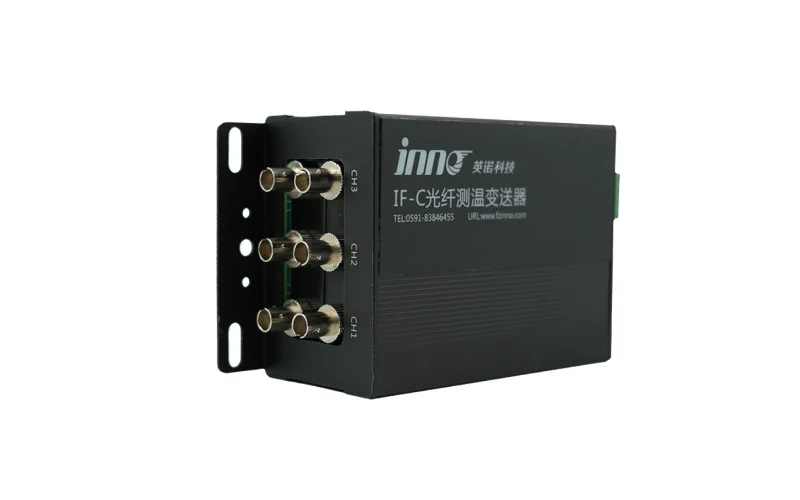
A complete transmitter is a finished instrument with front panel display, enclosure, power supply, and all user-facing features — designed to be installed as a standalone unit. The module is the sensing and signal processing core without a finished enclosure or display — designed to be integrated inside another product. It provides the fiber optic sensing front-end and Modbus output that the host product uses, with the host handling everything else. This distinction matters for OEM integrators: the module is a component, not a product you install on a DIN rail.
Can I connect the module directly to a PLC or microcontroller?
Yes. RS485 / Modbus-RTU is natively supported by virtually all industrial PLCs and many embedded microcontrollers via a standard RS485 transceiver IC. The Modbus register map provided with the module documents the holding registers for temperature value, alarm status, and configuration. Integration requires only standard Modbus client code — no proprietary driver or SDK.
What is the difference between this module and a standard thermocouple or PT100 sensor?
Thermocouples and PT100s measure temperature via electrical effects — thermoelectric voltage and resistance respectively — using metal conductors at the measurement point. They require calibration, are susceptible to EMI-induced measurement error, create conductive paths that are unsafe in high-voltage environments, and drift over time with metal aging and oxidation. The fiber optic module measures fluorescence decay time — an optical property — with no metal at the measurement point, no calibration, no EMI susceptibility, and no drift mechanism. For standard low-voltage, low-interference applications a thermocouple or PT100 is simpler. For high-voltage, high-EMI, or oil-immersed applications, fiber optic sensing is the correct technology choice.
How does the no-calibration operation work in practice?
The module uses adaptive measurement that references the fluorescence decay time directly to the temperature-lifetime characteristic curve of the rare earth sensing material — a fixed physical property that does not change with component aging, supply voltage variation, or ambient conditions outside the probe. On startup, the module runs a self-check to confirm optical signal quality from the probe. If the probe is undamaged and the fiber connection is clean, the system is immediately ready to measure with no user calibration action required. This applies to new modules, replacement modules, and modules that have been in continuous operation for years.
What certifications are available for OEM supply?
Standard supply carries CE, RoHS, and ISO 9001 certification. For OEM customers requiring UL (North American market), IECEx or ATEX (hazardous area applications), CSA (Canadian market), or TÜV certification, these are available on request. Specify certification requirements at the time of OEM inquiry as documentation preparation and testing lead times vary by certification body and module configuration.
What is the minimum order quantity for OEM supply?
Standard product modules are available from single unit for evaluation. OEM-branded supply and custom configurations typically require a minimum order quantity — contact our sales team to confirm MOQ for your specific configuration. Engineering samples for integration evaluation are available without MOQ commitment.
Can the module output an analog signal instead of Modbus?
Standard modules output RS485 / Modbus-RTU only. Analog output (4–20 mA or 0–10V) is available as a custom configuration for OEM orders where the host system requires analog input rather than digital communication. Specify the required analog output range and scaling at the time of inquiry. Analog output variants are not available as standard catalog items and require a custom order.
Request a Sample or OEM Quotation
If you are evaluating the single channel fiber optic temperature sensing module for OEM integration, transformer winding monitoring, or power equipment applications, our engineering team can provide configuration recommendations, integration documentation, and sample units for evaluation.
Send us your application description — measurement point environment, host system interface requirements, power supply constraints, probe length, and target volume — and we will respond with a specific module configuration recommendation and quotation within one business day.
Factory direct. In-house R&D and manufacturing. CE, RoHS, ISO 9001 certified. OEM/ODM available. Global supply.