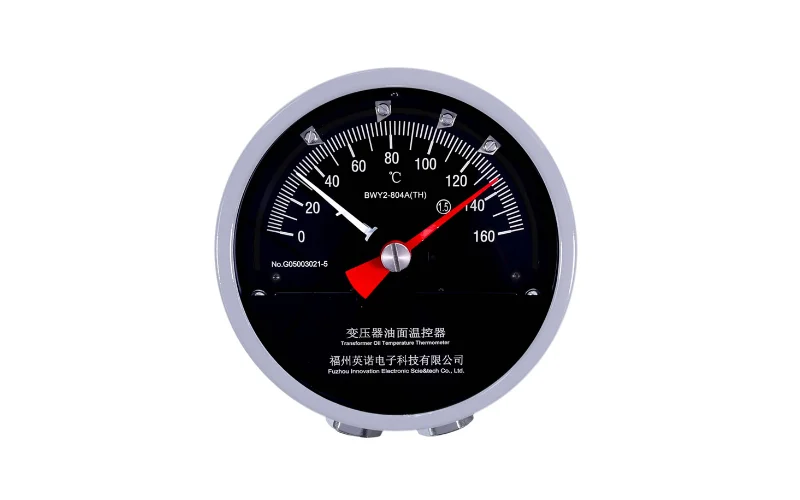
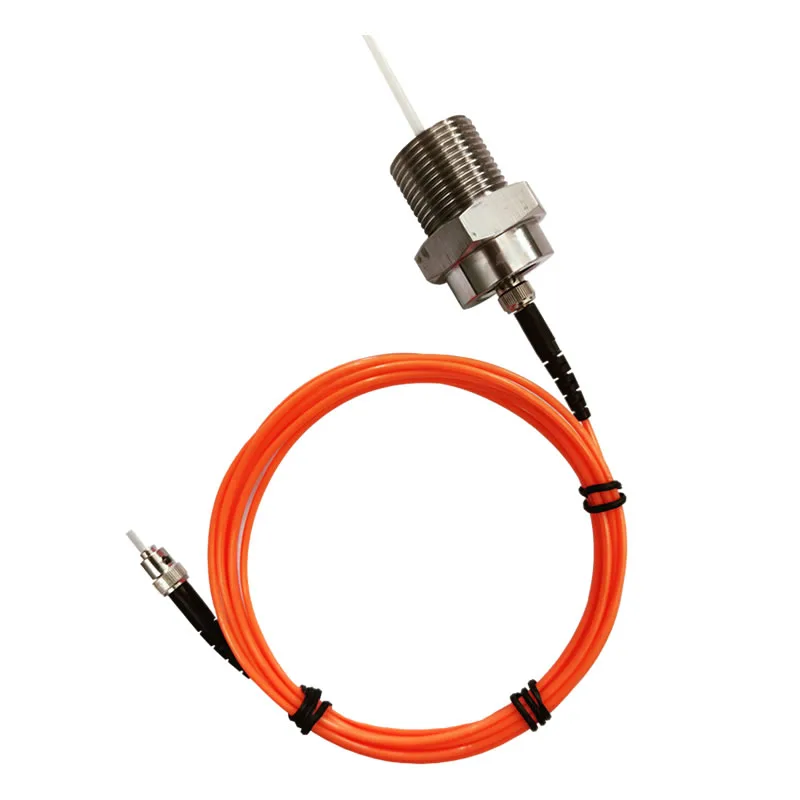

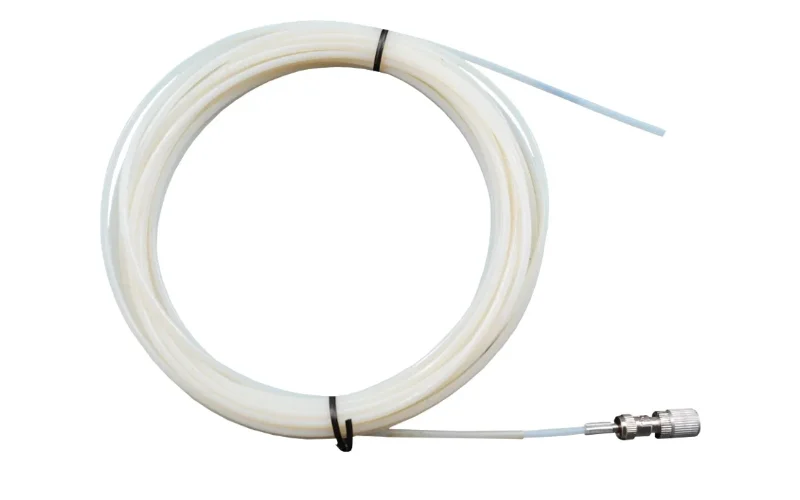

What Is an Armored Fiber Optic Temperature Sensor?
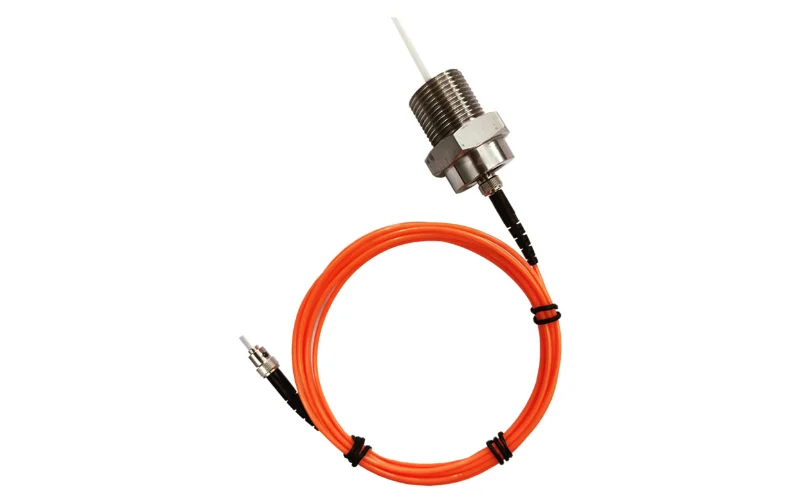
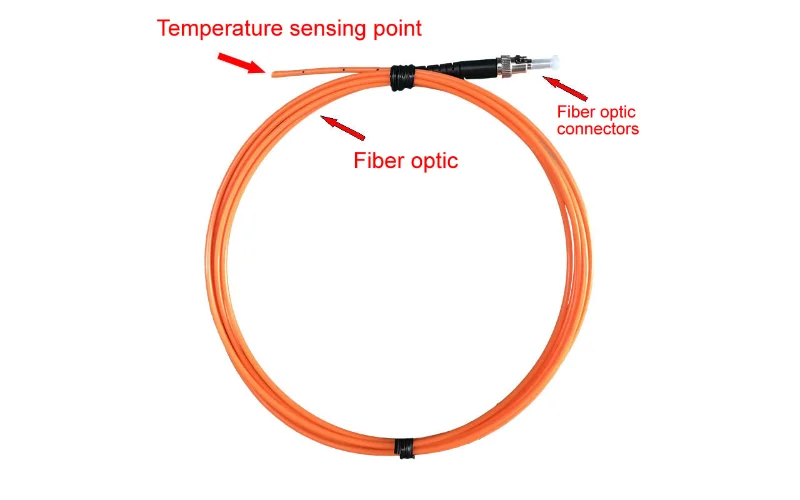
An armored fiber optic temperature sensor is an optical temperature probe with reinforced protection for internal oil-immersed transformer applications. It is used to measure local temperature points near transformer windings, spacers, lead areas or other internal hotspot positions where the sensor may face mechanical stress during assembly and operation.
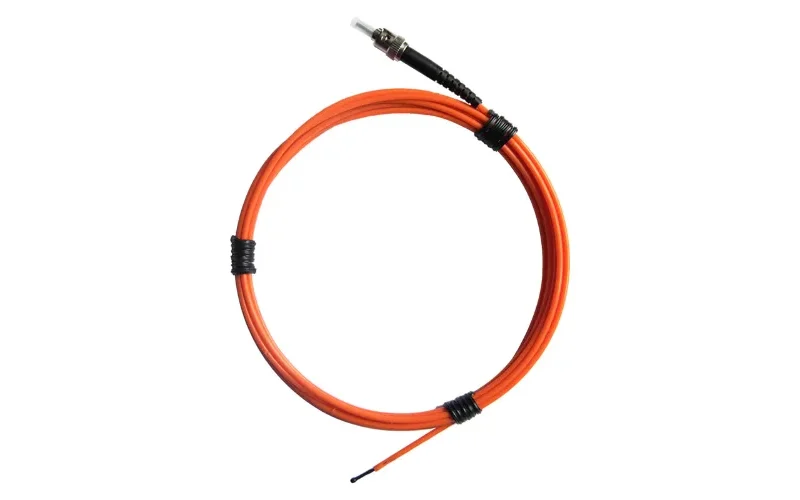
The key difference from a standard fiber optic temperature probe is the armored protection structure. The reinforced design helps protect the optical fiber from bending, compression, pulling and installation damage, making it more suitable for transformer interiors where long-term reliability is required.
Posicionamento do produto
This product is suitable for oil-immersed transformer winding hotspot monitoring, internal transformer temperature sensing, armored optical temperature probe installation and high-voltage transformer condition monitoring applications.
Why Use an Armored Probe Structure in Oil-Immersed Transformers?
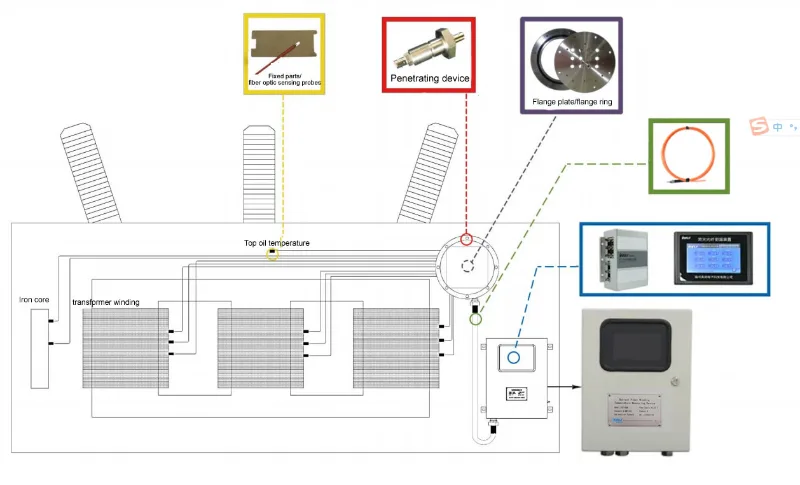
Oil-immersed transformer interiors are not simple measuring environments. The sensor may pass through narrow channels, winding support areas, internal insulation structures and oil-filled spaces. During transformer manufacturing, transportation and operation, the optical fiber may be exposed to bending, pressure, vibration and handling stress.
An armored fiber optic temperature sensor adds a protective layer around the optical path while keeping the sensing point electrically insulating. This structure is useful when a standard soft probe may not provide enough mechanical protection for internal transformer routing.
Mechanical Protection During Installation
The armored structure helps reduce the risk of fiber damage when the sensor is routed near windings, clamped along support structures or installed through limited internal space.
Protection for Long-Term Oil-Immersed Operation
The probe is designed for transformer oil environments where material stability, insulation compatibility and long-term mechanical reliability are important.
Better Suitability for Internal Routing
The reinforced sensor cable can be arranged along winding supports, internal brackets or transformer lead areas according to transformer design requirements.
Lifetime-Based Fluorescent Optical Measurement Principle
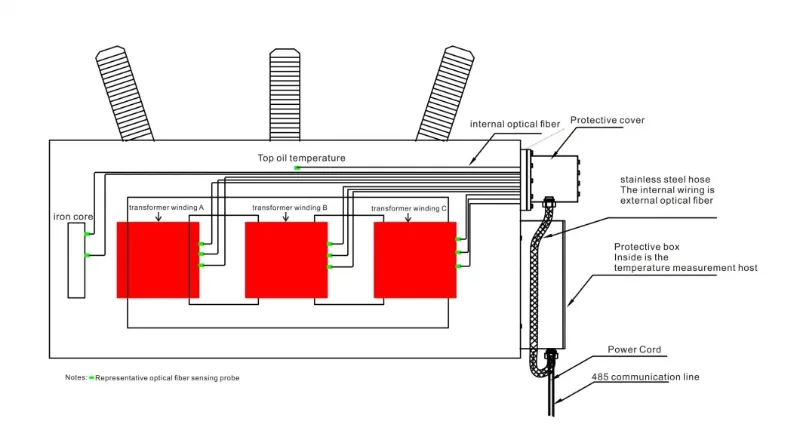
The sensor uses a fluorescent material at the sensing tip. When the monitoring device sends excitation light through the optical fiber, the sensing tip returns a fluorescence afterglow signal. The device detects the decay lifetime of this signal and converts it into temperature data.
Optical Excitation
Excitation light is transmitted from the monitoring device to the sensing tip through the optical fiber.
Fluorescent Signal Return
The fluorescent sensing material returns an optical afterglow signal after excitation.
Lifetime Detection
The monitoring device analyzes the decay time of the returned signal instead of depending only on signal strength.
Saída de temperatura
The measured lifetime value is converted into temperature data for display, alarm or system communication.
Key Advantages for Oil-Immersed Transformer Applications
Reinforced Armored Protection
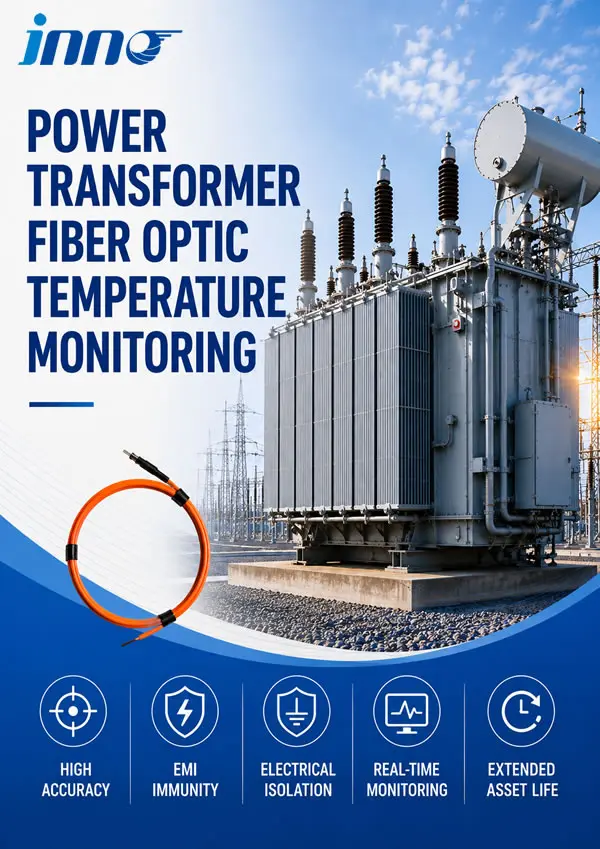
The armored design provides stronger protection for internal routing positions where the optical fiber may be exposed to bending, pressure or mechanical handling.
Oil-Immersed Transformer Compatibility
The sensor structure is designed for use inside transformer tanks, especially around winding-related temperature measurement positions.
Electrical Insulation at the Sensing Point
The measuring point uses optical sensing, making it suitable for high-voltage transformer interiors where electrical signal wiring is not preferred.
Direct Internal Hotspot Measurement
The sensing tip can be positioned closer to internal thermal points than external oil temperature sensors, supporting more targeted winding hotspot monitoring.
Stable Routing Inside Transformer Structures
The armored section can help maintain a more stable sensor path when routed along spacers, winding supports or internal lead areas.
Suitable for Embedded Monitoring Design
The sensor can be selected for transformer designs that require long-term embedded optical temperature monitoring rather than temporary surface measurement.
Especificações Técnicas
| Item da especificação | Configuração padrão / opcional |
|---|---|
| Nome do produto | Sensor de temperatura de fibra óptica blindado |
| Inscrição | Oil-immersed transformer internal temperature and winding hotspot measurement |
| Measurement principle | Fluorescence afterglow lifetime temperature measurement |
| Sensing type | Point-type optical temperature sensing |
| Faixa de temperatura | -40°C to +260°C |
| Precisão | de ±0,5 °C a ±1 °C |
| Resolução | 0,1 °C |
| Response time | Less than 1 second |
| Probe diameter | 2 mm to 3 mm, customizable |
| Fiber length | 0 m to 80 m, customizable |
| Fiber type | Quartz optical fiber |
| Protection structure | Armored reinforced protection |
| Installation style | Internal routing, winding area installation, spacer routing or customized |
| Electrical insulation | Electrically insulating optical sensing point |
| High-voltage withstand capability | Above 100 kV, depending on insulation structure and installation condition |
| Oil environment | Suitable for oil-immersed transformer applications |
| EMI immunity | Suitable for strong electromagnetic environments |
| Service life | Greater than 25 years under suitable operating conditions |
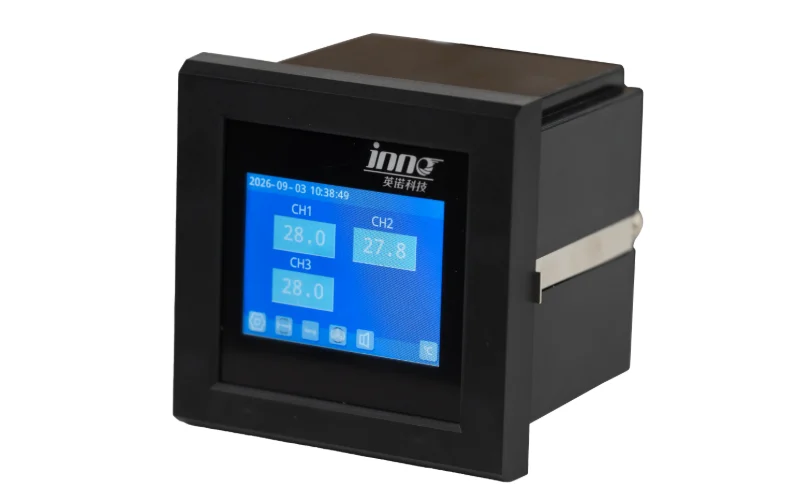
| Compatible device | Single-channel or multi-channel fiber optic temperature monitoring device |
| Customization | Armored length, probe diameter, fiber length, sensing tip, mounting method and connector |
Estrutura do produto
Fluorescent Sensing Tip
The sensing tip is placed at the target internal temperature point and measures local hotspot temperature through optical sensing.
Quartz Optical Fiber
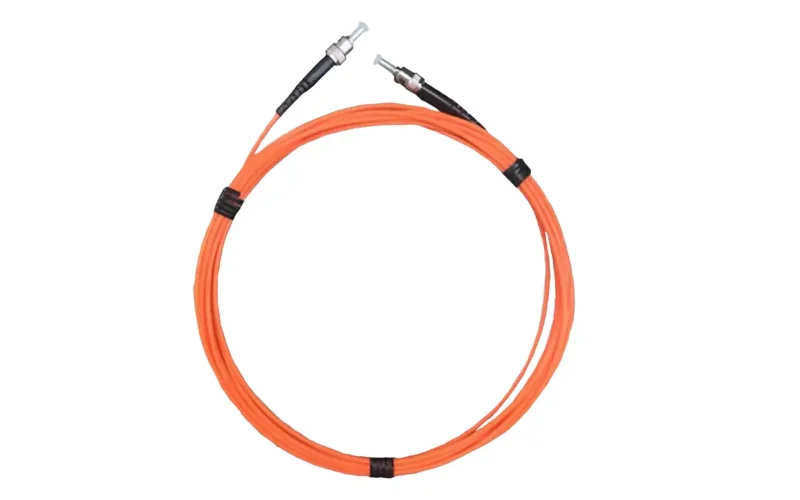
The optical fiber transmits excitation and return signals between the sensing tip and the monitoring device.
Armored Protection Layer
The armored layer improves mechanical durability during transformer internal routing, assembly and long-term operation.
Oil-Resistant Outer Structure
The outer structure is selected for transformer tank environments where oil compatibility and stable insulation performance are required.
Monitoring Device Interface
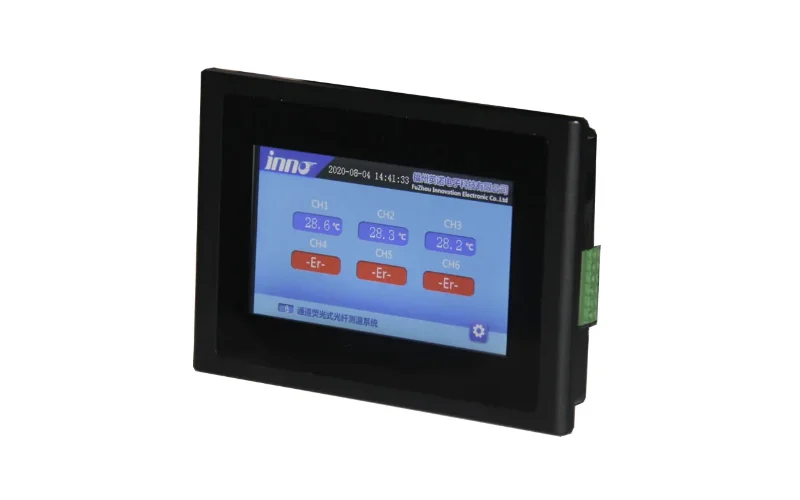
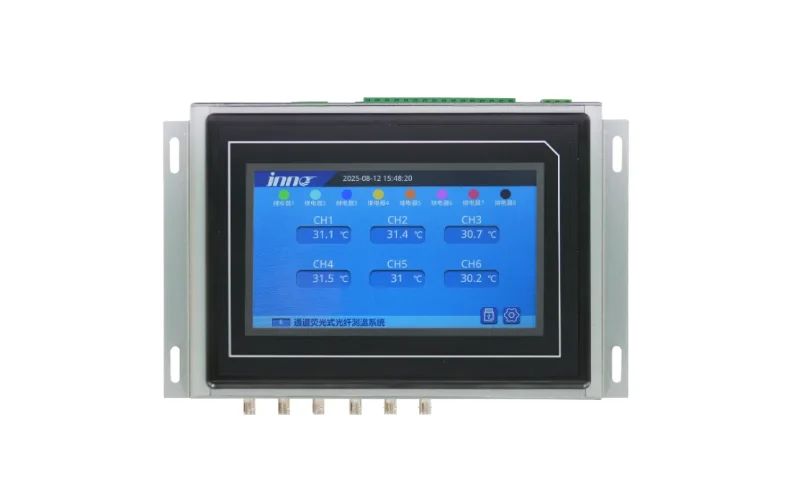
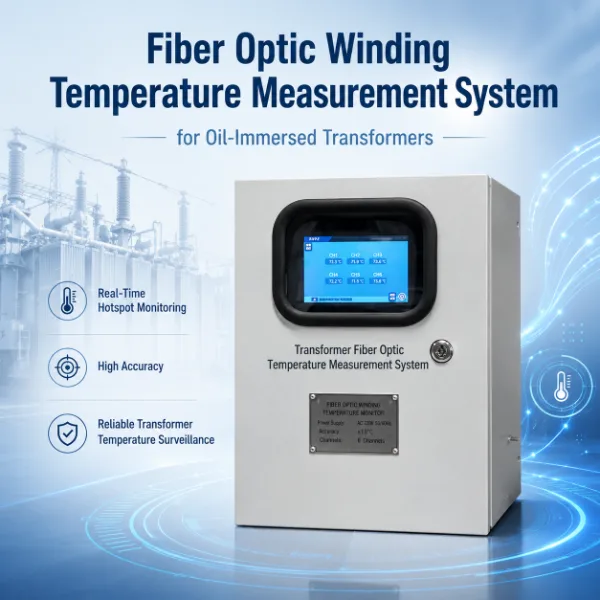
The sensor connects to a fiber optic temperature monitoring device that provides signal excitation, detection, calculation and output functions.
Armored Sensor vs Standard Fiber Optic Temperature Probe
The armored sensor is not simply another general probe. It is selected when the internal transformer installation path requires stronger mechanical protection and more stable routing.
| Comparison Item | Sensor de temperatura de fibra óptica blindado | Standard Fiber Optic Temperature Probe |
|---|---|---|
| Main purpose | Internal oil-immersed transformer routing and hotspot measurement | General point temperature measurement |
| Protection focus | Mechanical protection against bending, pressure and routing stress | Depends on standard probe housing |
| Posição de instalação | Winding area, spacer route, lead area and internal transformer path | Surface, cabinet, contact or general measuring point |
| Oil-immersed use | Designed for transformer tank environments | Requires suitable material selection |
| Mechanical durability | Higher protection for complex internal routing | Suitable for less demanding installation paths |
| Selection logic | Choose when the transformer internal installation path needs reinforced protection | Choose when the measuring point is easier to access and mechanical stress is lower |
Typical Installation Positions Inside Oil-Immersed Transformers
Winding Hotspot Area
The sensing tip can be placed near expected winding hotspot positions to obtain internal temperature data closer to the heat source.
Spacer Routing Area
The armored fiber can be routed along spacer structures to help keep the sensor path stable and protected.
Winding End Area
The probe can be arranged near winding end positions where temperature monitoring is required by transformer design.
Transformer Lead Area
The sensor can be used near internal lead connection areas where local temperature rise may need monitoring.
Internal Custom Monitoring Point
For special transformer designs, the armored sensor can be customized for defined internal temperature measurement positions.
Why Armored Protection Matters for Transformer Hotspot Monitoring
Transformer winding hotspot monitoring is usually a long-term embedded measurement task. Once the transformer is assembled and filled with oil, replacing or adjusting the internal sensor may be difficult. For this reason, probe protection and routing reliability are important during product selection.
Reduced Installation Damage Risk
The armored structure helps protect the optical fiber when passing through internal transformer paths or being fixed near support structures.
Improved Routing Stability
Reinforced protection helps the sensor remain stable along the designed internal route.
Better Support for Long-Term Monitoring
A protected sensor structure is suitable for applications where the measuring point must remain reliable through continuous transformer operation.
Customization Options
Armored Length
The armored section can be adjusted according to the internal routing distance and protection requirement.
Probe Tip Design
The sensing tip can be configured for winding hotspot, lead area, surface contact or internal embedded measurement.
Fiber Route
The fiber route can be selected according to transformer internal structure, outlet position and monitoring device location.
Protection Structure
Different reinforced protection designs can be selected according to mechanical stress, oil environment and installation space.
Monitoring Device Matching
The sensor can be matched with single-channel or multi-channel monitoring devices according to the required number of measuring points.
How to Select the Right Armored Fiber Optic Temperature Sensor
Confirm Transformer Structure
Review the winding layout, internal support structure and available sensor routing path before selecting the sensor design.
Confirm the Hotspot Position
Define whether the measurement point is near the winding, spacer, winding end, lead area or another internal temperature point.
Confirm the Protection Requirement
Check whether the sensor will face bending, pressure, clamping, vibration or other mechanical stress during installation and operation.
Confirm Installation Stage
Determine whether the sensor will be installed during transformer manufacturing, maintenance or retrofit evaluation.
Confirm Monitoring Point Quantity
The number of measuring points determines whether a single-channel or multi-channel monitoring device is required.
Recommended Information for Sensor Selection
| Informações obrigatórias | Exemplo |
|---|---|
| Tipo de transformador | Oil-immersed power transformer, distribution transformer or special transformer |
| Measuring position | Winding hotspot, spacer route, winding end, lead area or internal point |
| Installation stage | Factory installation, maintenance installation or retrofit evaluation |
| Protection requirement | Bending protection, pressure protection, routing protection or reinforced internal installation |
| Number of measuring points | Single point or multiple points |
| Oil environment | Long-term oil-immersed operation inside transformer tank |
| Monitoring device | Single-channel or multi-channel fiber optic temperature monitoring device |
Perguntas frequentes
What is an armored fiber optic temperature sensor?
It is an optical temperature probe with reinforced protection for applications where the fiber needs stronger mechanical durability during installation and long-term operation.
Why use an armored sensor inside an oil-immersed transformer?
Transformer interiors may require protected routing through winding supports, spacer areas or lead regions. The armored structure helps protect the optical fiber from installation and operation stress.
Is this sensor used for winding temperature or oil temperature?
It is mainly used for internal hotspot temperature measurement, especially near winding-related positions, rather than general oil temperature measurement.
How is it different from a standard fiber optic temperature probe?
The main difference is the reinforced protection structure. A standard probe is suitable for easier measuring points, while an armored probe is selected for more demanding internal routing.
Can it be installed during transformer manufacturing?
Yes. It is suitable for factory-installed internal temperature monitoring when the sensor route and hotspot position are defined during transformer design.
Can it be used for transformer retrofit?
Retrofit use depends on transformer structure, access conditions and available internal routing path. It should be evaluated according to the actual transformer design.
Can the armored length be customized?
Yes. The armored section and fiber route can be customized according to installation position and protection requirement.
What monitoring device is required?
The sensor works with a fiber optic temperature monitoring device that provides optical excitation, signal detection and temperature output.
How many measuring points can be monitored?
The number of measuring points depends on the sensor quantity and the channel number of the selected monitoring device.
What information is needed for selection?
Transformer type, hotspot position, installation route, protection requirement, oil environment and measuring point quantity are usually required.
Armored Fiber Optic Temperature Sensor for Oil-Immersed Transformer Hotspot Monitoring
The armored fiber optic temperature sensor is designed for protected internal temperature measurement in oil-immersed transformers. Its reinforced structure, optical sensing point and oil-immersed installation suitability make it a practical choice for winding hotspot, spacer route, lead area and other internal transformer monitoring positions.