
Online Dissolved Gas Analysis Monitoring for Transformer Oil Condition Assessment
Online DGA monitoring tracks key fault gases dissolved in transformer oil on a continuous basis, giving early insight into insulation and thermal condition between laboratory tests. Data integrates directly with your SCADA, substation automation, or asset management platform, and can be combined with temperature, partial discharge, bushing and OLTC condition information for a fuller transformer condition assessment.
- Continuous gas trending between scheduled laboratory tests
- Automated gas-ratio fault interpretation, not just raw readings
- Flexible integration with SCADA and substation automation systems
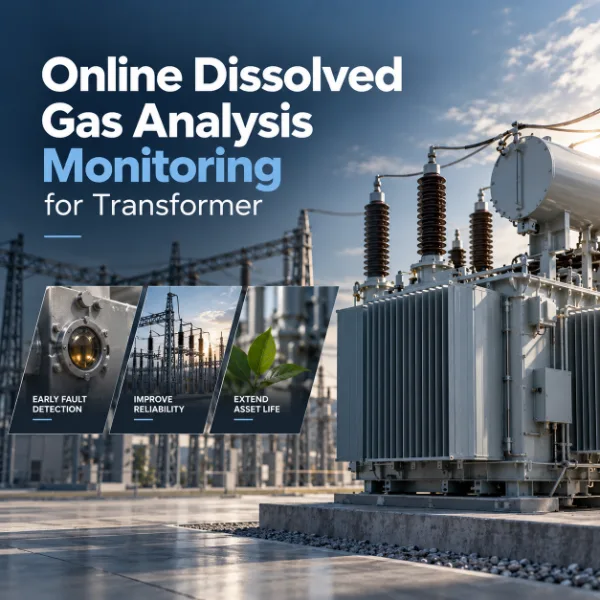
What Is Dissolved Gas Analysis Monitoring?
Dissolved gas analysis (DGA) is a diagnostic technique for oil-immersed power transformers. When internal faults — overheating, partial discharge, or arcing — decompose the insulating oil and cellulose, they release characteristic fault gases that dissolve into the oil. Monitoring these gases over time gives an indication of fault type, severity and how quickly a condition is developing.
Online DGA monitoring performs this measurement automatically and continuously at the installation site, adding a steady stream of trend data alongside the periodic laboratory tests already used for transformer oil analysis.
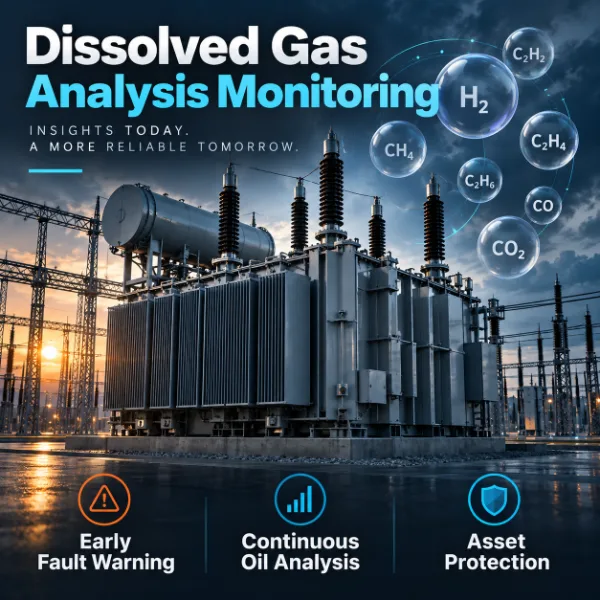
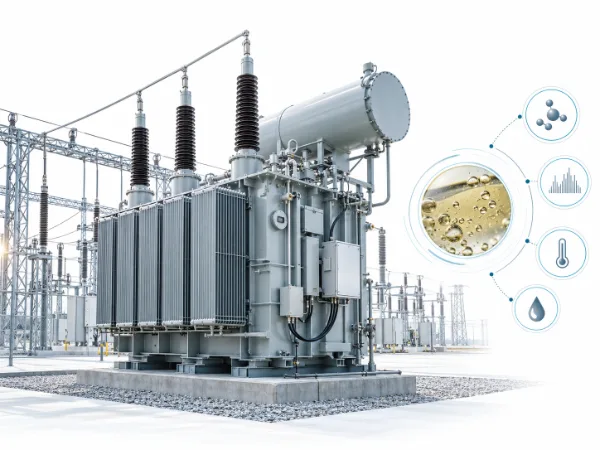
Why Continuous DGA Monitoring Matters
Transformer faults don't always develop on a predictable schedule. Continuous DGA trending adds visibility between test intervals, so a fast-developing condition — such as an arcing event — can be flagged while there is still time to plan a response.
- Tracks gas trends continuously rather than at fixed test intervals
- Flags rapid gas increases that a periodic sample could otherwise miss
- Supports condition-based maintenance planning with ongoing trend data
- Provides remote visibility for transformers that are difficult to sample frequently
Seven Key Fault Gases and Their Diagnostic Meaning
A standard online DGA system tracks seven gases dissolved in transformer oil. Reading them together — not as isolated numbers — is what turns a measurement into a fault indication.
| Gas | Typical Fault Association | Por que isso é importante |
|---|---|---|
| Hydrogen (H₂) | Partial discharge / low-energy discharge | Sensitive early indicator of electrical activity |
| Methane (CH₄) | Low-temperature thermal fault | Useful for early thermal fault trends |
| Ethane (C₂H₆) | Lower-temperature oil overheating | Supports thermal fault interpretation |
| Ethylene (C₂H₄) | Higher-temperature thermal fault | Important indicator of severe overheating |
| Acetylene (C₂H₂) | Arcing / high-energy discharge | Key gas for high-energy electrical faults |
| Carbon Monoxide (CO) | Cellulose degradation | Indicates thermal stress on paper insulation |
| Carbon Dioxide (CO₂) | Cellulose aging | Used together with CO for insulation assessment |
Gas-ratio methods and Duval Triangle interpretation compare these gases together to classify the likely fault type. Full detection ranges and accuracy figures are available on the Online DGA Monitoring System product page.
Online DGA and Laboratory DGA
Laboratory DGA remains an important part of detailed transformer oil analysis. Online DGA adds continuous trend information in the intervals between scheduled laboratory tests, so the two methods work well together.
Laboratory DGA
- Periodic sampling on a scheduled or condition-triggered basis
- Detailed laboratory analysis and reporting
- Manual oil sampling and transport
- Well suited to scheduled condition assessment
Online DGA Monitoring
- Continuous gas trending between laboratory tests
- Automatic, unattended measurement
- Earlier visibility into rapidly developing gas changes
- Remote monitoring with alarm and SCADA integration
Online DGA Monitoring System
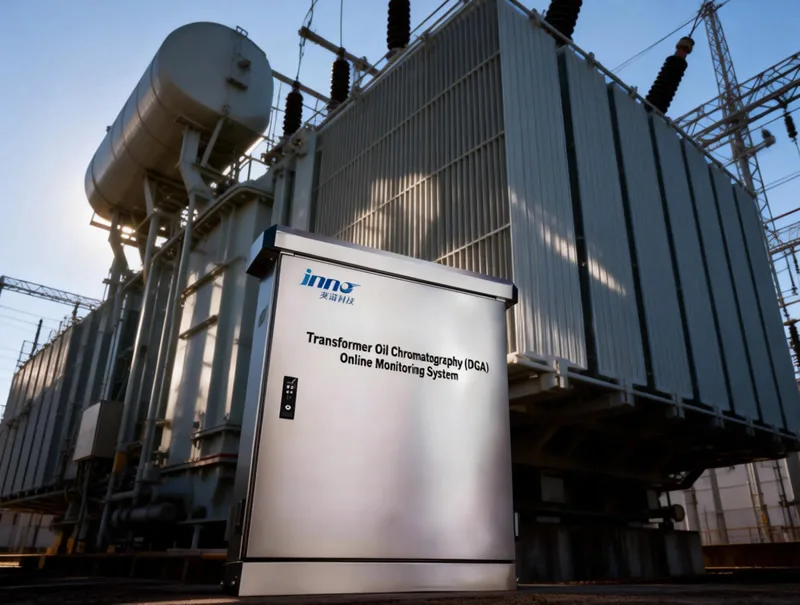
The Online DGA Monitoring System is our core solution for continuous transformer oil gas analysis, and pairs naturally with related transformer condition monitoring products for projects that need broader coverage.
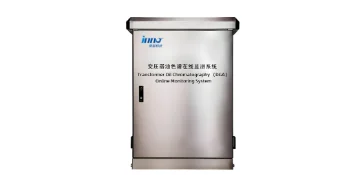
Online DGA Monitoring System
Continuous, automated gas chromatographic analysis of transformer oil with gas-ratio fault interpretation and standard industrial communication interfaces for SCADA integration. Configured per project for gas coverage, sampling cycle and communication protocol.
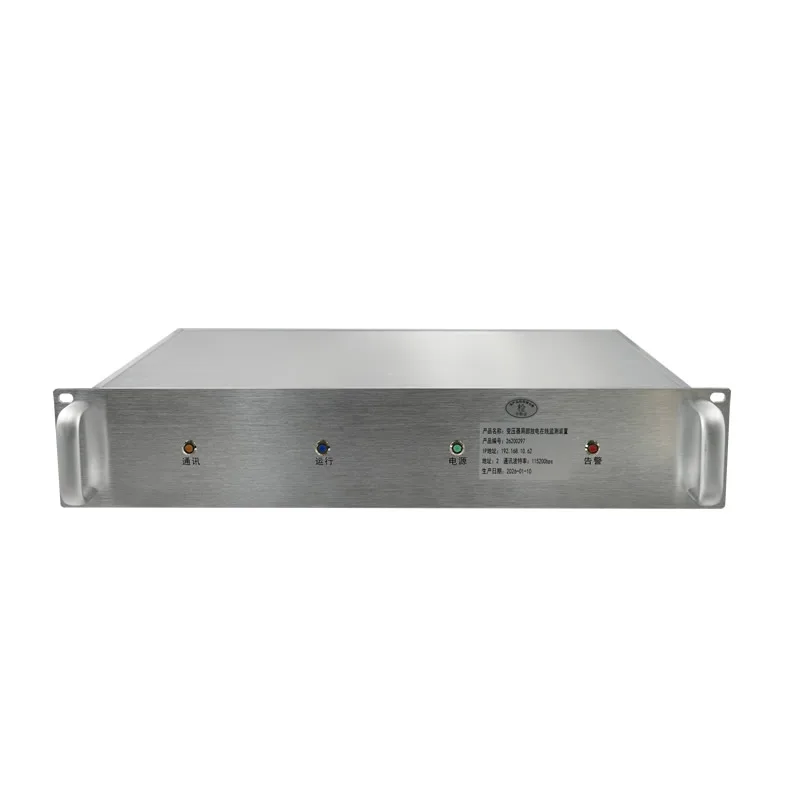
Partial Discharge Online Monitoring System
UHF, HFCT and ultrasonic PD sensing that complements DGA when hydrogen or acetylene trends point toward discharge activity.
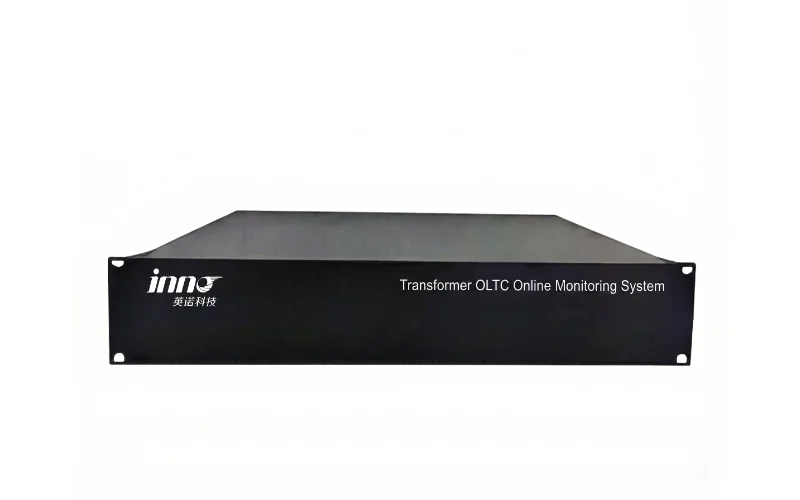
OLTC Online Monitoring System
Tap-changer current, vibration and torque monitoring, useful context when the OLTC compartment shows a different gas profile from the main tank.
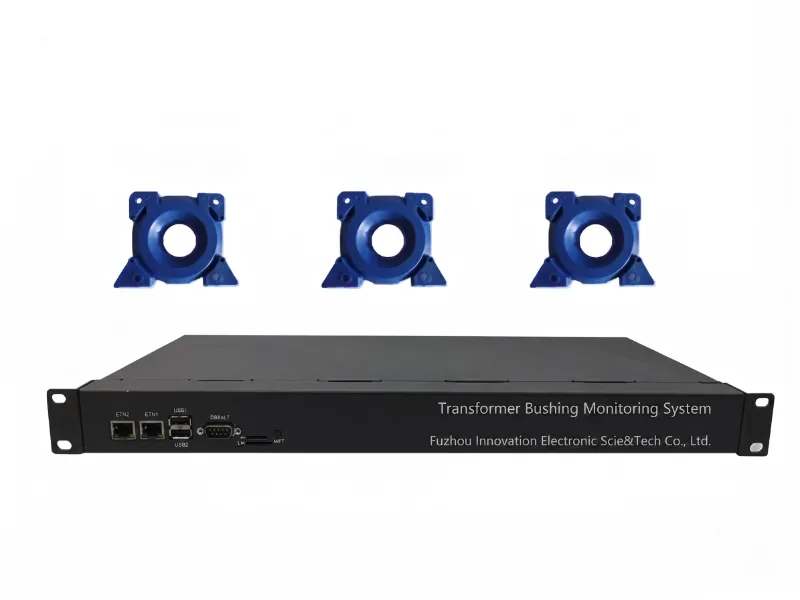
Sistema de monitoramento de buchas de transformadores
Capacitance, dielectric loss and leakage current monitoring for the bushing insulation system, alongside the main-tank oil that DGA covers.
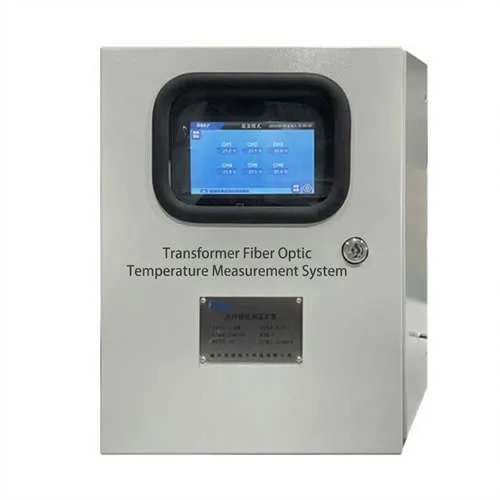
Sistema de medição de temperatura por fibra óptica
Direct winding hot-spot temperature measurement, useful for correlating thermal gas trends with the actual hot-spot value.
How Online DGA Monitoring Works
Oil Sampling / Circulation
A low-flow loop draws oil from the transformer's existing valves and returns it without disturbing operation.
Gas Extraction
Dissolved gases are extracted from the circulating oil for analysis.
Gas Separation & Measurement
Extracted gas is separated and measured to determine the concentration of each fault gas.
Diagnosis, Trending & Data Integration
Gas concentrations, trends and alarms are processed locally and can be transmitted to SCADA, substation automation or asset management systems through standard communication interfaces.
Expand Transformer Condition Monitoring
DGA provides chemical evidence of insulation and thermal faults. Other monitoring methods add complementary electrical, thermal and mechanical condition information, and can be combined according to project needs.
Monitoramento de transformadores
An overview of our full transformer condition monitoring range — temperature, DGA, PD, bushing and OLTC — configured to fit the project.
Monitoramento da temperatura do transformador
Online winding and top-oil temperature monitoring, adding thermal condition data alongside DGA gas trends.
Monitoramento de temperatura por fibra óptica
Direct winding hot-spot measurement using dielectric fiber optic sensors, useful for correlating thermal fault evidence with the actual hot-spot value.
Monitoramento de descargas parciais
UHF/HFCT/ultrasonic PD sensing that provides real-time electrical discharge information alongside DGA's chemical evidence.
Monitoramento do OLTC
Tap-changer current, vibration and torque monitoring, adding mechanical condition data for the OLTC compartment.
Monitoramento de buchas
Capacitance, dielectric loss and leakage current monitoring for bushings, complementing DGA's main-tank oil coverage.
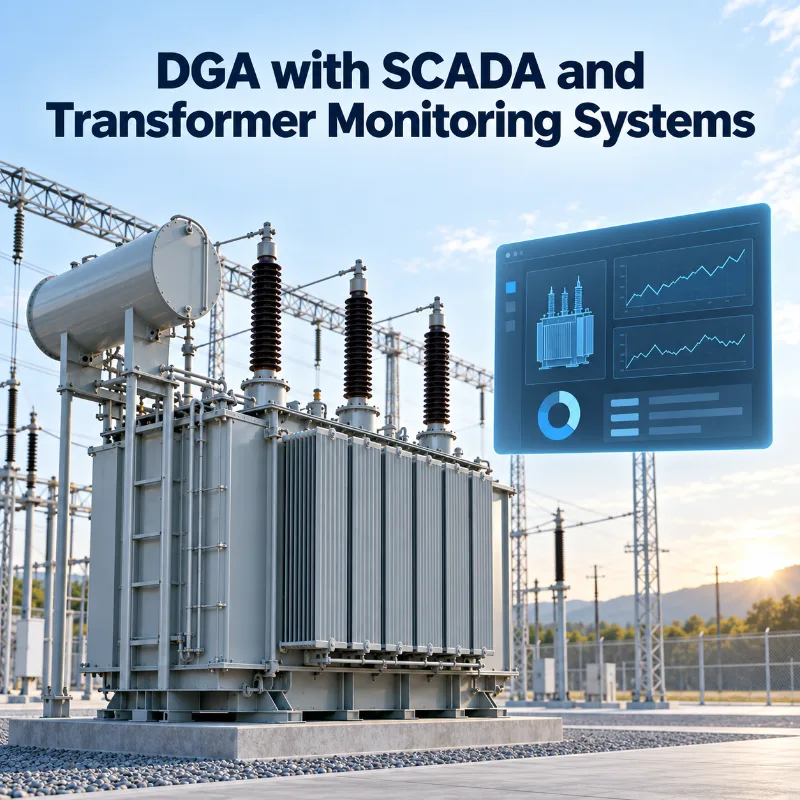
Flexible Integration with SCADA and Transformer Monitoring Systems
INNO online DGA monitoring solutions are designed for flexible integration with existing substation and transformer monitoring infrastructure. Measurement data, gas trends and alarms can be transmitted to SCADA, substation automation or asset management systems through standard industrial communication interfaces.
When a project requires broader transformer condition assessment, DGA data can also be evaluated together with temperature, partial discharge, bushing and OLTC condition information.
- RS-485 / Modbus RTU
- Ethernet / Modbus TCP
- IEC 61850
- Optional analog output depending on project configuration
Where Online DGA Monitoring Is Most Valuable
Continuous gas trending adds the most value on assets where an undetected fault would be costly, hard to reach, or difficult to sample on a frequent schedule.
Utility Power Transformers
Transmission and substation transformers where unplanned failure affects grid reliability and a wide customer base.
Generator Step-Up Transformers
Critical assets connecting generation to the grid, where continuous condition visibility supports generation availability.
Industrial Substation Transformers
Process plants where an unplanned outage can interrupt production far beyond the cost of the transformer itself.
Renewable Energy Step-Up Transformers
Solar and wind step-up transformers, often in remote locations where frequent manual sampling is impractical.
Critical Oil-Immersed Transformers
Aging or high-utilization transformers where condition-based maintenance decisions benefit from continuous trend data.
Transformer OEM Testing & Condition Assessment
Manufacturers and test facilities that need ongoing gas trend data during factory testing or field commissioning.
Standards & Typical Configuration
The online DGA system's extraction method and fault-interpretation logic are designed around the reference standards used for transformer oil dissolved gas analysis.
| Item | Typical Configuration |
|---|---|
| Sampling / analysis cycle | Adjustable; minimum ≤ 2 hours |
| Analysis method | Gas chromatography (GC) with TCD / FID detectors |
| Carrier gas | High-purity nitrogen (on-site generator optional) |
| Armazenamento de dados | ≥ 10 years of on-board measurement records |
| Communication | RS-485 / Modbus RTU, Ethernet / Modbus TCP, IEC 61850 |
| Fonte de alimentação | AC 220V ±15%, 50/60Hz; ≤ 200W |
| Método de instalação | Live (energized) transformer; oil inlet/outlet valve connection only |
For complete gas measurement ranges, accuracy, hardware configuration and technical specifications, see the Online DGA Monitoring System product page.
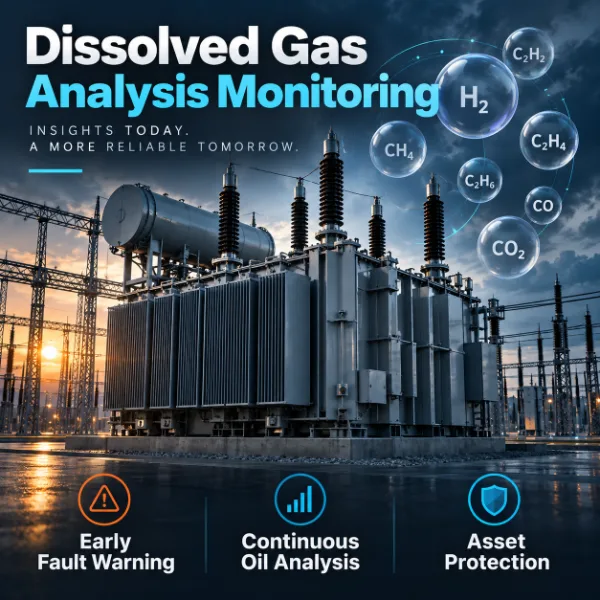
DGA Monitoring Configured for Your Transformer Project
INNO provides online DGA monitoring systems and project-specific transformer condition monitoring solutions for utility, industrial and OEM applications.
- Gas monitoring requirements confirmed per project
- Communication protocol selected to match your SCADA or platform
- Installation environment and oil valve arrangement reviewed in advance
- Optional accessories and engineering support from consultation through commissioning
Dissolved Gas Analysis Monitoring FAQ
What is dissolved gas analysis monitoring?
DGA monitoring identifies and quantifies gases dissolved in transformer oil, produced when internal faults such as overheating, partial discharge, or arcing decompose the insulating oil and paper.
Which transformer faults can DGA detect?
DGA trends can indicate thermal faults, partial discharge, and arcing, as well as cellulose insulation degradation, depending on which gases are rising and how quickly.
Which gases are monitored?
The standard configuration tracks seven fault gases — hydrogen, methane, ethane, ethylene, acetylene, carbon monoxide and carbon dioxide.
What is the difference between online DGA and laboratory DGA?
Laboratory DGA provides detailed analysis from a periodic oil sample. Online DGA adds continuous, automated gas trending in the intervals between those tests, so the two methods complement each other.
Can online DGA monitoring be installed on an operating transformer?
Yes. The system connects to the transformer's existing oil sampling valves as a live installation, without requiring the transformer to be de-energized or drained.
How often does an online DGA monitor analyze transformer oil?
The sampling and analysis cycle is adjustable, with a minimum interval of around two hours, giving continuous rather than one-off trend visibility.
How is DGA data integrated with SCADA?
Data can be transmitted through RS-485 / Modbus RTU, Ethernet / Modbus TCP, or IEC 61850, depending on the communication protocol used by your platform.
How does DGA complement partial discharge monitoring?
PD monitoring detects the discharge event itself in real time, while DGA shows whether that activity is producing fault gases in the oil over time — the two give a fuller picture together.
Can DGA be used with transformer temperature monitoring?
Yes. Temperature data helps put thermal-fault gas trends in context, and both can be evaluated together as part of a broader condition monitoring project.
Which transformers benefit most from online DGA monitoring?
Critical, aging, or hard-to-sample transformers — such as utility, generator step-up, industrial, and renewable energy step-up transformers — generally see the most value from continuous trend data.
Request A DGA Configuration for Your Transformer
Tell us your transformer type, voltage / capacity, required gases, oil valve arrangement, communication protocol, SCADA requirement, and installation environment — our engineering team will put together a DGA monitoring configuration for your project.