

Giám sát tình trạng dầu máy biến áp: DGA, độ ẩm, nhiệt độ, mức dầu và áp suất
发布时间:Ngày 5 tháng 10 năm 2026, 16:59:45
Insulating oil is often called the lifeblood of a transformer, and the comparison is useful. Oil circulates through every part of the active core and windings, carries heat away, insulates high-voltage parts and absorbs the by-products of aging and faults. A blood test reveals a great deal about human health, and in the same way the oil reveals a great deal about the transformer's internal condition without the need to open the tank.
This guide covers the five oil-related parameters that matter most for online monitoring: dissolved gases, moisture, temperature, oil level and pressure. For each one it explains what the parameter tells you, how it is measured, how to interpret the readings and how the parameters work together to give a complete picture of oil and insulation health.
Mục lục
- Why Oil Health Matters
- Dissolved Gas Analysis (DGA)
- Moisture in Oil
- Oil Temperature
- Oil Level
- Pressure and Gas Protection Devices
- Laboratory Oil Tests That Complement Online Monitoring
- Reading the Parameters Together
- Designing an Oil Health Monitoring System
- Câu hỏi thường gặp
Why Oil Health Matters
In an oil-immersed transformer, mineral oil or an alternative fluid such as natural or synthetic ester performs three jobs at once:
- Insulation. Oil fills the gaps between windings, between windings and the tank, and inside the paper insulation, providing much of the dielectric strength of the design.
- Cooling. Oil carries heat from windings and core to radiators or coolers, either by natural convection or forced circulation.
- Diagnostics. Gases, water and aging products dissolve in the oil, so its composition records what is happening inside the tank.
When oil condition deteriorates, all three functions suffer. Moisture lowers dielectric strength and speeds up paper aging. Oxidation forms acids and sludge that block cooling ducts. Low oil level can expose live parts or starve the cooling system. That is why oil health is a cornerstone of oil-immersed transformer monitoring.
| Tham số | Main Question It Answers | Typical Online Sensor |
|---|---|---|
| Dissolved gases | Is there an active internal fault, and what kind? | Công cụ giám sát DGA trực tuyến |
| Độ ẩm | Is the insulation wet or getting wetter? | Capacitive moisture sensor |
| Nhiệt độ | How hard is the transformer working, and is cooling effective? | Pt100 sensors, oil temperature indicators |
| Oil level | Is there enough oil, and is the preservation system working? | Magnetic level gauge with transmitter |
| Pressure | Is there gas accumulation or a sudden internal event? | Pressure transmitters, Buchholz and sudden pressure relays |
Dissolved Gas Analysis (DGA)
Where the Gases Come From
When oil and paper are stressed by heat or electrical discharges, their molecules break down and form characteristic gases. The type and proportion of gases point to the type and severity of the fault.
| Gas | Main Associated Fault |
|---|---|
| Hydrogen (H2) | Partial discharge, also present in most other faults |
| Methane (CH4) and ethane (C2H6) | Low-temperature thermal faults in oil |
| Ethylene (C2H4) | Higher-temperature thermal faults, roughly above 300 °C |
| Acetylene (C2H2) | Arcing and high-energy discharges, or very hot thermal faults |
| Carbon monoxide (CO) and carbon dioxide (CO2) | Degradation of cellulose (paper) insulation |
Interpreting DGA Results
DGA interpretation looks at three things: the concentration of each gas, how fast it is increasing and the ratios between gases. Established guidance includes IEEE C57.104 and IEC 60599, together with graphical methods such as the Duval Triangles and Pentagons. Two principles matter most in practice:
- Rates of change matter more than absolute values. A transformer with moderately elevated but stable gases is usually less urgent than one where gases are rising quickly from a low level.
- Acetylene deserves special attention. Even small amounts of new acetylene can indicate arcing and usually justify a quick investigation.
Online DGA Monitor Types
| Type | What It Measures | Best Suited For |
|---|---|---|
| Single-gas or composite | Hydrogen, sometimes with CO or a combined value | Early warning on medium-criticality units |
| Multi-gas | Several key gases, often with moisture | Critical transformers needing fault classification |
| Full-spectrum | All main fault gases, comparable to laboratory analysis | Highly critical or suspect units |
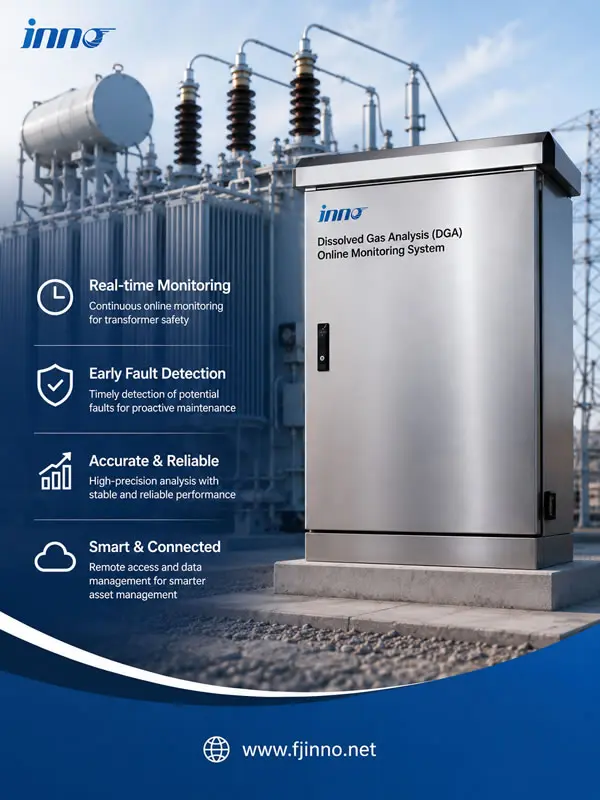
A multi-gas online DGA monitoring system for transformer oil gives continuous data with enough resolution to track fault development hour by hour. To understand how online monitoring differs from periodic sampling, read our online DGA vs oil sampling comparison and our guide to Giám sát DGA trực tuyến cho máy biến áp. Remember that OLTC compartments generate gases during normal switching, so leakage between the OLTC and main tank can mislead DGA results. Our OLTC online monitoring system helps separate these effects.
Moisture in Oil
Why Moisture Is So Harmful
Water is one of the most damaging contaminants in a transformer. It reduces the dielectric strength of oil, increases dielectric losses, accelerates the aging of paper insulation and can form bubbles during sudden overloads, creating a risk of flashover. Moisture comes from three sources: residual water from manufacture, ingress through leaking seals and breathers, and water generated by the aging of paper itself.
ppm vs Relative Saturation
Moisture in oil can be expressed in two ways, and understanding the difference is essential:
- Absolute water content in ppm (mg/kg) is the amount of water dissolved in the oil.
- Relative saturation (%RS or water activity) is the water content as a percentage of what the oil could hold at its current temperature.
The ability of oil to hold water rises steeply with temperature. Mineral oil may hold only a few tens of ppm at 20 °C but several times that at 60 °C. The same 20 ppm can therefore be harmless in hot oil and close to saturation in cold oil. Relative saturation directly indicates how close the oil is to releasing free water, which is why most online moisture sensors measure it and calculate ppm from temperature.
Oil and Paper Moisture Equilibrium
Most of the water in a transformer is held in the paper, not the oil, often by a factor of hundreds or more. As the transformer heats up, water moves from paper into oil, and as it cools, water moves back. Continuous monitoring of moisture together with oil temperature allows the system to estimate moisture in paper, which is the figure that really determines insulation aging and bubble risk.
Interpreting Moisture Readings
- Compare ppm values only at similar temperatures, or use values corrected to 20 °C as described in IEC 60422.
- IEC 60422 sets limits that tighten as voltage class increases. For high-voltage transformers, values below roughly 10 to 15 mg/kg (corrected to 20 °C) are generally regarded as good.
- A steady upward trend in moisture at similar temperatures suggests ingress through seals or a saturated breather.
- Moisture that rises sharply during heating and falls during cooling indicates wet paper releasing water.
For a broader view of insulation condition, see our transformer insulation monitoring page.
Oil Temperature
Oil temperature tells you how hard the transformer is working and how well its cooling system is performing. It also governs the chemistry of the oil itself: oxidation, sludge formation and the release of water from paper all accelerate as temperature rises.
What to Measure
- Top-oil temperature is the hottest oil in the tank and the main input for loading calculations and cooling control.
- Bottom-oil temperature shows how effectively coolers are removing heat.
- Cooler inlet and outlet temperatures help identify blocked radiators or failed pumps.
- Ambient temperature provides the reference for temperature rise.
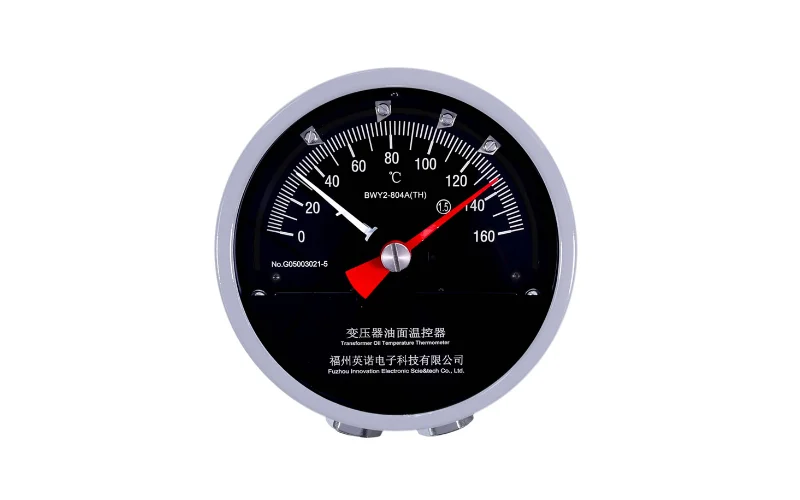
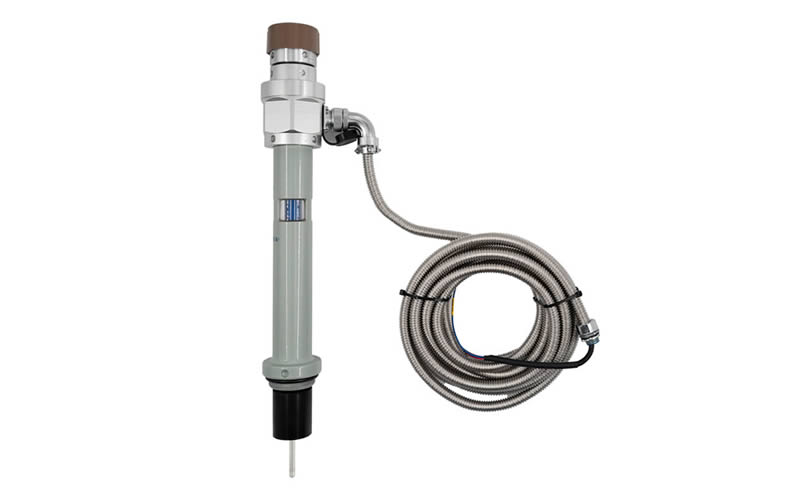
Top-oil temperature is typically measured with a Pt100 sensor or a dial thermometer in a thermometer pocket on the tank cover. Devices such as the BWY-802/803A transformer oil temperature indicator và BWY2 oil temperature indicator provide local display, alarm contacts and analog outputs for remote monitoring.
Oil Temperature vs Winding Temperature
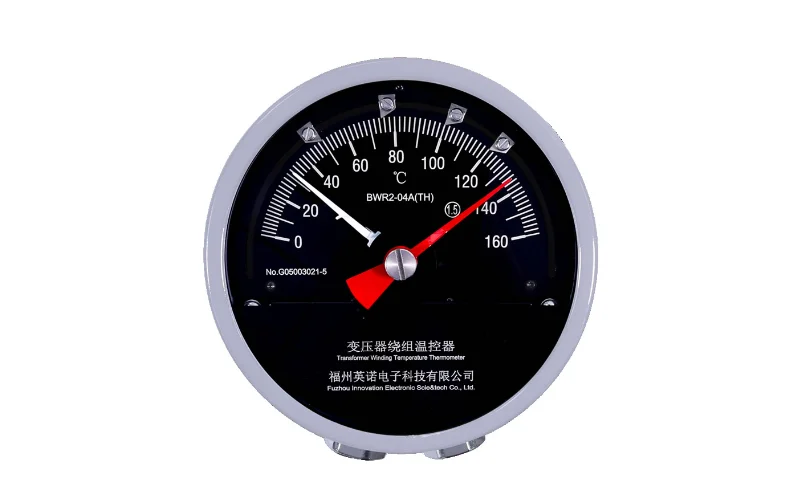
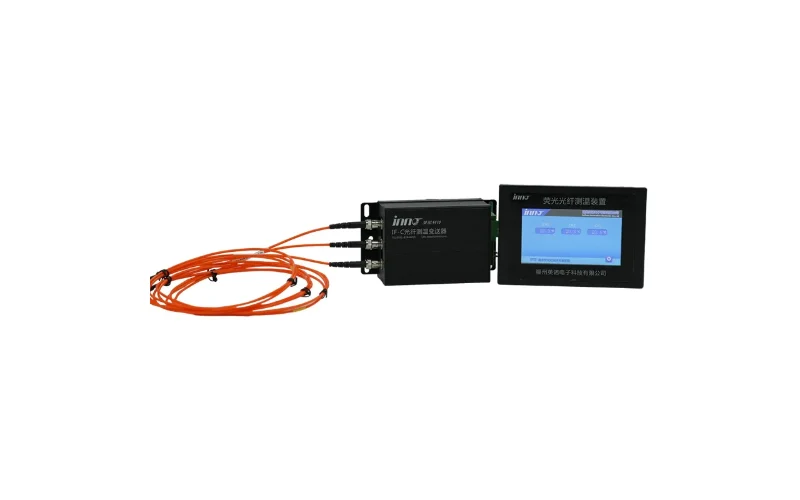
Oil temperature is not the same as winding temperature. The winding hot spot can be 20 K or more above top-oil temperature at full load, and it is the hot spot that determines paper aging. Oil temperature monitoring should therefore be combined with winding temperature measurement, ideally direct measurement with a fiber optic temperature measurement system for oil-immersed transformers. The differences are explained in our article on oil temperature gauges versus winding temperature gauges.
Typical Limits
IEC 60076-7 recommends a top-oil limit of 105 °C for loading beyond nameplate, and IEEE C57.91 uses a comparable limit. Utilities usually set alarms well below this, often in the range of about 85 °C to 95 °C, with exact values depending on the design and loading policy. Design temperature rise values are covered in transformer temperature rise limits and ratings.
Oil Level
Oil volume changes with temperature, expanding by roughly 0.07% to 0.08% per kelvin for mineral oil. In a large transformer this means thousands of liters of movement between cold and hot conditions. The conservator, a tank mounted above the main tank, accommodates this expansion while keeping the main tank completely full.
Why Oil Level Matters
- Low level can expose the Buchholz relay, bushings or even windings, reducing insulation and cooling. It usually indicates a leak.
- High level can cause oil to overflow through the breather, and may indicate overfilling or a ruptured conservator bag allowing oil into an unexpected space.
- Level that does not follow temperature points to a blocked pipe, a faulty gauge or a problem with the conservator bag or membrane.
Monitoring Oil Level Effectively
Traditional magnetic oil level gauges provide local reading and low and high level contacts. For health monitoring, a gauge with a continuous analog or digital output is much more useful, because it allows the system to compare actual level with the expected level for the current oil temperature. A gradual divergence reveals slow leaks long before the low-level alarm operates. Separate level monitoring is also recommended for the OLTC conservator compartment.
Pressure and Gas Protection Devices
Pressure-related devices serve two purposes: protection against severe internal faults and early warning of gas generation.
| Device | Chức năng | What It Indicates |
|---|---|---|
| Buchholz (gas) relay | Collects free gas and detects oil surges in the pipe to the conservator | Slow gas accumulation (alarm) or sudden oil flow from a severe fault (trip) |
| Sudden pressure relay | Detects a rapid rate of pressure rise in the tank | Internal arcing faults |
| Pressure relief device | Opens to release pressure and prevent tank rupture | Severe internal faults |
| Pressure transmitter | Continuously measures tank or gas-space pressure | Trends in sealed and nitrogen-blanketed designs, gas generation, seal integrity |
Pressure in Sealed Transformers
Sealed transformers and those with a nitrogen blanket have no conservator breathing to atmosphere, so their internal pressure varies with oil temperature. Continuous pressure monitoring in these designs confirms that the seal is intact and that pressure follows temperature as expected. Pressure that falls over time suggests a leak, while pressure rising faster than temperature can explain suggests gas generation inside the tank.
Gas collected in a Buchholz relay should always be analyzed. Its composition, combined with DGA results, helps distinguish between harmless air and fault gases. A combined transformer oil temperature, level and pressure monitoring system brings these measurements together with continuous trending instead of contact-only alarms.
Laboratory Oil Tests That Complement Online Monitoring
Online sensors cover the parameters that change quickly or need continuous tracking. Other oil properties change slowly and are still best measured in a laboratory, typically every one to a few years depending on criticality and condition.
| Laboratory Test | What It Reveals |
|---|---|
| Breakdown voltage | Dielectric strength, affected by water and particles |
| Acidity (neutralization number) | Oxidation products that attack paper and form sludge |
| Interfacial tension | Early oxidation and polar contaminants |
| Dielectric dissipation factor | Contamination and aging products |
| Color and appearance | General aging and contamination |
| Furan analysis | Degradation of paper insulation and remaining paper life |
| Inhibitor content | Remaining oxidation protection in inhibited oils |
| Corrosive sulfur and particles | Risk of conductor corrosion and dielectric problems |
Laboratory samples also provide a regular check on online DGA and moisture sensors. Significant differences between online and laboratory results should be investigated before relying on either one.
Reading the Parameters Together
Each parameter is useful on its own, but the strongest diagnoses come from correlating them. The table below shows common patterns.
| Observed Pattern | Likely Explanation | Suggested Action |
|---|---|---|
| Ethylene and methane rise with load and oil temperature | Thermal fault such as a poor joint or circulating current | Increase DGA attention, check connections and core grounding |
| Gases rise independently of load | Possible discharge activity or core ground fault | Check partial discharge and core ground current |
| New acetylene with Buchholz gas alarm | Arcing inside the tank | Urgent investigation, consider removing from service |
| CO and CO2 rising with high oil temperature | Paper overheating and accelerated aging | Review loading and cooling, check winding hot spot |
| Moisture rising steadily at similar temperatures | Water ingress through seals or saturated breather | Inspect seals and breather, plan oil drying |
| Oil level falling relative to temperature curve | Slow oil leak | Locate and repair leak before low-level alarm |
| Pressure rising faster than temperature in a sealed unit | Gas generation inside the tank | Check DGA and gas analysis |
| Top-oil temperature higher than expected for the load | Cooling degradation, such as failed fans or blocked radiators | Inspect cooling system |
Some of these patterns overlap with partial discharge and winding problems, so oil health monitoring works best alongside a partial discharge online monitoring system and direct winding temperature measurement. Our transformer failure modes guide và transformer overheating guide describe the underlying faults in more detail.
Designing an Oil Health Monitoring System
Scope by Transformer Criticality
| Tier | Typical Transformers | Recommended Oil Monitoring |
|---|---|---|
| Basic | Smaller or less critical units | Oil temperature, level contacts, Buchholz and pressure relief, periodic laboratory DGA |
| Standard | Typical substation transformers | Above plus single-gas or composite online DGA, moisture, continuous level and pressure |
| Comprehensive | Critical grid and generator step-up transformers | Above plus multi-gas online DGA, full temperature profile and correlation analytics |
Design Considerations
- Sampling location. Mount DGA and moisture sensors where oil flow is representative, avoiding dead zones near valves that do not circulate.
- Temperature compensation. Record oil temperature at the moisture sensor so readings can be normalized.
- Continuous outputs. Prefer level and pressure devices with analog or digital outputs so trends can be analyzed, while keeping independent contacts for protection.
- Integration. Bring all oil parameters into one platform via Modbus, IEC 61850 or similar protocols, together with load data, so correlations are easy to see.
- Baselines. Take laboratory samples at commissioning and use them to verify online sensors and set alarm thresholds.
- Alarm strategy. Combine absolute limits with rate-of-change alarms, and assign a clear response procedure to each.
For guidance on how oil monitoring fits into a full monitoring strategy, see our article on Các phương pháp và chiến lược giám sát tình trạng máy biến áp and our dissolved gas analysis solutions.
Câu hỏi thường gặp
Which oil parameter is most important to monitor online?
Dissolved gases are generally the most informative, because they reveal most internal fault types at an early stage. For critical transformers, moisture and oil temperature should be monitored alongside DGA, since they strongly influence insulation aging.
Why does moisture in oil change with temperature?
Oil can hold more water at higher temperatures, and water moves between paper and oil as temperature changes. As the transformer heats, water migrates from paper into oil. As it cools, water returns to the paper. This is why moisture readings must always be interpreted together with oil temperature.
Can online DGA replace laboratory oil analysis?
Online DGA provides continuous gas data and early warning, but laboratory analysis is still needed for tests such as acidity, interfacial tension, breakdown voltage and furans, and for periodic verification of the online sensors.
What does a Buchholz alarm mean?
A Buchholz alarm usually means free gas has accumulated in the relay. It may be air from recent oil handling, but it can also be fault gas from an internal problem. The gas should be sampled and analyzed, and DGA results checked, before the transformer is considered safe to continue in service.
Is oil health monitoring relevant for ester-filled transformers?
Yes. The same parameters are monitored, but interpretation differs. Ester fluids hold much more water than mineral oil and can produce different gas patterns, so sensors and diagnostic limits should be suitable for the specific fluid.
Monitor Your Transformer Oil Health with Confidence
We provide online DGA monitors, oil temperature indicators, level and pressure monitoring, and fiber optic winding temperature systems that work together to give a complete view of oil and insulation condition. Our solutions support power grid utilities, power generation, oil and gas facilities and substations, as well as substation transformer monitoring và transformer temperature monitoring projects.
Explore our transformer monitoring solutions, review our certifications, visit our technical support page, or contact our team to plan oil health monitoring for your transformers.